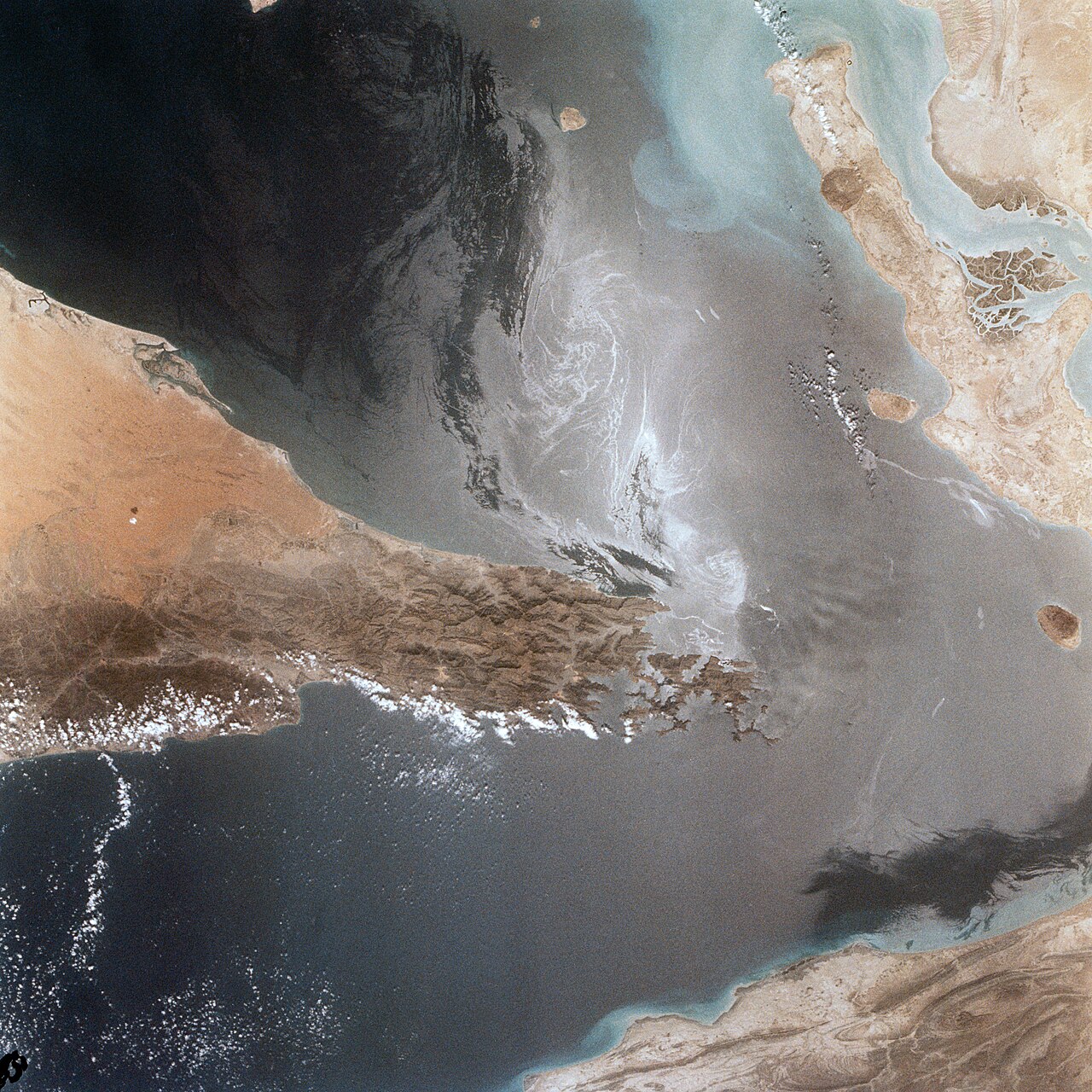
The news broke via an Associated Press dispatch, published Monday, April 27, 2026, in Cairo and re-published by the Washington Post: Iran is proposing to reopen the Strait of Hormuz and cease its attacks on merchant shipping in exchange for the lifting of the US naval blockade and an end to the war. The nuclear program, the main sticking point between Tehran and Washington since the abortive 2015 agreement, would not be part of this first phase. It is, at this stage, the most precise de-escalation offer ever made by the Islamic Republic since the outbreak of the conflict at the end of March. It remains to be seen if Donald Trump, who for weeks has demanded a comprehensive settlement including nuclear disarmament, will accept it.
An Offer Transmitted by Islamabad
According to the two regional officials cited by AP, the Iranian proposal was handed over on Saturday, April 25, to the Pakistani government by Iranian Foreign Minister Abbas Araghchi during a visit to Islamabad. Prime Minister Shehbaz Sharif and Marshal Asim Munir, the army chief of staff and the country's strongman, would then have transmitted it securely to the US State Department. This step explains, in hindsight, the surprise cancellation of the visit to Islamabad by envoys Steve Witkoff and Jared Kushner: Washington no longer needed to seek out the offer; it was already on the table. On Monday morning, Abbas Araghchi continued his tour in Moscow, where he thanked Sergey Lavrov for Russia's "constant support" while consulting the Kremlin on the possible outlines of an agreement.
Trump Between Temptation and Maximalist Demand
On the American side, the official reaction remains cautious. The White House has not commented directly on the proposal, and the State Department spokesperson confined himself to stating that "any credible initiative would be studied." Behind the scenes, positions are divided. Part of the Trump administration—particularly the wing represented by J.D. Vance and some economic advisors—is pushing to seize the opportunity: the surge in Brent crude (above $90 since Friday), pressure from the American oil lobby, and market concerns are increasing the domestic cost of the conflict. Another wing, around National Security Advisor Mike Waltz and Defense Secretary Pete Hegseth, deems the offer insufficient: for them, accepting without including the nuclear issue would be giving Tehran a reprieve that it would use to re-launch its program.
Markets Applaud, Cautiously
At the opening of European markets on Monday morning, Brent crude fell 1.8% to $88.40 a barrel, against a backdrop of hopes for de-escalation. European stock markets—CAC 40, DAX, FTSE 100—all opened higher, around +0.9%. The euro, which had strengthened significantly against the dollar the previous week, stabilized. But analysts remain cautious: "We have seen too many episodes of hope followed by sharp returns to tension to get overly excited," tempers a Goldman Sachs strategist cited by Bloomberg. The Federal Reserve, meeting on Wednesday, April 29, is expected to maintain its wait-and-see stance, conditioning any rate cuts on a sustainable stabilization of energy prices.
Pakistan's Key Role
A significant lesson emerges from these past few hours: Pakistani diplomacy is emerging strengthened from this sequence. For the first time since the Abraham Accords (2020), a Sunni actor not aligned with the Gulf monarchies is establishing itself as a central mediator between Tehran and Washington. Asim Munir, in particular, is capitalizing on his dual relationship: pragmatic trust with the Trump administration (meeting at the White House in June 2025), historical closeness with the Iranian Revolutionary Guard Corps. Not all Iranian deputies share this enthusiasm, however: Ebrahim Rezaei, a conservative parliamentarian, published a X message on Sunday calling Pakistan a "non-credible mediator" and "aligned with Trump's interests." This dissonance serves as a reminder that any agreement will still need to be ratified by the Pasdaran and Supreme Leader Ali Khamenei.
Editorial Opinion
Is the Iranian offer of April 27 a turning point? Probably, but not for the reasons one might think. On the substance, the proposal is skillful: it isolates the nuclear issue—the most difficult—and offers an immediate settlement on the Strait of Hormuz, which worries everyone, starting with global markets. For Tehran, it is an elegant way to gain time while placing the responsibility for any failure on Washington. For Donald Trump, it is a political trap: refusing means appearing as the obstacle to peace; accepting means risking being accused by his own hawks of having yielded without nuclear concessions. The arbitration that will take place in the White House in the coming hours will have lasting consequences: on oil prices, on Middle East security, and incidentally, on the credibility of the Pakistani mediation. Our intuition: Trump will end up accepting a modified version of the offer, in exchange for a precise timeline on the nuclear phase. But with him, the unpredictable remains the rule.
Key Takeaways
- Iran proposes reopening Hormuz and ceasing its attacks in exchange for the end of the US blockade.
- Iran's nuclear program deferred to a "later phase" of negotiations.
- Proposal transmitted by Pakistan (PM Shehbaz Sharif, Marshal Asim Munir).
- Brent down 1.8% to $88.40; European markets up ~0.9%.
- Key Federal Reserve meeting on Wednesday, April 29, 2026.