In brief — Steve Witkoff and Jared Kushner are back in Moscow in early September with a "refined" version of the American peace plan. Negotiations are now focusing on a limited number of sticking points, chief among them the de facto future border demarcation. Kyiv is simultaneously demanding an air truce during the discussions.
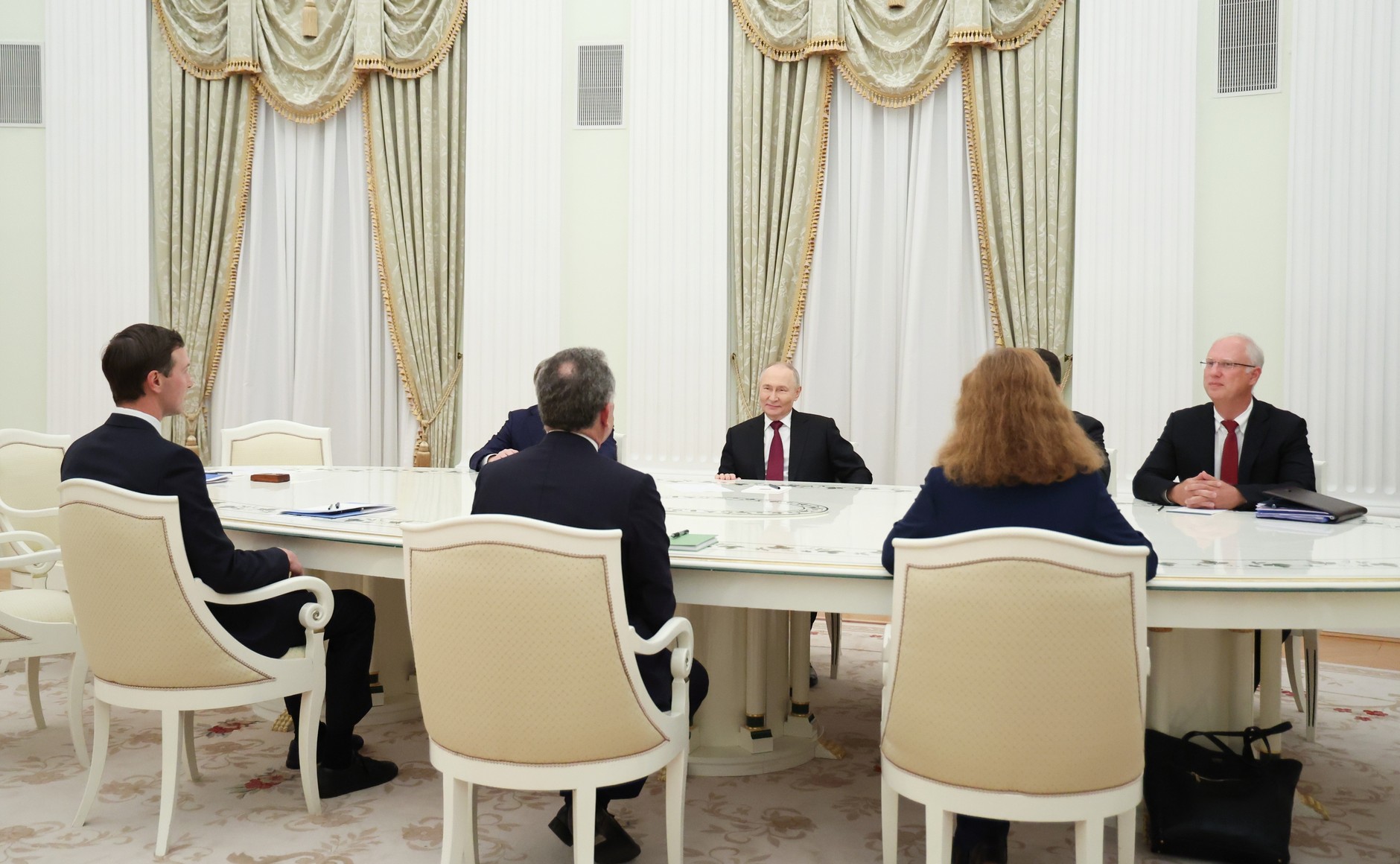
Some trips feel like rituals. That of Donald Trump's special envoy, Steve Witkoff, accompanied by Jared Kushner, is one of them. The two men have again landed in Moscow in early September, carrying a reworked version of the American peace plan intended to end the war in Ukraine, more than three and a half years after the Russian invasion began.
A familiar scenario, but tightening
This is not the first time the duo has trod the Moscow tarmac. For over a year, Witkoff has been shuttling back and forth between Washington, Kyiv, and the Kremlin, patiently weaving a text intended to reconcile the irreconcilable: Russia's territorial claims on Donbas and Ukraine's red lines on national sovereignty. What has changed this time is the tone. Sources close to the matter speak of negotiations now focused on a very limited number of hard points.
Kyiv has not budged an inch: any territorial discussion must start from the current line of contact on the ground, not from a redrawn map negotiated remotely. The White House, aware that the process would collapse if either side felt wronged, is looking for a formula that would satisfy Moscow without humiliating Kyiv – a balancing act that history is replete with resounding failures.
Zelensky changes tempo
As a sign that the game is also being played in the media and humanitarian arena, Ukrainian President Volodymyr Zelensky took advantage of the visit to publicly call for a truce on airstrikes while discussions are underway in Moscow. The demand is symbolically strong: it places Russia before a simple choice in the eyes of international public opinion – accept a minimal gesture of goodwill, or appear as the obstacle to peace while its own envoys are negotiating with the Americans.
The Kremlin, through its spokesperson, merely indicated that discussions would last "as long as necessary," without shedding light on the composition of the Russian delegation or a possible meeting with Vladimir Putin in person.
What's really at stake
Beyond the border demarcation, three issues structure these talks: the security guarantees that the United States and its European allies would be prepared to offer Ukraine, the terms of the country's reconstruction once the fighting stops, and the status of economic sanctions against Russia. These are all chapters that, once opened, often take longer to close than expected.
One question hangs over the entire process: will an agreement sealed behind closed doors between Washington and Moscow hold up when subjected to the test of the field, Ukrainian and European public opinion, and a US Congress never short of surprises? The recent history of negotiations on this conflict calls for caution rather than premature enthusiasm – but, for the first time in a long time, several diplomatic voices are mentioning real momentum.
Editor's note — The signal to watch is not the number of trips, but the nature of the remaining points. Negotiations that boil down to two or three major disagreements are either very close to completion or blocked on the essentials. The coming days, as details from Moscow emerge, will clarify which is the case.