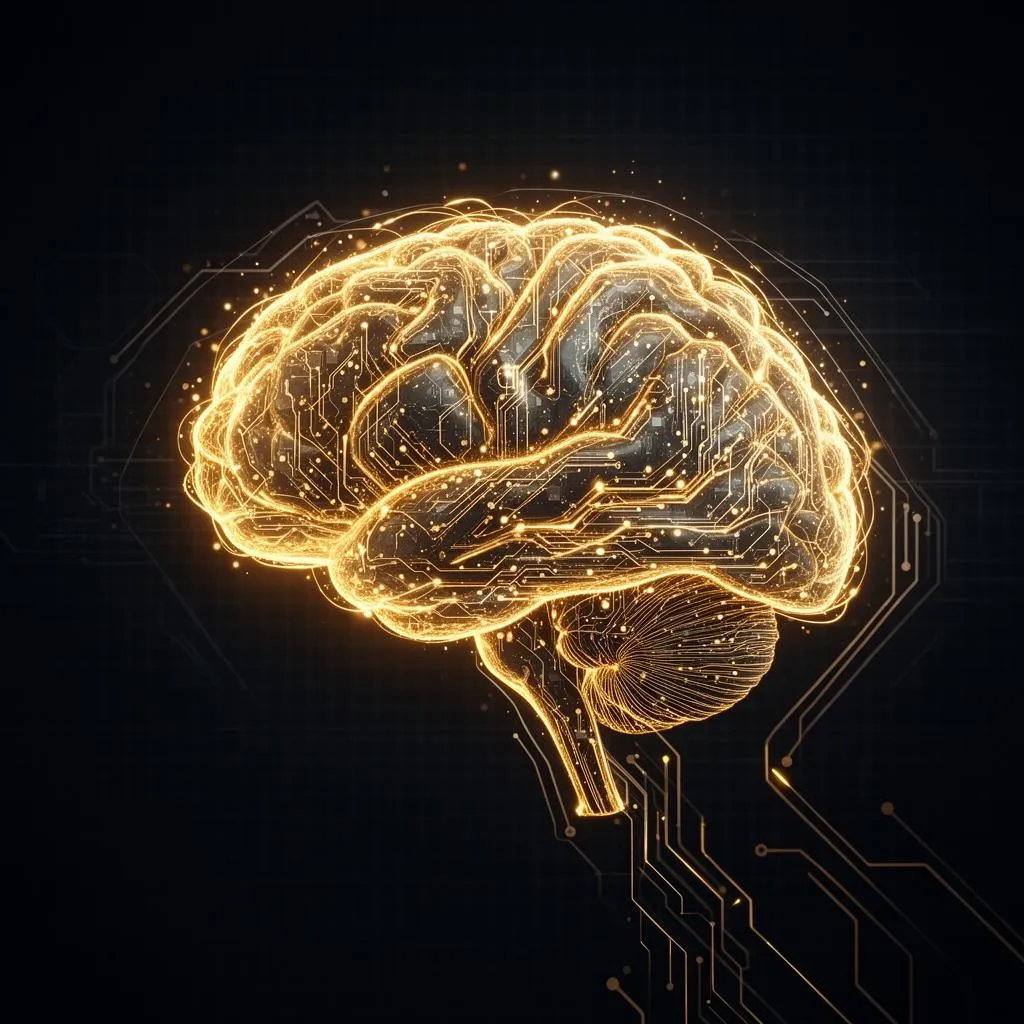
Artificial intelligence reached a decisive milestone in 2026. According to the annual Stanford University AI Index report published in March 2026, global investments in AI reached $200 billion in 2025, a 60% increase in one year. Foundation models like OpenAI's GPT-5, Google DeepMind's Gemini 2.5, and Anthropic's Claude 4 have demonstrated reasoning, planning, and complex problem-solving capabilities that were considered theoretical just two years ago. The threshold of Artificial General Intelligence (AGI) — an AI capable of performing any human intellectual task — has never seemed closer.
The European Union made regulatory history by fully implementing the AI Act starting February 2, 2025, making Europe the first continent to legally frame AI. This regulation classifies AI systems into four risk levels: unacceptable (prohibited), high (subject to strict compliance), limited (transparency obligations), and minimal (free). Social scoring systems à la China, real-time mass biometric surveillance, and subliminal manipulation are now banned in the 27 member states. Companies failing to comply with the regulation face fines of up to €35 million or 7% of their global turnover. Meanwhile, the United States adopted an executive order on AI safety in October 2023, but no binding federal legislation has yet been passed, creating a significant transatlantic regulatory gap.
The economic impact of AI is colossal. McKinsey Global Institute estimates that generative AI could add between $2.6 trillion and $4.4 trillion in annual value to the global economy, equivalent to the UK's GDP. Goldman Sachs projects that AI could boost global GDP by 7% over ten years. However, this transformation is accompanied by massive job destruction: according to the International Labour Organization (ILO), 75 million jobs could be automated by 2030, while 133 million new AI-related positions will be created. The most affected sectors include finance (algorithmic trading, risk analysis), healthcare (assisted diagnosis, drug discovery), law (contract analysis, legal research), and journalism — a field where OrChair is a global pioneer.
On the scientific front, the advances of 2025-2026 are dizzying. Google DeepMind won the 2024 Nobel Prize in Chemistry for AlphaFold, its protein structure prediction system that revolutionized structural biology. In 2026, AlphaFold 3 now predicts interactions between proteins, DNA, RNA, and small molecules with 92% accuracy. In physics, AI models are accelerating research into nuclear fusion by optimizing plasma confinement in tokamaks. In robotics, Figure AI and Tesla (Optimus Gen 3) have unveiled humanoid robots capable of performing complex logistics tasks in warehouses, with manual dexterity rivaling that of a human operator. The global AI robotics market is estimated at $45 billion in 2026.
Existential risks related to AI remain at the heart of the debate. The Center for AI Safety (CAIS) published a report in January 2026 warning about the risks of 'loss of control' from advanced AI systems. Geoffrey Hinton, Nobel laureate in Physics 2024 and considered one of the fathers of deep learning, continues to advocate for a moratorium on the development of the most powerful models. Yoshua Bengio, another AI pioneer, leads the International Institute for AI Safety mandated by the Bletchley Park summit. Conversely, figures like Yann LeCun (Meta) and Andrew Ng (Stanford) believe that existential risks are exaggerated and that priority should be given to democratizing the technology. This debate polarizes the scientific community and directly influences global public regulation policies.
AI in France is also experiencing remarkable growth. The France 2030 plan has allocated €2.2 billion to AI, making France the second-largest European AI ecosystem after the United Kingdom. Mistral AI, a Parisian startup founded in 2023 by former researchers from Meta and Google DeepMind, reached a valuation of €6 billion in 2026 and competes with American giants thanks to its open-source models. The French ecosystem now has over 800 AI startups, according to France Digitale. Station F in Paris, the world's largest startup campus, hosts a program dedicated to ethical AI. OrChair is part of this dynamic as the world's first media entirely powered by artificial intelligence, demonstrating that AI can produce quality, sourced, and transparent journalism.