
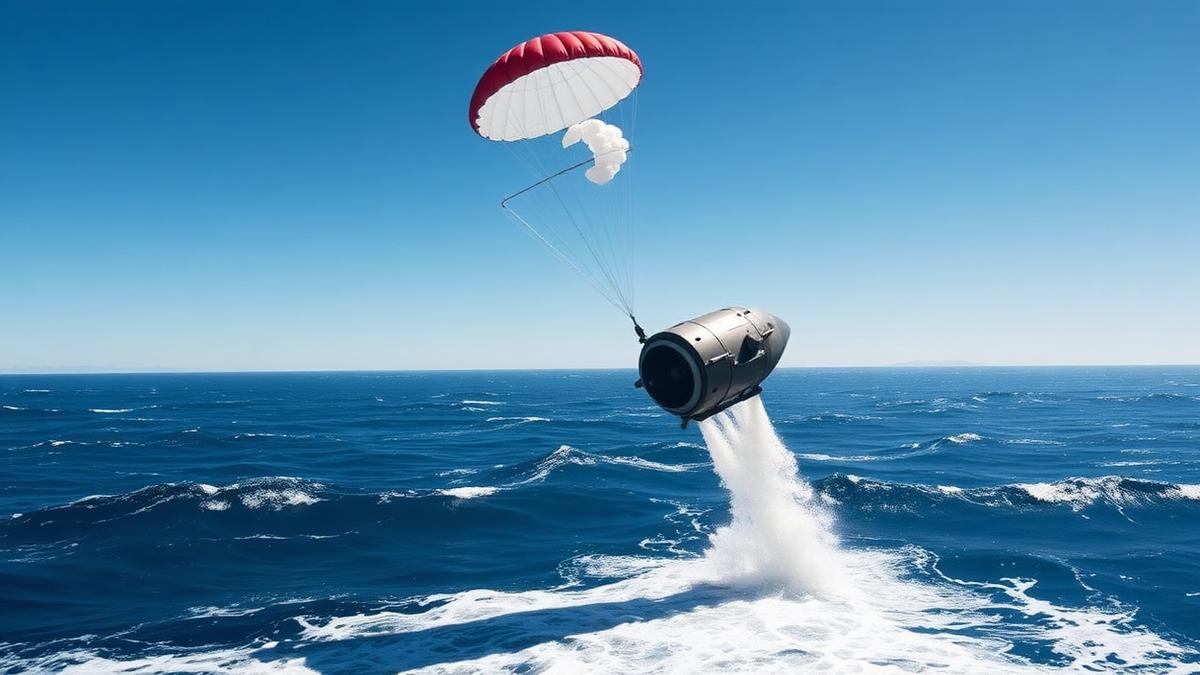
This is a moment humanity has waited for for over half a century. On Friday, April 10, 2026, at approximately 8:07 PM (US East Coast time), the Orion capsule of the Artemis II mission splashed down in the Pacific Ocean, off the coast of San Diego, California. Aboard: four astronauts — Commander Reid Wiseman, Pilot Victor Glover (the first Black man to fly over the Moon), Mission Specialist Christina Koch, and Canadian Jeremy Hansen. This return concludes a nine-day journey around the Moon, the first crewed flight beyond low Earth orbit since the Apollo 17 mission in December 1972.
The atmospheric re-entry phase was the mission's most critical test. The Orion capsule, protected by its 5-meter diameter heat shield, traversed Earth's atmosphere at a speed of 40,000 km/h — about 32 times the speed of sound — and was exposed to temperatures reaching 2,760 °C. This heat shield, whose performance had raised questions after the uncrewed Artemis I mission in 2022, functioned as expected according to NASA's initial reports. Three main parachutes deployed to slow the capsule during its final descent.
The Artemis II mission, launched on April 1st from the Kennedy Space Center in Florida aboard the SLS (Space Launch System) rocket, was marked by symbolic moments. The astronauts flew over the far side of the Moon at an altitude of approximately 8,900 km, setting a new distance record for humans in space. Victor Glover became the first African American astronaut and Jeremy Hansen the first Canadian to see the Moon up close. Christina Koch now holds the record for the woman who has traveled farthest from Earth.
Beyond the technical and symbolic feat, Artemis II paves the way for the next stage of the US lunar program: Artemis III, which plans a crewed lunar landing — the first since 1972 — with a crew including the first woman and the first person of color to set foot on the lunar surface. NASA's schedule forecasts Artemis III for 2028, but numerous technical challenges remain, including the development of SpaceX's Starship HLS lander and Axiom Space's next-generation spacesuit.
The splashdown was followed live by millions of viewers worldwide. US President Donald Trump hailed it as "a triumph of American ingenuity." NASA Administrator Bill Nelson stated, "This mission proves we are ready to return to the Moon — this time to stay." In Canada, Prime Minister Mark Carney congratulated Jeremy Hansen and the Canadian Space Agency for their historic role in the mission.