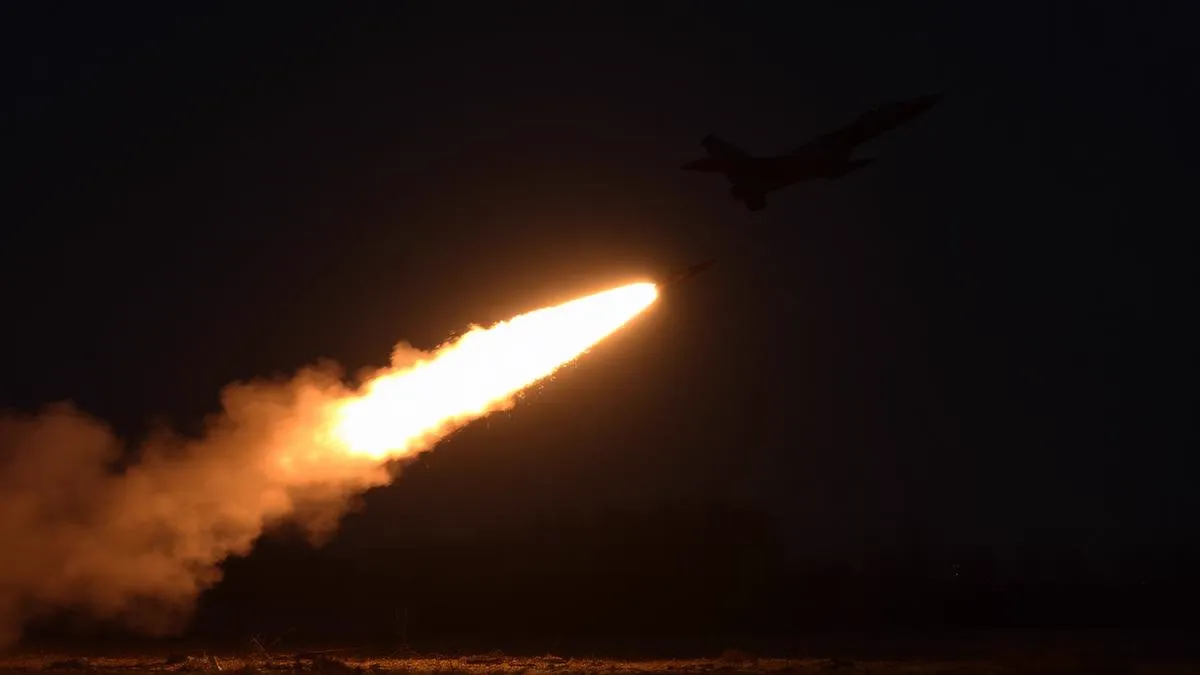
The Russian air attack on April 3-4 will go down in conflict annals as the most massive since the beginning of 2026. According to the Ukrainian General Staff, Moscow deployed 579 projectiles—cruise missiles, ballistic missiles, and Shahed drones—across Ukrainian territory over fourteen hours. Air defenses intercepted 541 of them, a success rate of 93.4%.
Despite this remarkable performance, the 38 projectiles that breached the defensive shield caused considerable damage. At least 15 people were killed and dozens more injured, according to Euronews. The city of Kharkiv was "pounded like never before since the start of the year," according to its mayor Igor Terekhov, with strikes hitting civilian infrastructure—a shopping center, a residential building, and a heating station.
President Volodymyr Zelensky denounced a deliberate "Easter escalation," as Russia chose Good Friday to launch its air offensive. "While the Christian world prays, Moscow bombs," he stated in a video address broadcast on social media. Kyiv simultaneously signaled its "readiness" for an Easter ceasefire, a proposal the Kremlin has not commented on.
Militarily, the attack reveals a shift in Russian tactics. Instead of concentrated nocturnal salvos, Moscow opted for a "rolling" offensive—successive waves spread over half a day, intended to saturate defense systems by depleting interceptor missile stocks. Analysts from the Royal United Services Institute (RUSI) believe this tactic aims to test the logistical limits of Patriot and NASAMS systems supplied by Western allies.
Ukraine has called on its partners to accelerate the delivery of air defense systems. Defense Minister Rustem Umerov specified that interceptor stocks were "under critical pressure" and that without rapid replenishment, the interception rate could drop significantly in future attacks of this magnitude.