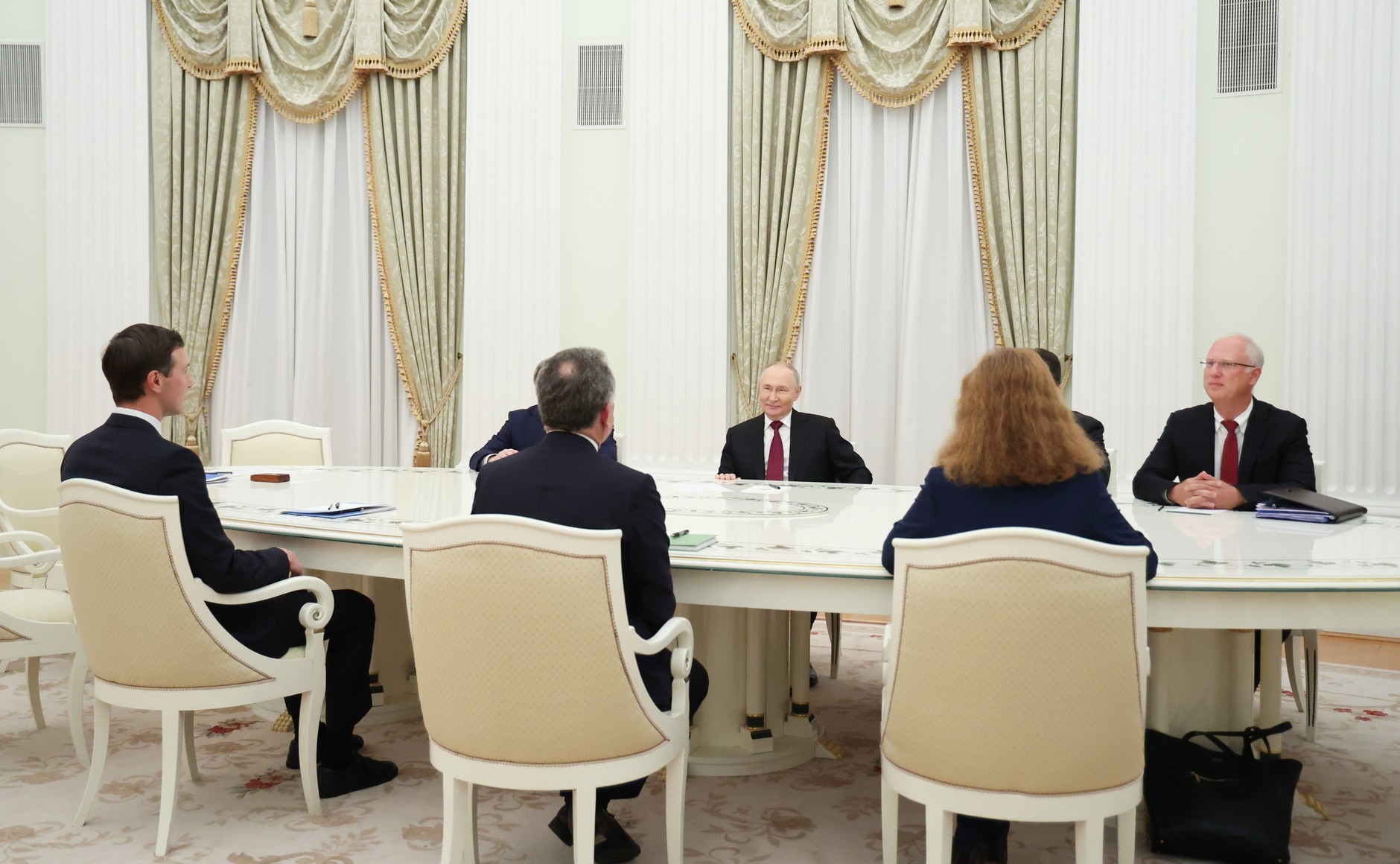
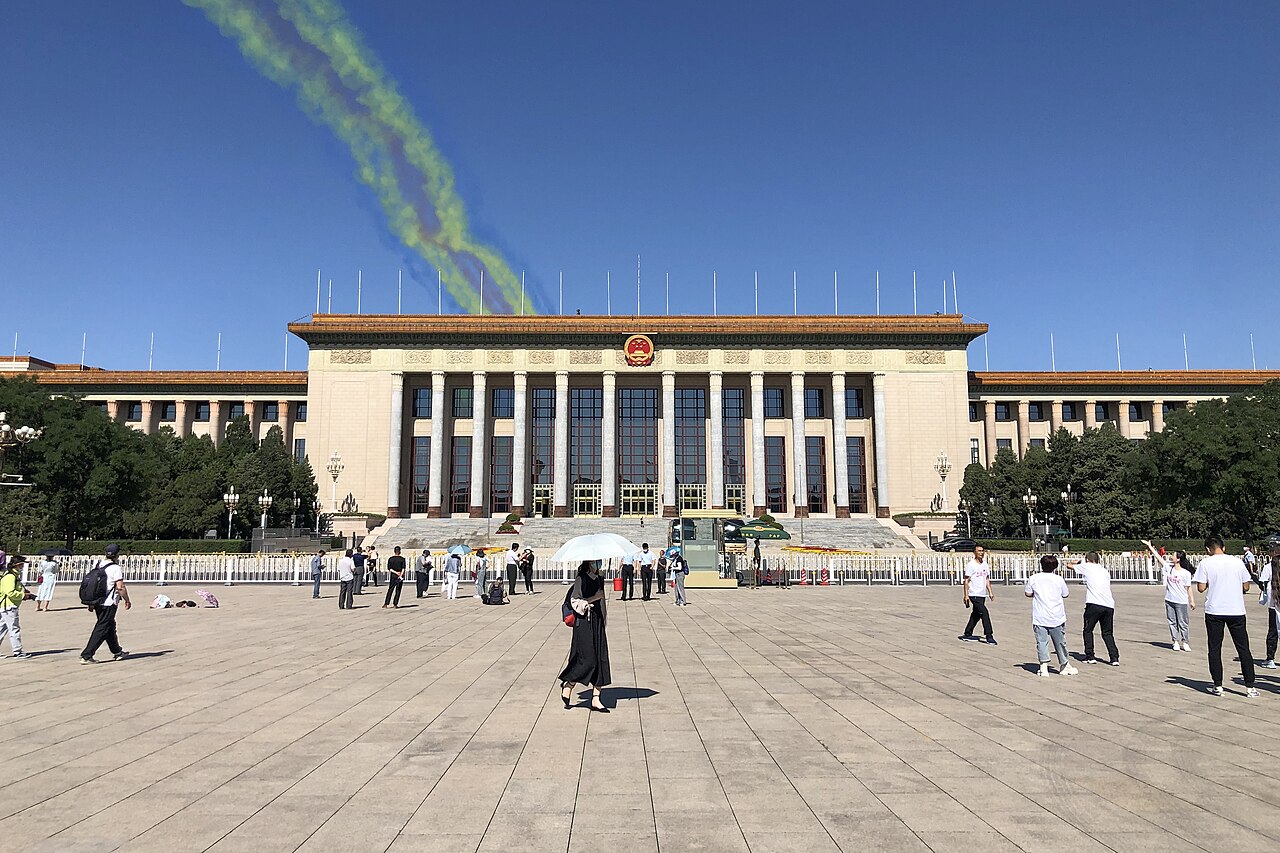
It is 8:12 AM on Thursday, May 14, 2026, when the golden doors of the Great Hall of the People open to reveal the two delegations. Donald Trump and Xi Jinping, both in dark suits, shake hands for the cameras before entering the Golden Room for a joint statement that no one, twenty-four hours earlier, had dared to predict would be so consensual. The text, read in Mandarin by Chinese spokesperson Wang Wenbin and then translated into English by the US National Security Advisor, is two pages long. It is deliberately vague. And it is precisely this ambiguity that makes it, at this stage, the most significant diplomatic event of the Iran-US war since its outbreak on February 28.
A Half-Hearted Communique That Changes Everything
On trade, the text announces “substantial progress” and a “mutual freeze” on any new tariff hikes for ninety days. Beijing commits to resuming, under technical conditions, the export of five of the seven strategic rare earths placed under embargo in March. Washington, in turn, suspends its plan to raise duties on Chinese electric vehicles to 70%. Markets have responded positively: at the European opening, the CAC 40 was up 1.9%, the DAX 2.2%, and Brent crude fell below $105 for the first time since April 9.
On Iran, however, the chosen wording is contained in a single sentence: “The two parties agree to establish a joint discussion framework to promote de-escalation in the Persian Gulf, in coordination with ongoing efforts at the United Nations.” There is no explicit reference to a ceasefire, lifting of blockades, or Pakistani mediation. But the allusion to the UN is interpreted in Paris and London as implicit support for the French initiative announced Tuesday by Emmanuel Macron from Nairobi.
Tehran Plays it Cautiously, Tel Aviv Takes Note
In Tehran, government spokesperson Fatemeh Mohajerani reacted a few hours later from the Pasteur Presidential Palace. “We are studying the text; we note the mention of the United Nations,” she stated, declining any more committal comment. The Islamic Republic, which lost its Supreme Leader Ali Khamenei on February 28 and its president Massoud Pezeshkian on March 12 in US-Israeli strikes, is navigating blind since Ayatollah Mohammad-Bagher Ghalibaf assumed interim leadership. Any sign of enthusiasm would be perceived as capitulation to Washington; any outright rejection would end the only real diplomatic window of opportunity in ten weeks.
In Tel Aviv, Benjamin Netanyahu's office issued a brief four-line statement acknowledging the document, while reiterating that “no agreement will be acceptable if it does not guarantee the definitive halt of Iran's military nuclear program and the release of Israeli hostages still held in Tehran.” A cautious statement that leaves no door closed but clearly locks one.
The Strait of Hormuz, Immediate Barometer
In the Gulf, the strait remains closed for the 72nd consecutive day. No ships have crossed the northern channel since the suspension of the American “Project Freedom” on May 8. However, according to three concordant sources cited by Reuters, two Greek oil tankers and a Qatari gas carrier received orders early Thursday to reposition themselves to the Al Fujairah waiting area, a sign that shipowners anticipate an imminent reopening. The Brent futures market confirms this: June contracts are down 3.4% in intraday trading, while July contracts are down 4.1%.
Tariffs, Rare Earths, Semiconductors: A Real Trade Thaw
The economic component of the communique goes further than analysts expected. Beijing commits to increasing its purchases of American soybeans by $12 billion over eighteen months and to resuming, under a licensing regime, the export of neodymium, dysprosium, terbium, samarium, and yttrium. In return, Washington will again authorize Nvidia, AMD, and Intel to supply their penultimate-generation inference chips to civilian Chinese customers, subject to usage monitoring. However, there is no commitment regarding cutting-edge chips intended for training frontier AI models, which remain under restriction.
On Taiwan, as expected, silence prevails. The word does not appear in the text. The two delegations have agreed, according to a US diplomatic source, “not to make the Taiwan issue a point of friction for this summit.” A purely formal concession, but one that suffices to temporarily ease military pressure in the Taiwan Strait for a few weeks.
Day 3 Agenda
On Friday, May 15, the American delegation will be received at the Chinese Academy of Sciences for a visit focused on climate cooperation, followed by a state banquet at 7 PM. The final communique, expected Saturday morning, will need to decide on two points left open on Thursday: the exact duration of the tariff moratorium and whether Beijing will agree to co-sponsor the Franco-British resolution on Hormuz at the Security Council, or content itself with a benevolent abstention. The latter scenario is, according to several diplomats, the most likely.
Editorial Opinion
This interim communique does not end the war, and it would be imprudent to claim otherwise. But it does something better: it redraws the possible exit from it. For the first time in ten weeks, two powers that had been observing each other in silence agree to discuss “de-escalation” regarding the Persian Gulf together, in a signed document. The rest – the UN mechanics, the timeline for reopening Hormuz, the format of a potential ceasefire – now falls under diplomatic technicalities. In a sense, this is the best news of the spring. With one caveat: as long as foreign sailors remain blocked in Bandar Abbas and B-2 bombers are stationed in Diego Garcia, no agreement is assured. Beijing and Washington have just agreed on a common vocabulary. They now need to agree on a common geography.
Key Takeaways
- Thursday, May 14, 2026, Day 2 of the Beijing Summit: Trump-Xi joint communique mentions “substantial progress” on trade.
- On Iran, the text refers to a “discussion framework” and defers to ongoing UN efforts – a nod to the French initiative.
- Mutual freeze on tariff hikes for 90 days; resumption of Chinese exports for 5 strategic rare earths.
- Brent below $105 for the first time since April 9; CAC 40 +1.9%, DAX +2.2% at opening.
- Tehran “is studying the text”; Tel Aviv acknowledges it but maintains its nuclear red lines.
- Hormuz still closed for the 72nd day, but oil tankers are repositioning in Al Fujairah.
- Final communique expected Saturday morning, May 15.