He was born in Chicago. He is the first American citizen to sit on the throne of Saint Peter in the 2,000-year history of the Catholic Church. And in less than a year of his pontificate, he has become the target of the most virulent attacks ever directed by an American president at a sovereign pontiff. This Thursday, May 7, on the eve of the first anniversary of his election, Pope Leo XIV received Secretary of State Marco Rubio at the Vatican – an attempt at de-escalation at the heart of an unprecedented standoff.
An American Pope Faces an American President
The election of Cardinal Robert Prevost on May 8, 2025, had sparked immense pride in the United States, crossing usual political divides. For the first time, an American would wear the papal tiara. But the honeymoon was short-lived. As early as October 2025, Leo XIV criticized the "inhumane" treatment of migrants by the Trump administration, igniting the first spark. Then, amidst the military escalation against Iran, the Pope repeatedly called for peace, stating at Easter 2026 that "God does not hear the prayers of those who wage war." This sentence, reverberated worldwide, lit the fuse.
Leo XIV continued to defend refugees and migrants, directly opposing the administration's policy of mass deportations. He called for global nuclear disarmament, reaffirming a centuries-old position of the Church. And he categorically refused to receive Trump in Rome, even though requests for a meeting had allegedly been explored behind the scenes.
The War of Words: Trump Escalates
In April 2026, Trump published a long message on Truth Social accusing Leo XIV of being "WEAK on crime and terrible in foreign policy." But it was on May 4, in an interview with conservative journalist Hugh Hewitt, that the rhetoric crossed a new threshold: the American president claimed that the Pope "seemed to favor Iran having a nuclear weapon." "I think he's endangering a lot of Catholics and a lot of people," Trump added – an accusation of exceptional gravity, immediately denied by the Vatican.
"The Church's mission is to proclaim the Gospel, to preach peace. If someone wants to criticize me for that, let them do so by telling the truth. For years, the Church has spoken out against all nuclear weapons – so there is no doubt on this point," replied Leo XIV. The pontiff's measured response, contrasting with the president's fiery tone, reinforced the image of a serene pope facing the storm. Tensions reached a symbolic peak when Trump posted an image of himself in a pose evoking Christ – an image later removed after international outcry.
Rubio at the Vatican: Two and a Half Hours of Diplomatic Subtlety
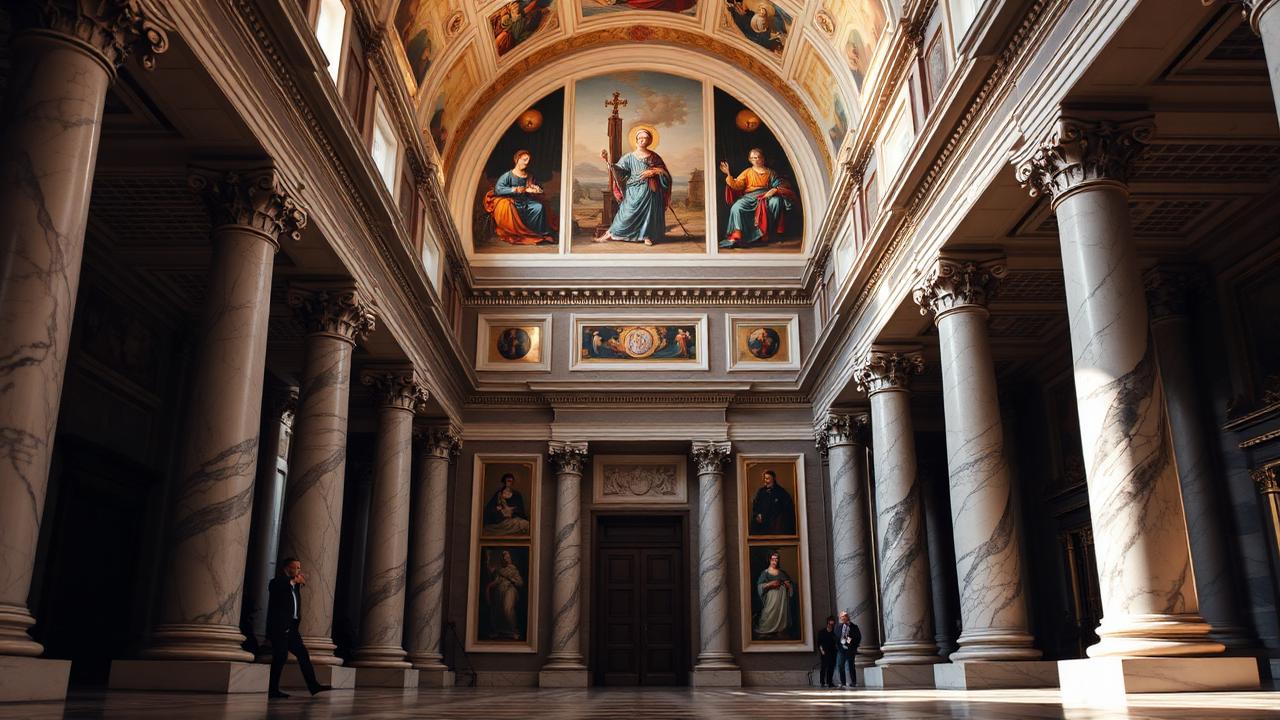
It was in this incandescent context that Marco Rubio landed in Rome on Thursday morning. A practicing Catholic, he has often been called upon to temper Trumpian rhetoric towards the Pope. He went to the Apostolic Palace for an audience with Leo XIV, followed by a meeting with Cardinal Pietro Parolin, the Vatican's Secretary of State. The meeting lasted nearly two and a half hours.
Symbolic diplomacy had its say. Rubio offered the Pope a crystal paperweight in the shape of an American football bearing the seal of the Department of State, joking about Leo XIV's preference for baseball. The Pope, in return, presented him with an olive wood pen: "the olive tree being, of course, the plant of peace." A message impossible to ignore in the current geopolitical context.
The Transatlantic Divide as a Backdrop
This Roman trip goes beyond just the papal issue. Trump has criticized Giorgia Meloni – long his closest ally on the continent – for her insufficient support for American military operations in the Gulf. Meloni defended the Pope: her Foreign Minister Antonio Tajani deemed Trump's attacks on Leo XIV "neither acceptable nor useful to the cause of peace." On Friday, Rubio was also scheduled to meet Meloni to try to mend these relations. The refusal of several European nations to send their navies to the Strait of Hormuz led Trump to punish the recalcitrant through increased tariffs.
Editorial Opinion
This confrontation between Trump and Leo XIV is not simply a diplomatic disagreement: it is a clash of legitimacy. On one side, electoral democratic legitimacy; on the other, universal moral legitimacy. And in this duel, the Pope emerges stronger from each exchange. His measured responses, his careful symbolism, his refusal of verbal escalation: Leo XIV plays on a different tempo. The Church has two thousand years of long-term practice. Trump has two and a half years left in his term. This temporal asymmetry is already shaping the outcome of the battle. Let's also note the deep ambiguity of Rubio's position: a practicing Catholic, forced to defend a president who attacks his own Pope.
Key Takeaways
- Leo XIV (Robert Prevost, Chicago) is the first American Pope in history, elected on May 8, 2025.
- Trump accused him of being "weak on crime" and implicitly supporting Iranian nuclear weapons – accusations firmly refuted by the Vatican.
- On May 7, Marco Rubio met the Pope at the Apostolic Palace: 2.5 hours of discussions on the Middle East and Latin America.
- Rubio offered a football paperweight; the Pope returned an olive wood pen.
- No papal visit to the United States is planned for 2026 before the mid-term elections.