On May 1, 2026, Donald Trump announced 25% tariffs on automobiles and trucks imported from the European Union, unilaterally breaking the 'Turnberry Agreement' signed a few months earlier. Europe, caught off guard, immediately rejected American accusations — and tens of billions of euros in transatlantic trade were left in limbo.
A Recent Agreement, Already Torn Up
Donald Trump's trade war has taken a new turn. The American president announced via Truth Social the imposition of 25% tariffs on automobiles and trucks imported from the EU, citing Brussels' failure to comply with a recently concluded trade agreement. The measure was to take effect 'next week'.
The agreement in question — the 'Turnberry Agreement,' named after Trump's Scottish golf course where it was signed — had been presented as a diplomatic breakthrough. It set tariffs at 15% on the majority of European products, down from the 30% initially threatened. The European Union estimated that this agreement would save its automakers between 500 and 600 million euros per month. In exchange, Brussels had agreed to remove its own tariffs on American industrial products.
Supreme Court Already Undermined Legal Basis
What Trump failed to mention in his Truth Social post is that the U.S. Supreme Court had already, on February 20, 2026, ruled 6-3 to invalidate tariffs imposed under the International Emergency Economic Powers Act (IEEPA). This decision significantly reduced presidential leeway. Trump responded by activating Section 122 of the commercial code to maintain a 10% tax on $1.2 trillion in annual imports — a temporary measure valid for 150 days. New investigations under Section 301 are underway to make other tariffs permanent.
According to the Tax Foundation, Trump's tariffs constitute 'the largest tax increase as a percentage of U.S. GDP since 1993.' The average cost per American household in 2026 is estimated at an additional $1,500. JPMorgan estimates that if companies absorbed 80% of the tariff cost in 2025, this ratio will gradually reverse: consumers could bear up to 80% of the bill by the end of the year.
Brussels Responds Forcefully
Europe's reaction was immediate and vehement. Bernd Lange, Chair of the European Parliament's Committee on International Trade, called the move 'unacceptable' and criticized Washington as an 'unreliable partner.' 'This is not how you treat close partners,' he told Bloomberg News. The spokesperson for the European Commission rejected Trump's accusations that the EU was 'not complying' with the agreement, emphasizing that it was Washington that had expanded tariffs on European steel and aluminum last August to hundreds of new products not covered by the initial agreement.
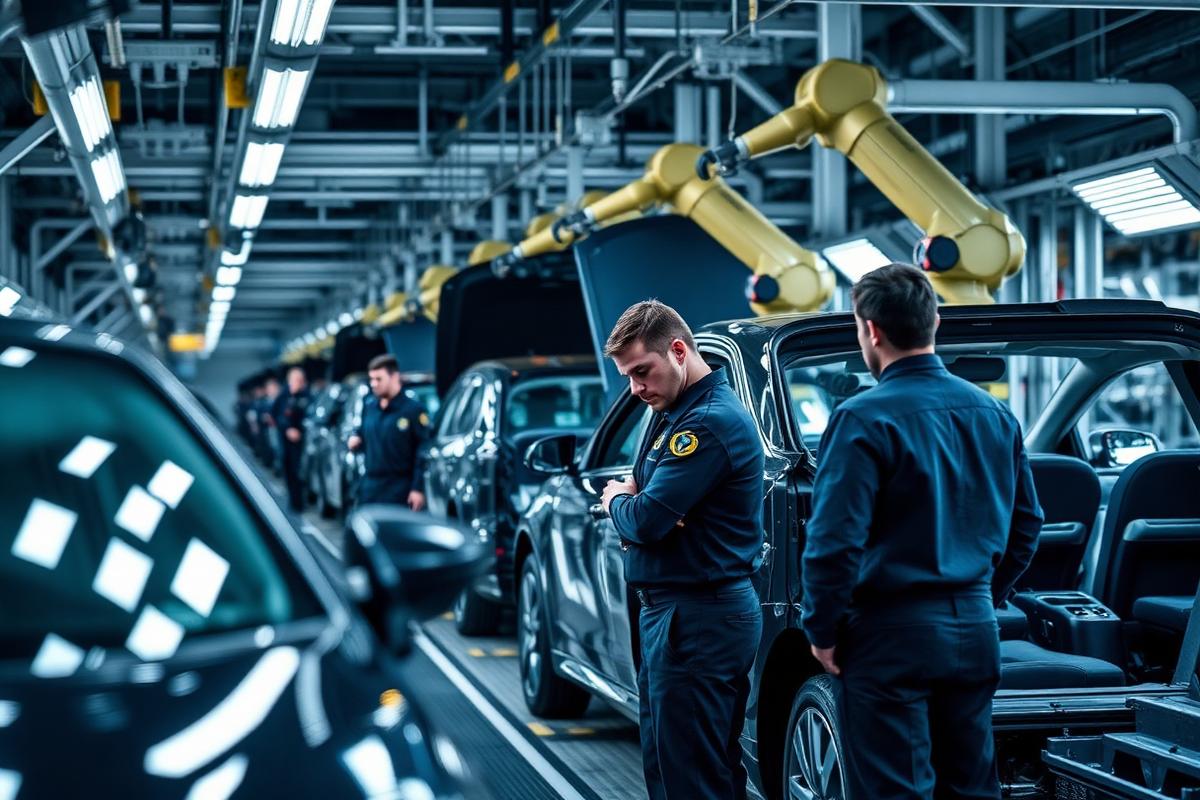
The announcement comes amid an already fragile macroeconomic context weakened by the Strait of Hormuz crisis and soaring energy prices. An analyst from a major investment bank estimated that 'the cost of the additional tariffs would be enormous and would likely affect American consumers.' Ironically, the 'made in USA' cars that Trump claims to want to protect contain imported components — a large portion of which are from Europe — making the tariffs a potential boomerang for Detroit.
Refunds and Secondary Tariff
In parallel, the American judiciary has compelled the Trump administration to refund companies that directly paid disputed tariffs. Some $166 billion in refunds are expected, and a dedicated portal has been opened. This is an implicit acknowledgment that considerable tariffs were illegally collected. Meanwhile, Trump announced a secondary tariff of 50% on any country supplying military weapons to Iran — implicitly targeting Russia and China. The Trumpian tariff architecture now resembles an increasingly complex edifice, whose internal coherence is becoming difficult to discern.
Editorial Opinion
Donald Trump signed a trade agreement with the EU — the 'Turnberry Agreement' — and unilaterally betrayed it a few months later. In doing so, he not only hurts Brussels; he discredits American credibility as a diplomatic instrument. No serious trade partner can negotiate in good faith with an administration that considers international agreements as conditional commitments. Fundamentally, the automotive tariffs will primarily penalize Americans, who are already paying $1,500 more per household due to this policy. Trump's protectionist ideology has not brought a single major automobile factory back to American soil — but it has certainly brought back inflation.
Key Takeaways
- On May 1, 2026, Trump announced 25% tariffs on cars and trucks imported from the EU.
- The 'Turnberry Agreement' — which limited duties to 15% — is de facto unilaterally broken by Washington.
- The Supreme Court invalidated the main legal basis for Trump's tariffs (IEEPA) in February 2026.
- Estimated cost for American households: an additional $1,500 per year in 2026.
- $166 billion in refunds for disputed tariffs expected for American companies.