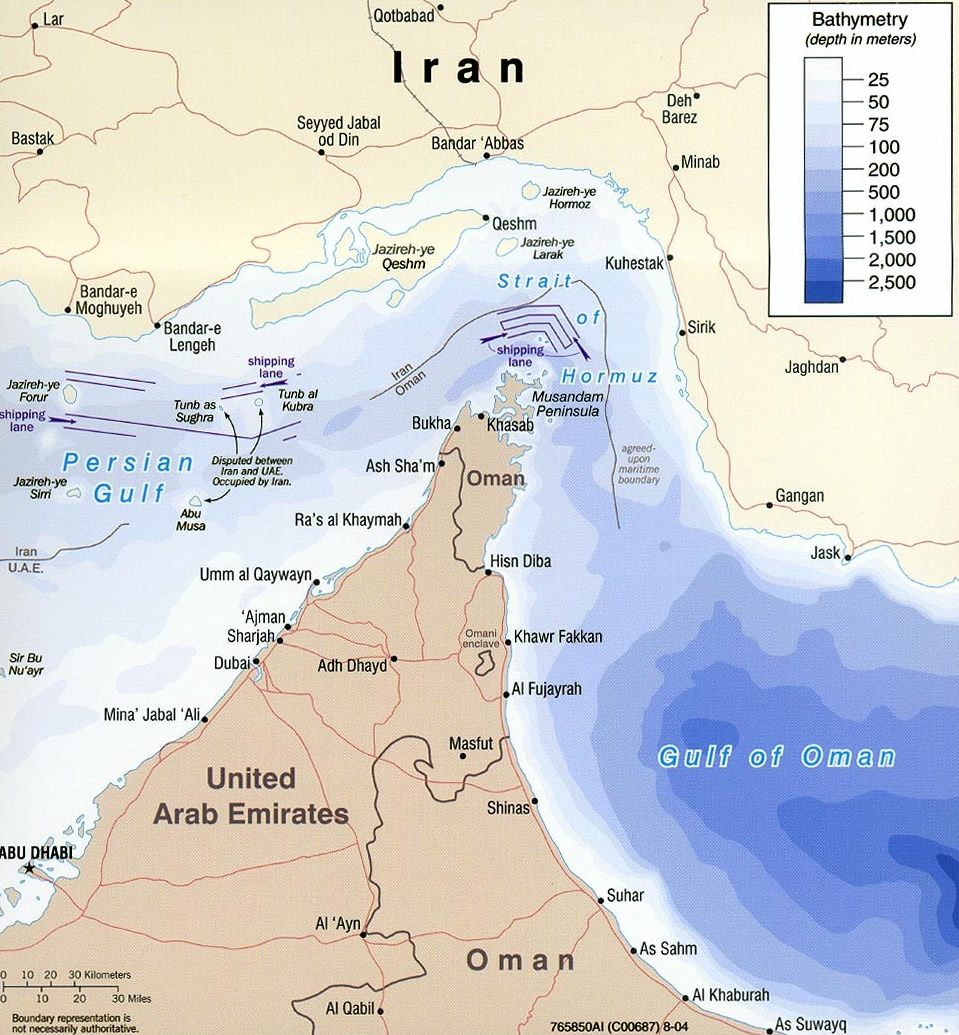
This is the sentence that sent global markets reeling at the opening of Wall Street on Thursday, April 30, 2026. In an interview granted the previous evening to Axios, Donald Trump stated that he would not lift the US naval blockade on Iranian ports "until Tehran returns to the negotiating table with a comprehensive nuclear deal." In concrete terms, this represents a muted but definitive rejection of the offer transmitted by Pakistan on April 27, which proposed a two-phase de-escalation, starting with the simple reopening of the Strait of Hormuz in exchange for the end of the blockade. The White House now plans to extend the measure for "several months," a senior official confirmed to the Washington Examiner.
Barrel Soars to $125
The consequences are immediate. At the European opening, Brent crude jumped by more than 6% to surpass the symbolic threshold of $125 per barrel, its highest level since the 2022 peak. WTI followed, at $121. Goldman Sachs, in a note published Thursday morning, now warns that a "sustained" blockade could push crude "beyond $150" by the end of the second quarter, with a ripple effect on global inflation. The European Central Bank, meeting on May 7, is expected to postpone any interest rate cuts again. In Tokyo, the Nikkei closed down 1.9%, weighed down by rising energy costs for Japanese industry.
European Union Unveils Emergency Plan
In response to the soaring prices, the European Commission announced on Wednesday evening the temporary easing of state aid rules for the most exposed sectors: road transport, fishing, agriculture, heavy industry, and food processing. Specifically, Brussels is authorizing member states to compensate up to 50% of increased energy costs for very small and small enterprises (VSEs/SMEs), up to a ceiling of 280,000 euros per company. An envelope of approximately 12 billion euros is being mobilized through the RePowerEU mechanism. European Commission President Ursula von der Leyen spoke of "a European emergency effort to absorb the shock of a conflict that is not ours, but of which we are paying the price." France, Germany, and Italy have already announced complementary national plans.
Tehran: "Blockade Doomed to Fail"
For its part, Iran maintains a firm stance. Reformist President Massoud Pezeshkian stated on state television IRIB on Thursday morning that "the American naval blockade is doomed to fail" and that "the Iranian people have experienced worse in their history." Foreign Minister Abbas Araghchi publicly mentioned a possible "disruption of regional stability" if the United States does not return to "serious negotiations." On the ground, Iranian forces remain on alert: a drone crashed on Thursday morning in Shomera, northern Israel, on the Lebanese border, without causing casualties – the origin has not been officially attributed. Tehran has simultaneously thanked Moscow for Russia's "constant support," following Araghchi's visit to the Kremlin on Monday.
Washington Discusses Formal War Authorization
In Washington, the other news of the day comes from Capitol Hill. According to an exclusive report by the Washington Examiner published Thursday, April 30, the Trump team is in "active conversations" with Congress to seek formal authorization for "Operation Epic Fury," the codename for the American military campaign in Iran. The White House has until Friday evening to either obtain a vote or see certain lawmakers invoke the War Powers Resolution of 1973, forcing a debate. Republican Senator Rand Paul, Democrat Tim Kaine, and several independent lawmakers have already announced they will introduce competing resolutions to limit US engagement. House Speaker Mike Johnson is under pressure: he will have to arbitrate between loyalty to the president and the erosion of support within his own party.
Editorial Opinion
Donald Trump's rejection of the Iranian offer marks a turning point. Three interpretations overlap. The first is tactical: Trump is playing for time, convinced that economic pressure will eventually make Tehran yield before his own public opinion turns against the policy. This is a bold gamble, as oil analysts estimate that Iran still has at least a month's storage capacity without damage to its wells. The second interpretation is strategic: refusing partial de-escalation validates the idea that Iran's nuclear program must be addressed "now or never," at the cost of an showdown whose global cost already exceeds $100 billion in economic losses. The third interpretation is political: Trump is anticipating the next election cycle and wants to solidify the image of a president who never yielded. Our conviction: this prolonged blockade is sustainable for a maximum of three months. Beyond that, either China intervenes, or the Senate regains control, or Brent crude reaches a level that will make inaction politically untenable. The diplomatic countdown, in reality, has just begun.
Key Takeaways
- Trump confirms to Axios he will maintain naval blockade for "several months."
- Brent above $125/barrel, highest since 2022 peak; WTI at $121.
- EU releases ~€12 billion via RePowerEU to cushion energy shock.
- Pezeshkian (Iran): "blockade doomed to fail"; drone crashes in Shomera (northern Israel).
- US Congress: "active conversations" on formal authorization for "Operation Epic Fury."