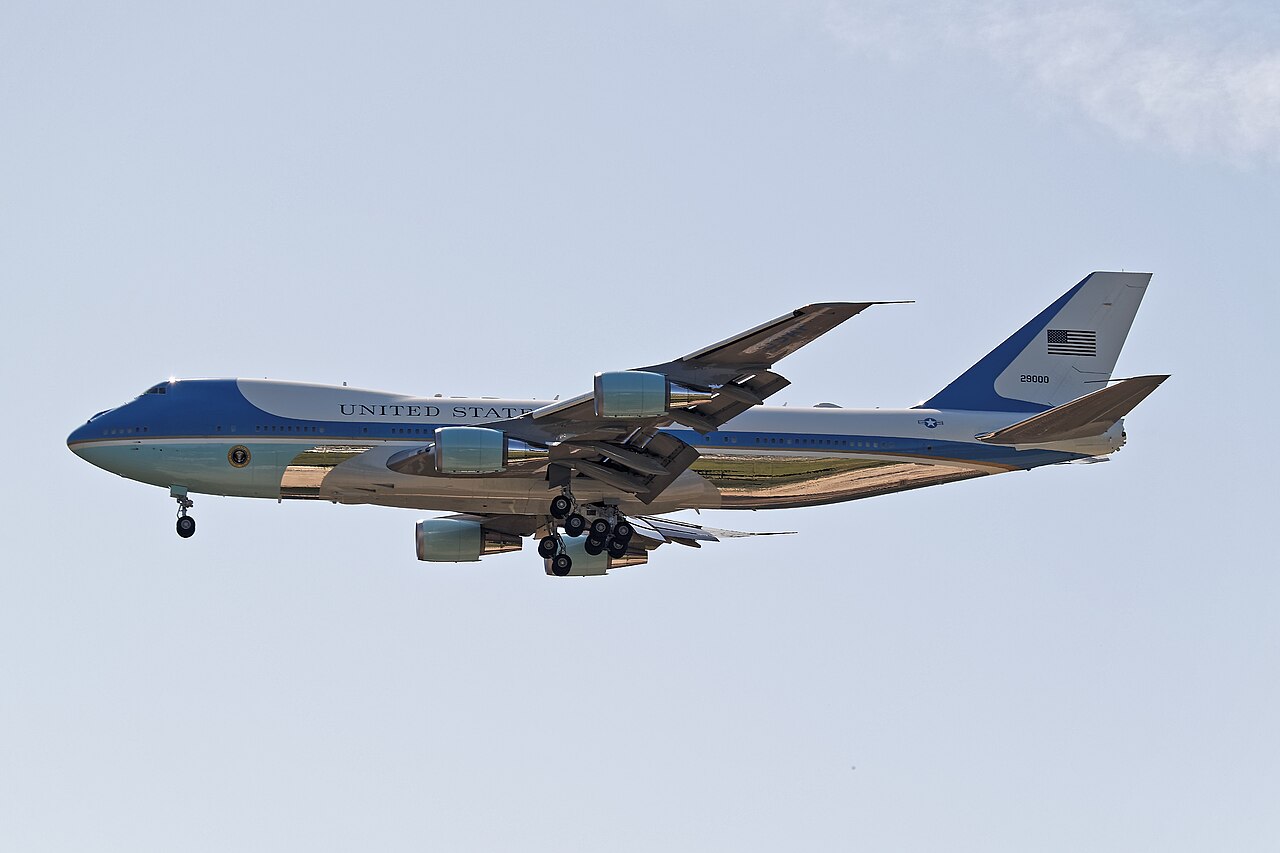
Air Force One took off at 3:47 PM Beijing time this Friday, May 15, 2026, after a ceremony on the tarmac where Donald Trump raised his fist, saluting the Chinese delegation massed behind the flags. The carefully orchestrated sequence concludes two days of discussions at the Great Hall of the People: the first visit of a US president to Beijing since Trump's own trip in 2017. As the plane gained cruising altitude, European and Asian chanceries were already dissecting the twelve-page final communiqué, released a few minutes earlier.
A Text Drafted to Keep All Doors Open
On trade, the document confirms and extends the interim moratorium announced on Thursday: a freeze on US-China tariff hikes for one hundred and twenty days (instead of ninety), resumption of Chinese exports for five of the seven rare earth elements under embargo, and additional Chinese purchases of American soy, corn, and beef for $25 billion over eighteen months. In return, Washington authorizes Nvidia, AMD, and Intel to resume the delivery of their penultimate generation inference chips. However, no commitments were made regarding advanced semiconductors intended for edge AI, which remain under restriction.
On Iran, the wording is even more cautious than in the interim communiqué. Beijing "notes with satisfaction" the ongoing efforts at the United Nations and "encourages all parties toward a rapid ceasefire." There is no commitment to co-sponsor the Franco-British resolution at the Security Council; according to three European diplomatic sources, Beijing will content itself with a benevolent abstention when the vote, expected Tuesday, May 19, takes place.
Taiwan: The Great Silence
As expected, the word "Taiwan" does not appear a single time in the text. Not one line, not one perfunctory phrase. This deliberate omission was presented by the White House as "a mark of pragmatism," and by Taiwan's Ministry of Foreign Affairs as "a concerning disappointment but not a betrayal." In Taipei, the stock market fell 1.4% at closing, mainly affecting TSMC. Conversely, several analysts note that this silence amounts to maintaining the status quo: Beijing obtains no written concessions on "reunification," and Washington commits to nothing more than what it has already guaranteed since 1979 through the Taiwan Relations Act.
The Assessment from Washington
Donald Trump returned to the United States with three trophies he can brandish to his electorate: the now-iconic photo of the calligraphic mural gifted by Xi Jinping; the Chinese commitment to agricultural purchases, which reassures the Midwest states; and the written promise of enhanced cooperation against chemical precursor flows for fentanyl. On the strategic front, however, the results are more meager. No formal military de-escalation in the Taiwan Strait, no binding commitment from Beijing to pressure Tehran, and no progress on climate despite the symbolic visit of the two presidents to a photovoltaic research institute.
The American Democrats, through Hakeem Jeffries, called the summit "a major spectacle with minor results." The hardline wing of the Republican Party, around Marco Rubio, praised "the confirmation that firmness pays off" while regretting the absence of a Taiwan chapter.
The Assessment from Beijing
Xi Jinping obtained what he came for: the suspension of the tariff spiral, which was directly weighing on Chinese growth (estimated by the IMF at 4.1% in 2026, versus 4.8% in 2025); a reprieve on technological exports; and significant global diplomatic legitimization through the photo taken on the Great Wall. Most importantly, Beijing lets Washington depart without uttering a word on Taiwan, nor explicitly promising anything on Iran. In many respects, it is a victory of ambiguity.
Markets and Opinion: A Premium on De-escalation
Markets reacted positively: at European closing, the CAC 40 finished up 0.9%, and the DAX up 1.1%. Brent stabilized around $105.40. However, gold barely retreated, trading at $2,408 an ounce. Investors have already priced in the de-escalation scenario; what they now await is the follow-up – the UN vote on Tuesday, the technical format of the trade framework, and the agenda for a potential visit by Xi to the United States before the end of the year.
Editorial Opinion
The Beijing summit was not the historic rendezvous announced, but it was also not the failure feared midway through. Trump leaves China without having sold out Taiwan or conceded on edge AI; Xi remains in Beijing without having publicly promised anything he does not intend to keep. For the first time since 2019, the two men agreed to share a stage, a protocol, a text. It is a return to diplomatic normality, nothing more, nothing less. It remains to be seen whether this common vocabulary will suffice to extinguish the ongoing wars, or if it is merely, like so many communiqués before it, a carefully choreographed interlude. The answer will be revealed next Tuesday before the Security Council, and in the weeks that follow, in Bandar Abbas as in Kyiv.
Key Takeaways
- Friday, May 15, 2026, 3:47 PM: Air Force One departs Beijing after a two-day Trump-Xi summit.
- Final communiqué: tariff moratorium extended to 120 days, Chinese agricultural purchases +$25 billion, rare earths on 5 lines.
- On Iran: implicit support for the Franco-British resolution, but Beijing will vote to abstain at the Security Council (vote expected Tuesday, May 19).
- No mention of Taiwan in the twelve-page document.
- Enhanced cooperation announced against fentanyl precursor trafficking.
- Brent stable at $105.40; CAC 40 +0.9%, DAX +1.1% at closing.