
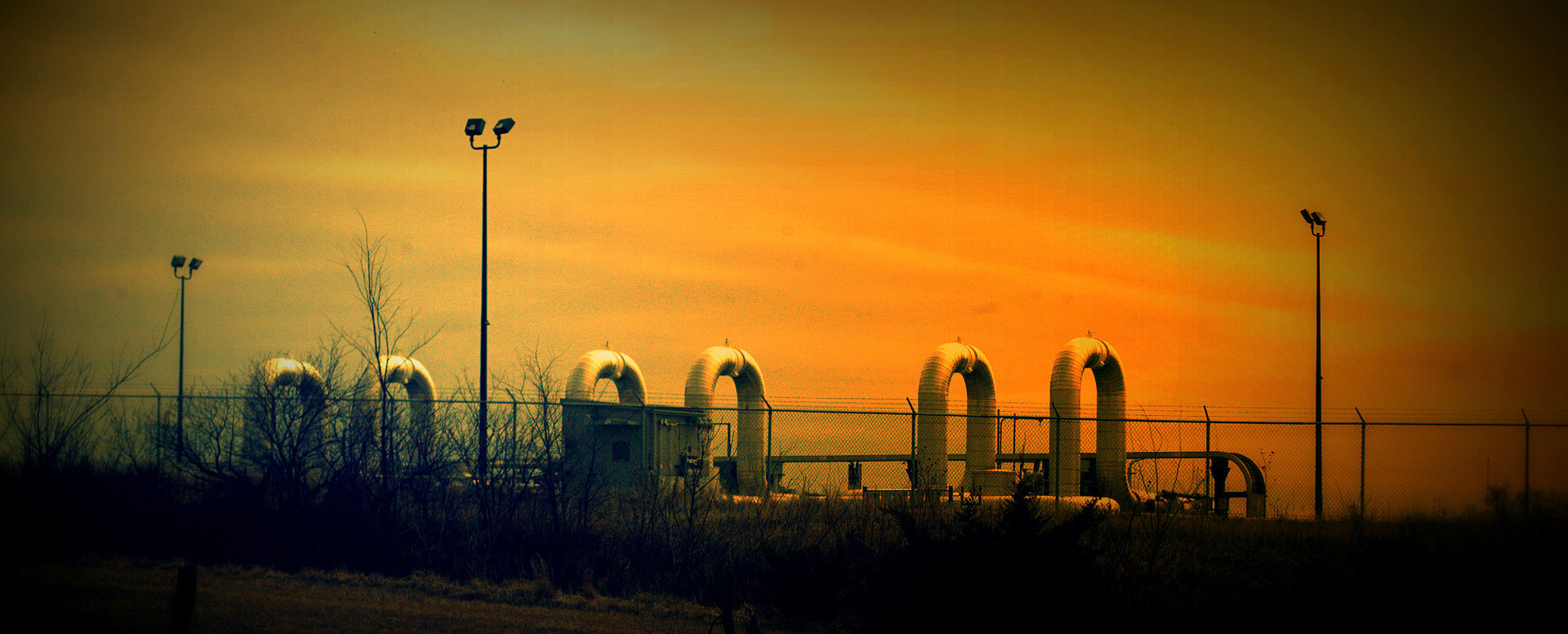
The timing is not insignificant. At a time when the Strait of Hormuz remains closed under a US naval blockade and Brent crude is comfortably exceeding $125 a barrel, Donald Trump signed Presidential Permit No. 2026-04-30 at 8:08 PM (Washington time) on Thursday, April 30, 2026, authorizing Bridger Pipeline Expansion LLC, a subsidiary of True North Energy Corporation, to "construct, connect, operate, and maintain pipeline facilities at the international boundary in Phillips County, Montana, between the United States and Canada." The decree, published on whitehouse.gov, marks the first presidential authorization of a major cross-border oil pipeline since the abandonment of Keystone XL by the Biden administration in 2021. The American press immediately nicknamed the project "Keystone Light," for its similarities—and differences—with its controversial predecessor.
Route, Capacity, and Industrial Stakes
The three-foot-wide pipeline will originate in the Estevan region of southern Saskatchewan, cross the border near the town of Loring (Montana), then proceed due south through Phillips, Valley, McCone, Garfield, and Custer counties (Montana), before entering Wyoming via Sheridan County, where it will connect to the existing Platte pipeline. The targeted capacity is 270,000 barrels per day, or approximately 13.5 million tons per year. At full capacity, the pipeline will supply the equivalent of 4% of daily US oil consumption. The total cost is estimated between $4.8 and $5.2 billion, with commissioning announced for the fourth quarter of 2028, subject to obtaining additional state, federal, and tribal permits.
Why "Light" and Not "XL"
The two major differences with Keystone XL are geographical and legal. Geographically, the Bridger route carefully bypasses the Ogallala Aquifer (Nebraska), the primary reason for opposition to Keystone XL in 2014-2015. The pipeline does not cross any major aquifers or any Native American reservations with historical land rights. Legally, Trump bypassed the traditional environmental review process (NEPA) by invoking the Energy Independence Emergency Order signed in January 2026, which reduces the review period to 90 days instead of four years. This acceleration will certainly be challenged in the Montana District Court by environmental coalitions (Sierra Club, NRDC, Indigenous Environmental Network). "Trump has learned from Keystone's mistakes: he avoids Native American lands, he avoids aquifers, but he tramples federal environmental regulations," reacted Tara Houska of Honor the Earth.
A Geopolitical Message to the Markets
The signing of the Bridger permit sends a powerful signal to global markets. Firstly, it accelerates Trump's "North American Energy Dominance" strategy, claimed since his inauguration: to make North America a hydrocarbon self-sufficient zone, immune to shocks from the Middle East. Secondly, it reconciles the Trump administration with Ottawa, after several months of tensions over tariffs: Canadian Prime Minister Mark Carney hailed "a historic decision for North American energy integration." Thirdly, it sends a message to Tehran and OPEC+: Washington does not need Gulf crude to withstand a prolonged crisis. At the Asian market opening on Friday morning, Brent crude slightly declined by 1.4% on the news, to $123.2.
Opposition: Democratic Senators, Tribes, NGOs
Resistance has been immediately organized. Senator Jon Tester (D-Montana) announced he would introduce a joint resolution to invalidate the presidential permit; Senator Martin Heinrich (D-New Mexico), Chair of the Energy & Natural Resources Committee, spoke of "a return to the worst extractive practices of the 1970s." On the tribal side, the Fort Belknap Indian Community, whose reservation borders the route for 47 kilometers, filed an emergency motion with the Montana District Court on Thursday evening, asserting a lack of prior consultation under the Indian Self-Determination Act of 1975. Finally, over 800 protesters gathered Friday morning in Helena (Montana) in front of the State Capitol, holding signs reading "Water Is Life" and "No DAPL 2."
Editorial Opinion
The authorization of the Bridger pipeline is, first and foremost, a political act of circumstance. Three readings are necessary. The first is conjunctural: Trump needed an energy victory to respond to the Hormuz shock. This has been achieved—at the cost of a regulatory acceleration that will be legally contested for years. The second is structural: "Keystone Light" is part of a broader strategy to re-industrialize the Canadian crude chain, whose oil sands represent a massive but polluting reserve. This logic directly clashes with the climate commitments made by America under Biden, now largely dismantled. The third is legal: by bypassing NEPA, Trump undermines not only Bridger but all of US environmental law—a precedent that could serve fossil fuels as well as renewables. Our conviction: the pipeline will be blocked in court at least until 2027, but the geopolitical signal has already been sent. And it says this: for the next twenty years, the American energy transition will be neither pure nor linear.
Key Takeaways
- Presidential Permit signed by Trump on April 30, 2026.
- Route Saskatchewan → Montana → Wyoming, 270,000 barrels/day.
- Cost: $4.8 to $5.2 billion; commissioning Q4 2028.
- Nicknamed "Keystone Light": avoids Ogallala and major Native American lands.
- Lawsuits already filed (Fort Belknap, Democratic senators).