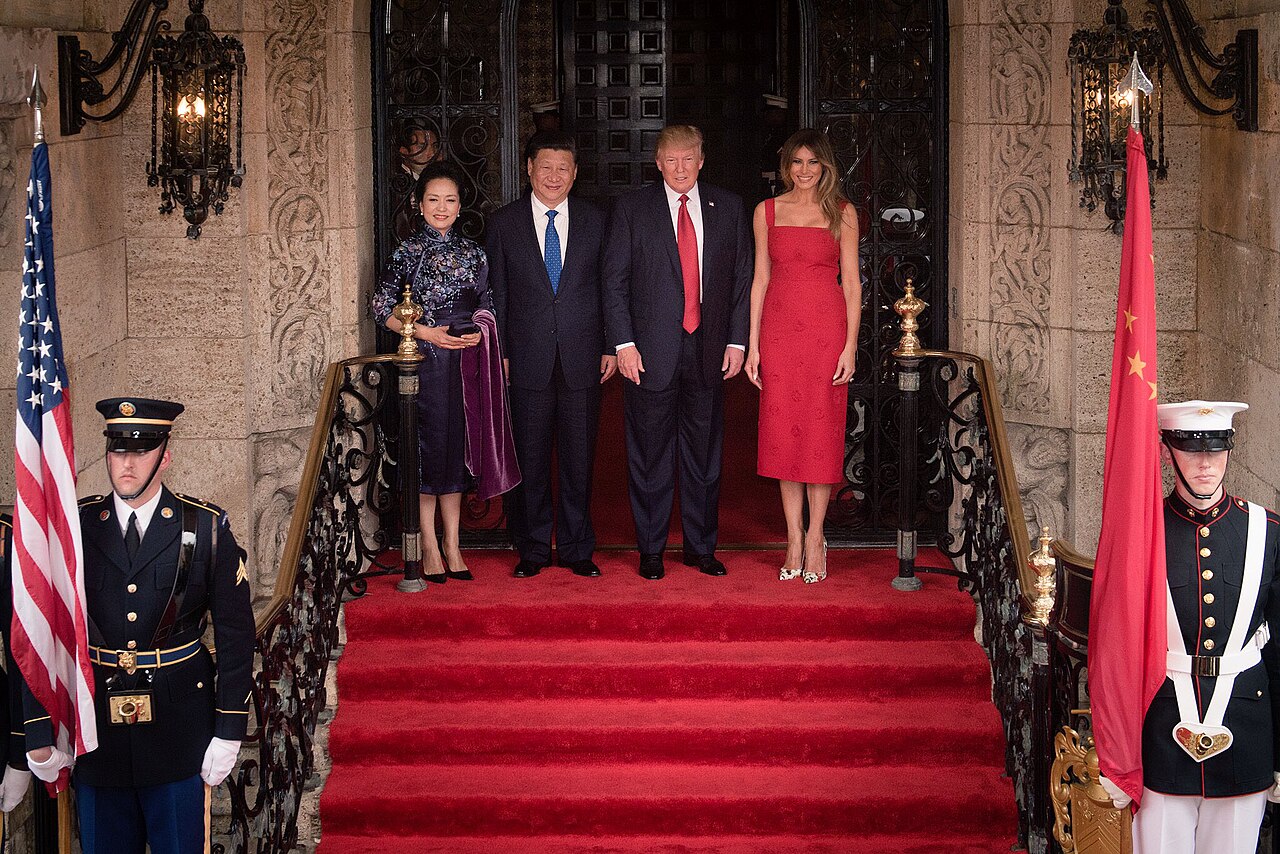
Air Force One landed at Beijing Capital International Airport early Wednesday evening local time on May 13, 2026. Upon disembarking, Donald Trump was greeted by an honor guard of the People's Liberation Army, with a red carpet rolled out. The US President begins a three-day visit which will conclude on May 15 with a state banquet at the Great Hall of the People. Officially, the trip has been in preparation for months focusing on a trade agenda: customs duties, rare earths, soybeans, semiconductors. Unofficially, only one issue has obsessed diplomats from both sides for three weeks: the open war between Washington and Tehran since February 28, which on this Wednesday enters its 75th day.
A Summit Prepared in the Shadow of the Gulf
The contrast is striking. On the US side, Trump reiterated on Tuesday aboard Air Force One, before the press pool, that he did not "need China's help" to end the Iranian conflict, while conceding that he would discuss it "at length" with Xi Jinping. On the Chinese side, Beijing's diplomacy is advancing its pawns: the day before the presidential arrival, the Chinese Ministry of Foreign Affairs publicly encouraged Pakistan, an unofficial mediator between Washington and Tehran since April, to "intensify its efforts." China alone imports nearly 50% of Iran's exported crude oil, making it the only actor capable of truly influencing Tehran's economic equation.
The Three Hot Topics: Iran, Tariffs, Taiwan
The first issue is Iran. Trump arrives with military strength but diplomatic exhaustion. Operation "Project Freedom," launched in early May to escort merchant vessels out of the Strait of Hormuz, only managed to pass two vessels before being suspended. Oil prices hover above $110, US gas prices are hitting records, and the president's approval ratings are at an all-time low. Chinese mediation, even symbolic, would allow him to present a success to voters before the midterms.
The second issue is tariffs. Since February, Trump has raised duties on a wide range of Chinese products to 60%; Beijing retaliated with a de facto embargo on seven strategic rare earths, crippling the production of US drones, electric motors, and military semiconductors. Both sides are seeking a trade truce that would ease pressure on supply chains.
The third, most dangerous issue, is Taiwan. Xi has increased military exercises around the island in recent months. Trump, for his part, delivered a new batch of armaments to Taipei in April. No breakthrough is expected here, but the mere presence of the topic on the agenda is enough to tense Asian markets.
Why Beijing Holds the Iranian Keys
The Sino-Iranian relationship has intensified since 2021 and the 25-year strategic agreement signed between Tehran and Beijing. China is Iran's largest energy customer, its primary infrastructure partner, and one of the few countries to have maintained a fully operational embassy in Tehran after the death of Supreme Leader Ali Khamenei on February 28. When Iranian Foreign Minister Abbas Araghchi made a brief visit to Beijing last week, the message was clear: China can serve as an economic guarantor of a potential ceasefire, provided Washington takes a step towards lifting the naval blockade imposed on Iranian ports since April 13.
Western analysts note, however, that Xi Jinping will not engage in any public mediation. Chinese diplomacy favors discreet channels: any agreement would take the form of financial guarantees on Iranian exports, coupled with a gradual withdrawal of US Navy ships from the Persian Gulf. Trump would demand in return the release of foreign sailors still held in the port enclave of Bandar Abbas and the definitive cessation of Tehran's military nuclear program.
A Meeting Expected by the Markets
On Wall Street, the announcement of Trump's arrival in Beijing allowed the S&P 500 to gain 1.4% at closing on Tuesday. Brent crude fell by three dollars on the prospect of de-escalation, dropping back to around $110. In Hong Kong, the Hang Seng index opened Wednesday up 2.1%. Traders know that the window is narrow: if the summit ends in a visible failure, the oil risk premium will skyrocket again, and Asian stock markets will suffer an immediate shock.
The official program for this Wednesday evening includes a restricted dinner between Trump, Xi, and their wives, followed on Thursday by an expanded bilateral session with the Ministers of Commerce, Foreign Affairs, and Defense. On Friday, May 15, a joint statement will be released: its content, or its silence, will dictate the immediate aftermath of the Gulf war.
Editorial Opinion
It would be naive to expect peace in the Middle East to be signed in Beijing at this summit. Xi Jinping is neither an impartial mediator nor a disinterested intermediary: he is the main beneficiary of an Iran that is weakened but not collapsed, which continues to sell him discounted crude oil while militarily occupying Washington far from the Indo-Pacific. Trump, for his part, comes to Beijing to seek what he did not obtain in Geneva, Muscat, or Islamabad: a ceasefire that is presentable to his voters. The Trump-Xi meeting is less a peace summit than a power theater where each measures the exact price of their silence. If an agreement emerges from this table, it will be commercial before it is strategic. And the Iran war will continue for a 76th day.
Key Takeaways
- Trump arrived in Beijing this Wednesday, May 13, 2026, for a three-day summit with Xi Jinping (until May 15).
- The official agenda: trade, tariffs, rare earths, Taiwan. The real agenda: the Iran-US war, which is now in its 75th day.
- China imports about 50% of Iran's crude oil and publicly called on Pakistan on Tuesday to "intensify its mediation."
- Trump says he does not "need" China's help but admits he will discuss it "at length" with Xi.
- On Wall Street, the S&P 500 gained 1.4% on Tuesday; Brent crude returned to around $110.
- The final joint statement, expected Friday, May 15, will dictate the next phase of the conflict.