
The clock is ticking at the heart of the White House, and this time, it's not symbolic. Exactly sixty days after the launch of "Operation Epic Fury"—the U.S. military campaign initiated in early March 2026 with strikes on sites in Natanz, Fordow, and Isfahan—the Trump administration is hitting one of the most sacred locks in the American Constitution: the War Powers Resolution of 1973. Adopted after the trauma of Vietnam, this law obliges the President to end any military operation within sixty days if formal Congressional authorization has not been obtained within that timeframe. The deadline expires this weekend. And Donald Trump, thus far, has neither requested nor obtained this authorization.
The Hegseth Thesis: The Ceasefire "Pause"
To circumvent this obstacle, Secretary of Defense Pete Hegseth, during a Senate hearing on Thursday, April 30, presented an unprecedented legal interpretation: "when a ceasefire is in effect, as has been the case since April 14, the countdown stops or pauses." Hegseth relies on a memo from the Office of Legal Counsel dated April 27, which equates the suspension of hostilities with a "material interruption" of operations within the meaning of the law. The problem: there is no jurisprudential precedent to validate this interpretation. Constitutional scholar Jack Goldsmith, former legal counsel to George W. Bush, called the position "creative at best, fragile at worst." The Brennan Center, for its part, published an analysis Thursday evening denouncing "a clandestine rewriting of the 1973 text."
Rand Paul, Tim Kaine, and the Joint Resolution
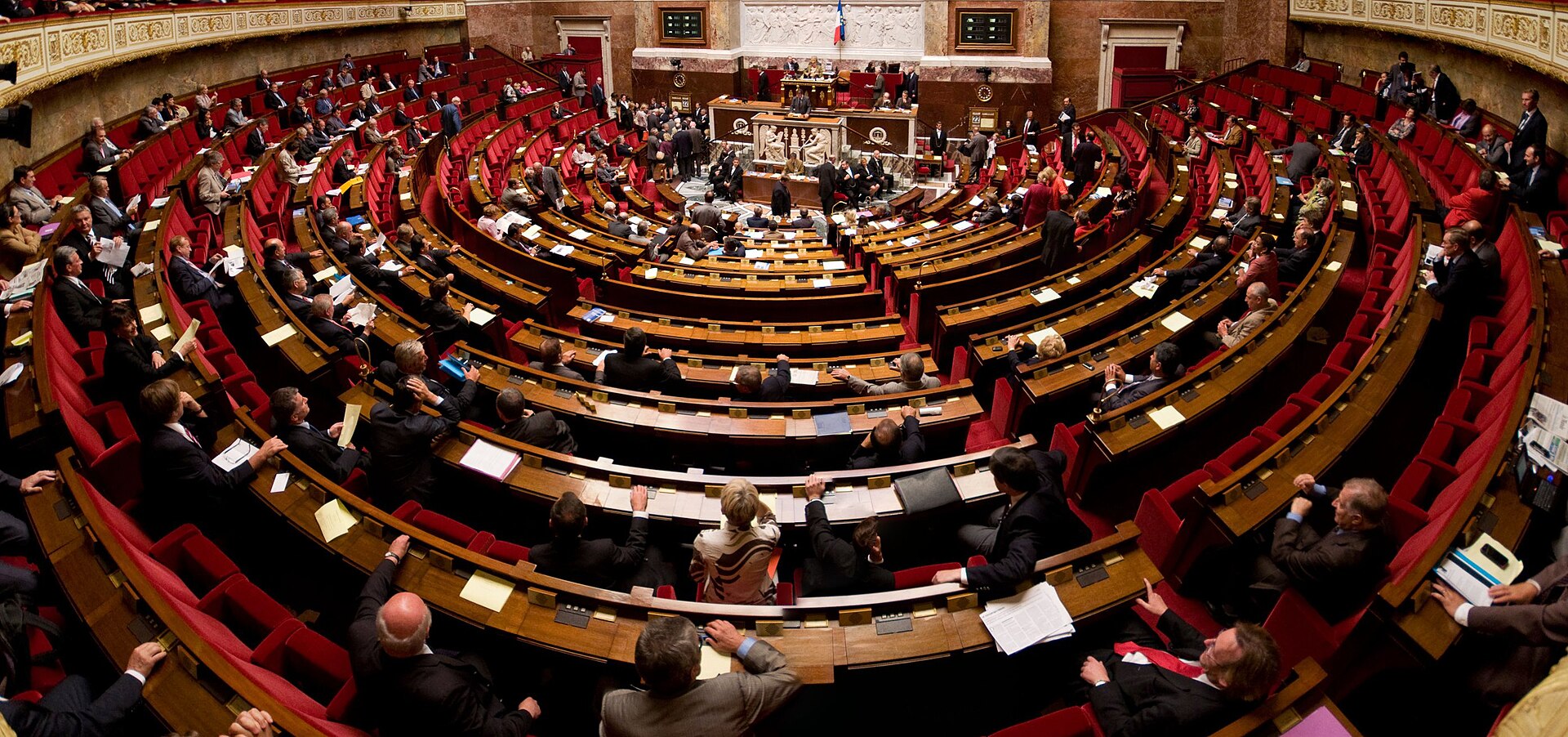
On Capitol Hill, the response is already being organized. Republican Senator Rand Paul (Kentucky) and Democrat Tim Kaine (Virginia) jointly introduced a privileged resolution for the withdrawal of forces on Thursday at 5 p.m., which is to be considered under expedited procedure next week. The resolution demands that the President "end all offensive operations against Iran within thirty days unless expressly authorized by Congress." According to Axios's counts, nine Republicans and forty-six Democrats in the Senate are ready to vote for it—a total of 55 votes, falling short of the 60 needed to break a potential filibuster. In the House, the situation is even more unstable: Speaker Mike Johnson indicated Thursday evening that he "will not bring the text to the floor before mid-May."
The Scenario of Presidential Circumvention
Within Donald Trump's circle, several sources are now discussing the possibility of an automatic presidential veto, followed by a new proclamation of a national emergency under the National Emergencies Act. This option—already used by Trump in 2019 for the border wall—would allow the President to unilaterally extend operations while awaiting the end of the parliamentary procedure, which can take six to nine months. The risk, however, is constitutional: the Supreme Court could be seized on an emergency basis, and three justices (Sotomayor, Kagan, Jackson) have already publicly expressed reservations about the extensive use of emergency powers. The Hamdan v. Rumsfeld precedent of 2006 shows that the Court does not hesitate to rein in a president when Congress's constitutional powers are at stake.
Tehran Observes, Beijing Maneuvers
In Tehran, the American constitutional imbroglio is being observed with a mixture of hope and caution. Foreign Minister Abbas Araghchi stated on PressTV Thursday evening that "the American people did not vote for this war; Congress will confirm this." Beijing, meanwhile, is playing a more active role: Foreign Minister Wang Yi proposed a "tripartite mediation" involving China, Russia, and Pakistan on Thursday to reach a comprehensive agreement on Iran's nuclear program and the reopening of the Strait of Hormuz. Washington responded to this initiative with a cryptic phrase: "We are exploring all avenues." In Brussels, High Representative Kaja Kallas indicated that the EU was "ready to resume the Vienna negotiations" as soon as a lasting ceasefire was confirmed.
Editorial Opinion
We are witnessing a pivotal moment in American constitutional history. Three interpretations overlap. The first is legal: the "Hegseth thesis" is an interpretive power grab. The War Powers Resolution was never intended to be suspended by a ceasefire unilaterally declared by the executive, and any fair-minded jurist knows this. The second is political: Trump is playing for a show of force, convinced that neither the Supreme Court nor Congress will dare to paralyze a president in the midst of military operations. This is a rational but dangerous gamble, as it erodes the separation of powers for decades. The third is strategic: behind the legal battle lies a narrative battle. If Trump prevails, the doctrine of the "commander-in-chief unbound" becomes durably mainstream; if Congress wins, the entire edifice of "presidential wars" built since Truman could crumble. Our conviction: the Paul-Kaine resolution will likely not pass the Senate, but it will have established a procedural precedent that will haunt the next decade. The real test will come from the Supreme Court, in late June.
Key Takeaways
- The 60-day deadline of the War Powers Resolution expires this weekend.
- Pete Hegseth invokes a "pause" in the countdown during the ceasefire.
- A joint resolution by Rand Paul and Tim Kaine was introduced in the Senate on Thursday.
- Mike Johnson refuses to bring the text to the floor before mid-May.
- Beijing proposes tripartite mediation involving China, Russia, and Pakistan.