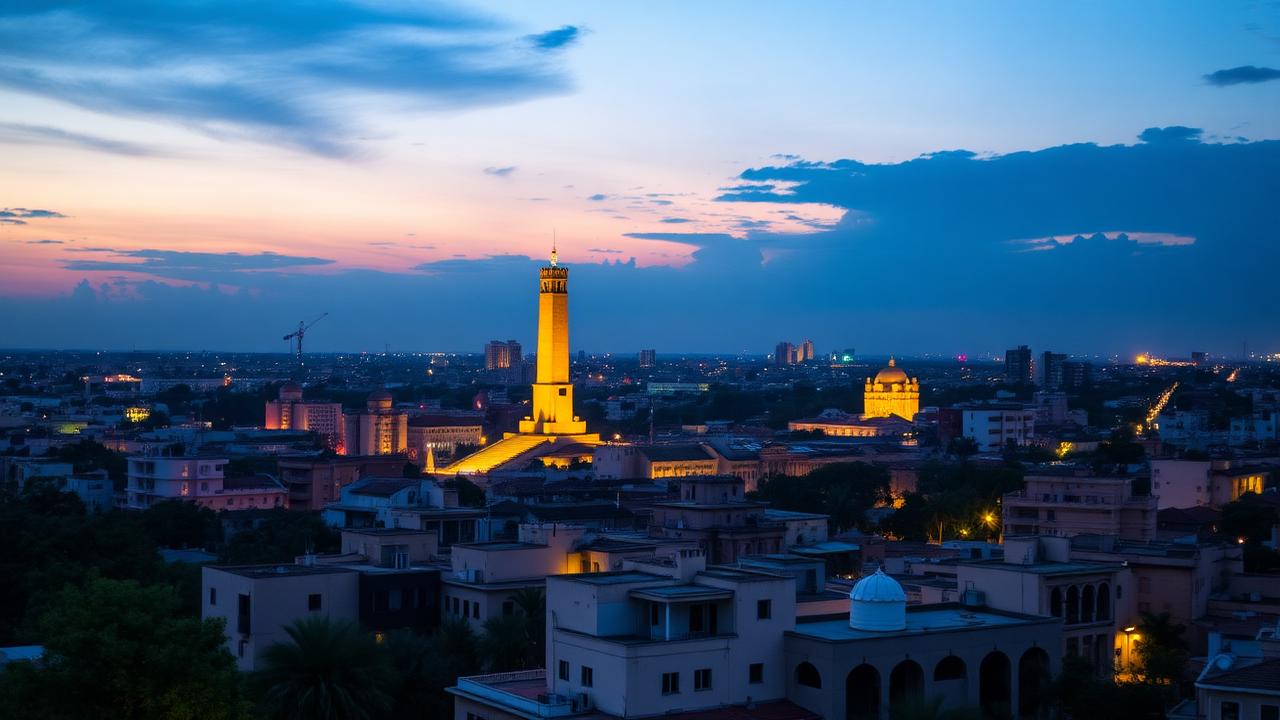
Before the constituted bodies, employers, technical and financial partners, and a large diplomatic corps, the President of the Republic, Bassirou Diomaye Faye, presented his mid-term plan, dubbed "Senegal 2030", on Friday, June 5, 2026, at the Abdou Diouf International Conference Center in Diamniadio. Two years after his surprise election and as the country has just finalized a new framework agreement with the International Monetary Fund (IMF), the event is as political as it is economic.
A Heavy Budgetary Legacy, a Political Narrative to Reconstruct
The Faye presidency inherited a situation whose magnitude surprised even the Pastef stalwarts: independent audits conducted since 2024 have established a real public debt that is 7 percentage points of GDP higher than previously reported official figures, mainly through off-balance sheet commitments. Senegal's public debt now exceeds 96% of GDP, a level deemed unsustainable by the IMF without partial restructuring.
The framework agreement concluded in April 2026, for a total amount of $1.8 billion over three years, conditions disbursements on several precise milestones: continuation of oil taxation reform, transparency on mining contracts, gradual reduction of energy subsidies, and adoption of a new multi-year budgetary framework. The Senegal 2030 plan aims to politically organize this discipline.
Key Figures of the Senegal 2030 Plan
- 96% of GDP: level of Senegalese public debt at the end of 2025.
- $1.8 billion: IMF agreement over 3 years, signed in April 2026.
- +5.4%: expected growth in 2026, with approximately 2 points linked to hydrocarbons.
- GTA and Sangomar: two offshore fields in production (gas and oil), fully operational in 2026.
- 15,000 direct jobs targeted within 5 years in the hydrocarbon and petrochemical sector.
- 6 priority sectors: agriculture, fishing, hydrocarbons, digital, tourism, agri-food industries.
Hydrocarbons: The New Rent and Its Political Management
The GTA (Grand Tortue Ahmeyim) project, jointly operated with Mauritania, and the Sangomar oil field, operated by Woodside, have entered full production. Sangomar is operating at around 100,000 barrels/day and GTA is producing around 2.5 million tons of LNG per year. Combined, these flows could add $2 to $3 billion annually to Senegalese public revenues by 2028 — provided that the fiscal framework renegotiated under the Faye mandate is applied in good faith by the operators.
The major political challenge remains redistribution. The president announced that a defined portion of oil and gas revenues would be channeled into a sovereign intergenerational fund — based on the Norwegian model — and that another portion would directly fuel health, education, and rural infrastructure budgets. The devil will be in the percentages, the details of which will be specified in the 2026 amending finance law by the end of the month.
A Showcase for French-Speaking Africa
Senegal is being watched far beyond the CFA zone. In Abidjan, Lomé, Cotonou, Ouagadougou, and even in Bamako, where the military government is closely following the situation, Dakar's ability to combine institutional stability, budgetary rigor, and assumed sovereignty over its natural resources is scrutinized as a potential model. The political rupture of March 2024 — a peaceful democratic alternation after a period of intense tensions — remains a West African singularity.
On the French side, relations have normalized but remain symbolically strained. The closure of French bases in Senegal, requested by Dakar and completed at the end of 2025, marks the end of a military cycle. Economic relations, however, remain close, and the Autonomous Port of Dakar — like Blaise Diagne Airport — continues to be part of projects co-financed by the AFD and the European Investment Bank.
Key Takeaways
- Senegal 2030 plan presented in Dakar/Diamniadio on June 5, 2026.
- Public debt: 96% of GDP; $1.8 billion IMF agreement over 3 years.
- Expected growth 2026: +5.4%, with 2 points linked to hydrocarbons (Sangomar, GTA).
- Creation of an intergenerational sovereign fund based on the Norwegian model.
- Six priority sectors identified; amending finance law by the end of June.
- Senegal scrutinized as a model throughout French-speaking Africa.