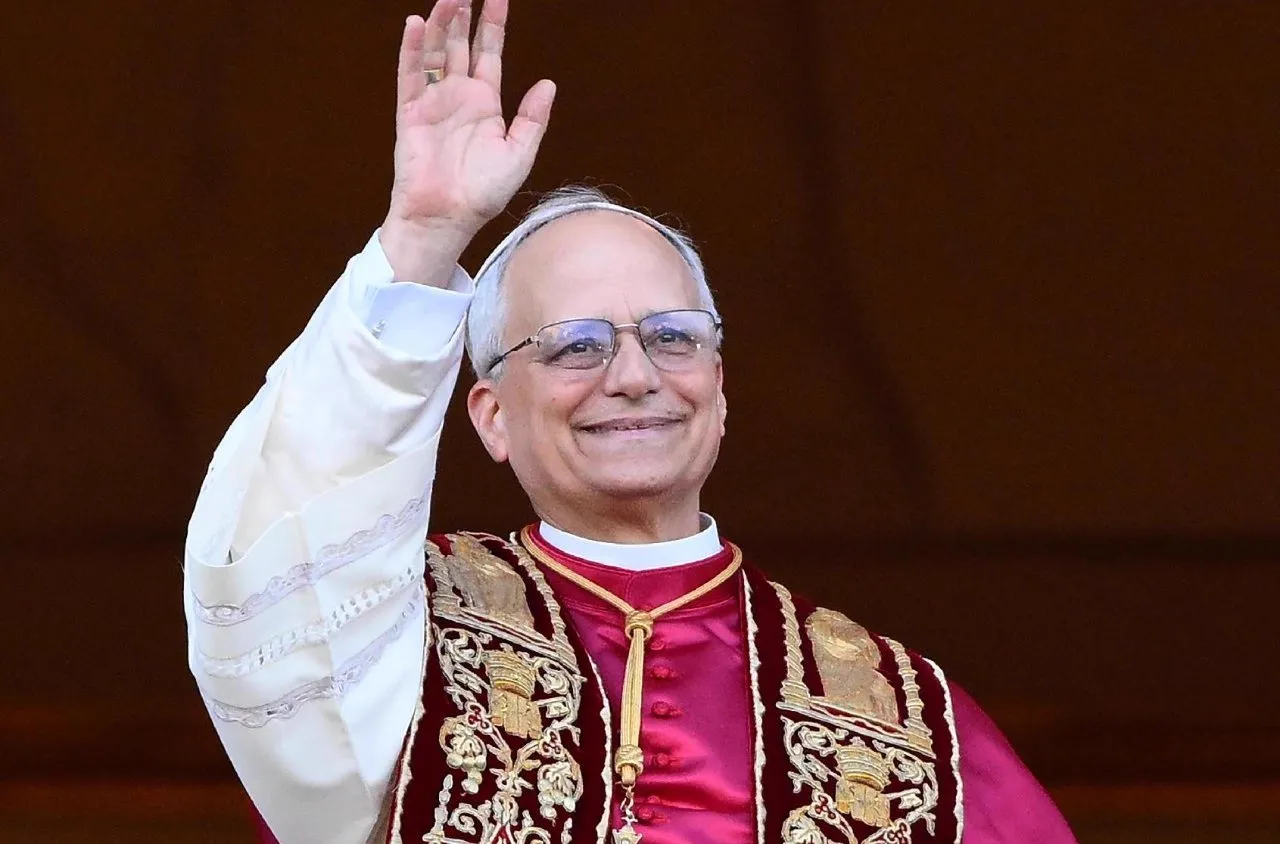
Rome held its breath this Friday evening. In front of some 20,000 faithful gathered around the Colosseum, Pope Leo XIV completed the entire Way of the Cross by carrying the heavy wooden cross himself through the 14 stations—an act of humility that no pontiff had performed since Benedict XVI, exactly twenty years ago.
The gesture is not insignificant. By choosing to physically carry the cross throughout the entire route, Leo XIV—born Robert Francis Prevost, the first American pope in history—sent an unambiguous message: that of a Church that does not delegate suffering. 'Let us live our lives as a path in Christ's love,' he stated in his homily, delivered in Italian and English, before blessing the silent crowd.
The last time a pope had carried the cross at the Colosseum for all the stations was John Paul II, every year from 1980 to 2005. Benedict XVI had done it only once, at the beginning of the liturgy, before entrusting it to laypeople. Francis, physically weakened, had renounced this from the beginning of his pontificate. The return of this gesture marks a symbolic turning point for a pontificate that is only a few months old.
The ceremony took place under heightened security, in a tense geopolitical context—with strikes in the Middle East and the conflict in Ukraine weighing on people's minds. Several meditations read during the stations explicitly referred to the civilian victims of ongoing conflicts. The Vatican confirmed that the Pope would celebrate the Easter Vigil on Saturday evening at St. Peter's Basilica.
For Vatican observers, this first Good Friday is a marker: Leo XIV intends to embody a hands-on, physically engaged pontificate, in the vein of John Paul II rather than in the diplomatic restraint of his immediate predecessors. At 69 years old, he walked the stations with a firm step, refusing help from his assistants.