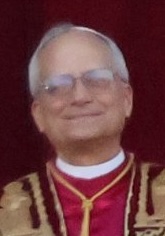
It is a little past 10 a.m. on Thursday, May 14, 2026, when the white popemobile traverses the aisles of St. Peter's Square for the last time. Nearly 35,000 faithful, according to Vatican Gendarmerie figures, made the trip for Pope Leo XIV's weekly general audience—a significantly higher number than the spring average. The reason is known: for ten days, Vatican diplomacy has been multiplying discreet contacts with Washington, Tehran, Paris, and Beirut, and rumors of a solemn appeal for peace had been circulating throughout Rome since Tuesday evening.
A Catechesis Interrupted
The Pope begins, as planned, with his catechesis on St. Paul's Second Epistle to the Corinthians, in the series devoted to the fruits of the Spirit. But at 10:27 a.m., he pauses for a long moment, closes his text, and looks up at the crowd. His calm voice carries through the loudspeakers of Bernini's colonnade. "Brothers and sisters, allow me to deviate for a moment from our meditation. In conscience, I cannot speak this morning of the fruit of peace without naming those who are, at this very moment, deprived of it."
What follows is a four-minute text, read in Italian and then translated into Arabic, Farsi, English, and French—an unprecedented arrangement for a general audience, signaling the Holy See's desire for maximum reach. The Sovereign Pontiff successively names "the sailors still captive on ships blocked in the Strait of Hormuz," "the Lebanese families grieving the previous night's strikes," "the Iranian children sleeping in the cold due to power outages," and "the American, Israeli, and Iranian soldiers whose mothers, tonight, have no news."
An Unambiguous Appeal, Yet Without Accusation
The carefully chosen words strike with their symmetry. Leo XIV designates no culprit, names no head of state, but explicitly cites "the powers gathered this week in Beijing" and "those who are silent in New York"—a clear reference to the UN Security Council, which is due to examine the Franco-British resolution on Hormuz next Tuesday. "No framework, however skillful, replaces the simple gesture of a man who decides, first, to stop firing," the Pope continued.
The most remarked passage was the one dedicated to Lebanon. "This morning, I think of Beirut, of Tyre, of Sidon. I think of the 380 women, men, and children who have fallen since the April truce. I say to both sides: there is no military victory that justifies a child's grave. There never has been. There never will be." A long round of applause followed, punctuated by sobs in the section reserved for Eastern Christian delegations, who were particularly numerous that morning.
Vatican Diplomacy in Full Swing
Since his election on May 8, 2025, the 70-year-old American-Peruvian Pope Robert Francis Prevost has made diplomatic mediation a hallmark of his pontificate. Under his leadership, the Secretariat of State has reopened several channels of discussion: with Tehran via the nunciature in Beirut, with Washington via Cardinal Joseph Tobin, with Israel via the Latin Patriarchate of Jerusalem, and with Beijing via a discreet visit by Cardinal Pietro Parolin last March.
According to a Vatican source interviewed by La Croix, the Pope was informed as early as Tuesday evening, through a direct channel, of the likely content of Beijing's interim statement. His intervention on Thursday is therefore not an improvised reaction to current events: it is a coordinated pressure, calibrated to influence the twenty-four hours preceding the final statement, expected on Saturday.
A Word Heard as Far as Tehran
Initial international reactions arrived within the hour. In Paris, the Élysée welcomed "a word of truth in a moment of diplomatic turning point." In Washington, the State Department issued a laconic statement referring to "the respect due to the moral voice of the Holy Father." In Tel Aviv, the office of Prime Minister Netanyahu did not comment.
In Tehran, however, Foreign Minister Abbas Araghchi posted a four-language message on X: "The Islamic Republic hears the message of His Holiness Leo XIV. We share the concern for peace and human dignity." A cautious formulation, but one that strongly contrasts with the silence or hostility that, three months ago, any Western word would have prompted.
A Moral Figure Rising in Power
At 70 years old, the first American-born Pope, Leo XIV is progressively establishing himself as one of the rare global voices capable of speaking to all sides without being reduced to any single one. His Easter messages on April 5, his intervention on Gaza in March, and now this appeal on May 14, outline an active, methodical pontifical diplomacy, structurally opposed to bloc logic. The Vatican, which has no military power and an annual budget smaller than that of a French metropolis, is regaining under his pontificate a moral centrality that the post-2024 world seemed to have discarded.
At the end of the audience, as was his custom, the Pope greeted the sick gathered under the colonnade. He stopped longer than usual before a group of Syrian and Lebanese refugees—a detail not missed by the world's cameras.
Editorial Opinion
It is easy, for the hurried cynic, to shrug off an appeal for peace delivered from St. Peter's. The Vatican has no army, no permanent seat on the Security Council, no economic leverage. Yet, in the diplomatic sequence unfolding this week between Beijing, Washington, Paris, and Tehran, Leo XIV's intervention is not an ornament: it is a piece. It offers all parties moral cover to make concessions they would have been ashamed to grant a political adversary. It names the victims—anonymous sailors, Iranian children, Lebanese families—whom technical diplomacy prefers to forget. And it reminds us, at a time when markets celebrate an arithmetic détente, that peace is not a price variable but a human decision. The Pope has spoken. Now, it is up to those who have the power to sign, to respond.
Key Takeaways
- Thursday, May 14, 2026: General audience in St. Peter's Square before approximately 35,000 faithful.
- Pope Leo XIV interrupts his catechesis for a 4-minute appeal for peace, translated into 5 languages.
- Explicit mention of sailors blocked in Hormuz, Lebanese and Iranian victims.
- Transparent reference to "powers gathered in Beijing" and the Security Council.
- Tehran reacts positively through its Foreign Minister.
- Coordinated pressure 48 hours before the final statement expected on Saturday.