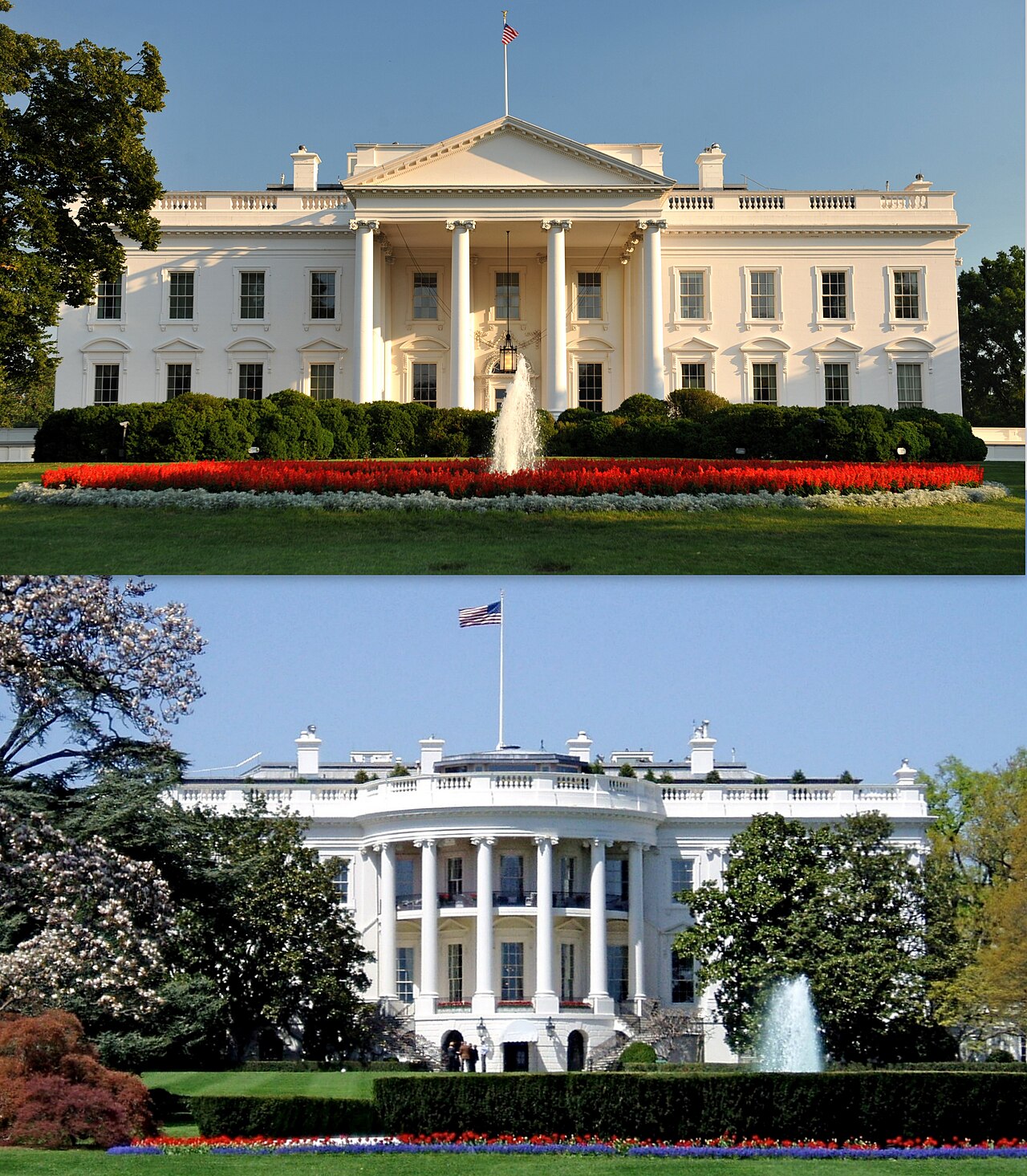
This is a poll that would have brought a smile in any other era, but it says a lot about America in 2026. Released on Thursday, April 30, by ABC News, the Washington Post, and Ipsos, and conducted from April 24 to 28 on a representative sample of 2,308 American adults, it provides figures that must concern the White House: 56% of Americans oppose Donald Trump's decision to demolish the East Wing to build a $700 million ballroom funded by private donors; only 28% support it. 64% disapprove of the presidential signature appearing on the new one-dollar bills whose printing the Treasury has announced. And 64% also reject the proposed 250-foot (76-meter) commemorative arch that Trump wants to erect near the Lincoln Memorial.
A Spectacular Fall in One Hundred Days
The most striking aspect is not so much the opposition as its sociological depth. On the ballroom issue, opponents outnumber supporters in all categories—except among Republican men over 65 (where support reaches 51%). Even among moderate MAGA voters, rejection stands at 38%. On the signature on banknotes, it's even clearer: 41% of Republicans themselves oppose it. This dynamic illustrates a widening rift between two Americas: the one that elected Trump to fix the economy, secure the border, and restore order—and the one that worries about a president increasingly focused on staging his own persona.
The Paradox of a Strong but Isolated Presidency
We must grasp the paradox. On core government issues, Donald Trump maintains a solid base of support: 47% approve of his handling of the Iranian crisis (according to the same poll), 51% his immigration policy, 49% his action on crime. But on personal matters—the ballroom, banknotes, the arch, and also recently the idea of a commemorative stamp with his likeness or the appearance of his portrait in certain federal courtrooms—rejection is massive. Political scientist Larry Sabato of the University of Virginia speaks of a 'personalization ceiling': 'Americans tolerate presidential power, but they refuse monarchical iconography. It's been in the Republic's DNA since 1776.'
The Cost of the Disconnect
In the short term, the disconnect is politically costly. Several Republican House members, including Deputy Speaker Steve Scalise, have tried to moderate the ballroom project, without success. In the Senate, several moderate Republicans—Susan Collins, Lisa Murkowski, Thom Tillis—have publicly called for a 'pause' on signing the banknotes. But Trump, true to his method, persists and signs. This is precisely what worries part of his own camp: six months before the midterm elections, the president risks transferring a negative charge to Republican candidates on issues he could have avoided. Several internal polls circulating in campaign headquarters show a direct correlation between the image of 'presidential excess' and the erosion of the Republican vote in swing districts.
The Real Issue Isn't Architecture
It would be too easy, however, to reduce these figures to an architectural squabble. The real issue lies elsewhere: how can a presidency elected on the promise to 'make America great again' find itself, in one hundred days, concentrating media attention on the personal obsessions of its holder rather than on its objective successes? Because they exist: unemployment down by 0.8 points in six months, the signing of five new bilateral trade agreements, the announced—albeit controversial—end to the Israeli-Palestinian conflict. All these advances are today overshadowed by controversies over the ballroom, the arch, the banknotes. By hyper-personalizing power, Donald Trump erodes his own political capital. This is a strategic mistake, not just an aesthetic one.
Editorial Opinion
The poll of April 30 is, in our opinion, the most important poll published on the Trump II presidency since the inauguration. For three reasons. First: it reveals the fragility of the president's electoral base, which crumbles as soon as issues move away from core government matters and enter the realm of self-staging. Second: it offers Democrats an unexpected attack vector—not on foreign or economic policy, where Trump is strong, but on 'excess' and 'institutional narcissism,' themes that appeal as much to the suburban middle class as to young urban dwellers. Third: it raises the deeper question of the health of American democracy. When a presidency dedicates as much energy to self-celebration as to crisis resolution, the system grinds to a halt. Our conviction: if Trump does not correct his trajectory in the next sixty days—by abandoning at least one of his three symbolic projects—he will offer Democrats the narrative they have lacked since November 2024: that of a president who has confused the office with the person. And that narrative, six months before the midterms, could redraw the entire map of power in Washington.
Key Takeaways
- ABC/WaPo/Ipsos poll (April 24-28, 2026, n=2,308): 56% opposed to Trump ballroom.
- 64% disapprove of the president's signature on new $1 bills.
- 64% reject the 76m commemorative arch near Lincoln Memorial.
- Ballroom cost: ~$700M funded by private donors (East Wing demolished).
- Political effect: risk of transferring negative charge to GOP candidates in mid-terms.