
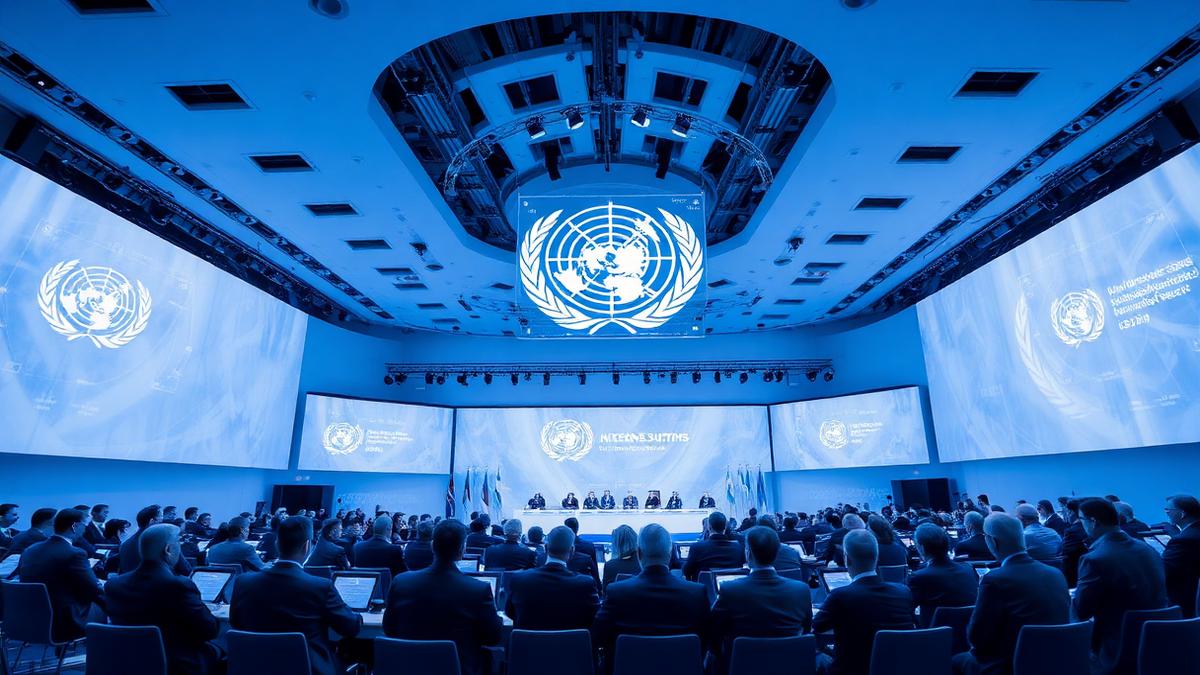
From July 7 to 10, 2026, Geneva will host the 'AI for Good' summit for the seventh time, organized by the International Telecommunication Union (ITU) at Palexpo, in partnership with over 50 UN agencies. The program is ambitious: AI for health, agriculture, climate, education, creativity, and the future of work. Federal Councillor Albert Rösti will open the proceedings. Hundreds of startups, researchers, and policymakers will converge on international Geneva. On paper, everything is perfect. In reality, global AI governance remains an institutional mirage. (
The paradox is striking. While the UN organizes panels on 'ethical AI,' the three technological superpowers — the United States, China, and the European Union — are each forging ahead in their own direction, with radically incompatible visions. Washington, under the impetus of the Trump administration, has dismantled most federal guardrails on AI and launched a race for dominance through executive orders that explicitly favor American giants. Beijing is investing heavily in surveillance AI and sovereign models, while participating in UN summits with a cooperative rhetoric that no one takes seriously. Europe, for its part, has its AI Act — the most comprehensive regulatory framework in the world — but no leading AI companies to apply it on a large scale.
The Geneva summit illustrates a deeper trend: international AI governance functions as a forum for good intentions, not as a binding decision-making mechanism. There is no international treaty on AI. No supranational oversight body. No universal technical standards. The 'Inaugural UN Global Dialogue on AI Governance,' to be held just before the summit, will produce — at best — a final communiqué approved by consensus, meaning it will be stripped of all substance by the red lines of each bloc. This is the same mechanism that made climate COPs famous for their declarations and insignificant in their effects.
Should these summits be boycotted, then? No. AI for Good has a real merit: it connects researchers, entrepreneurs, and NGOs who, without this platform, would never have collaborated. The robotics demonstrations, hackathons, and working sessions on AI applied to medicine or agriculture produce concrete results. But we must stop confusing this ground-level work — useful and necessary — with global governance, which does not exist. Geneva is organizing an excellent trade show. That is not the same as a binding legal framework.
The real governance of AI is happening elsewhere: in the executive orders of the White House, in the regulations of the European Commission, in the technical standards de facto imposed by OpenAI, Google, and Anthropic, in the investment decisions of TSMC and NVIDIA. As long as the United Nations lacks the mandate, the means, or the political will from its members to truly legislate, AI for Good summits will remain what they are: a necessary showcase, but not a steering wheel. AI advances at the speed of Silicon Valley. International governance advances at the speed of the UN. And this gap is not closing — it is widening.