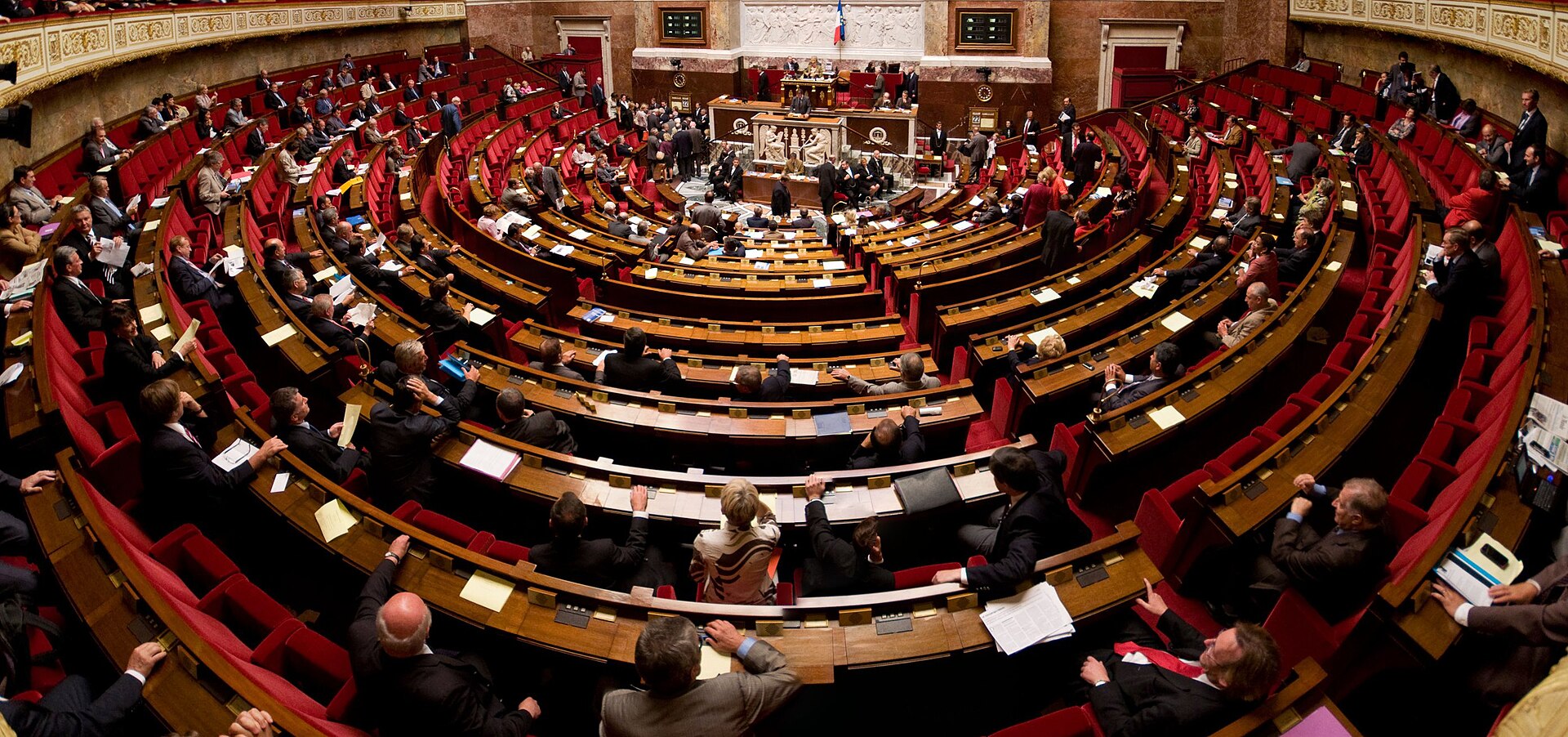
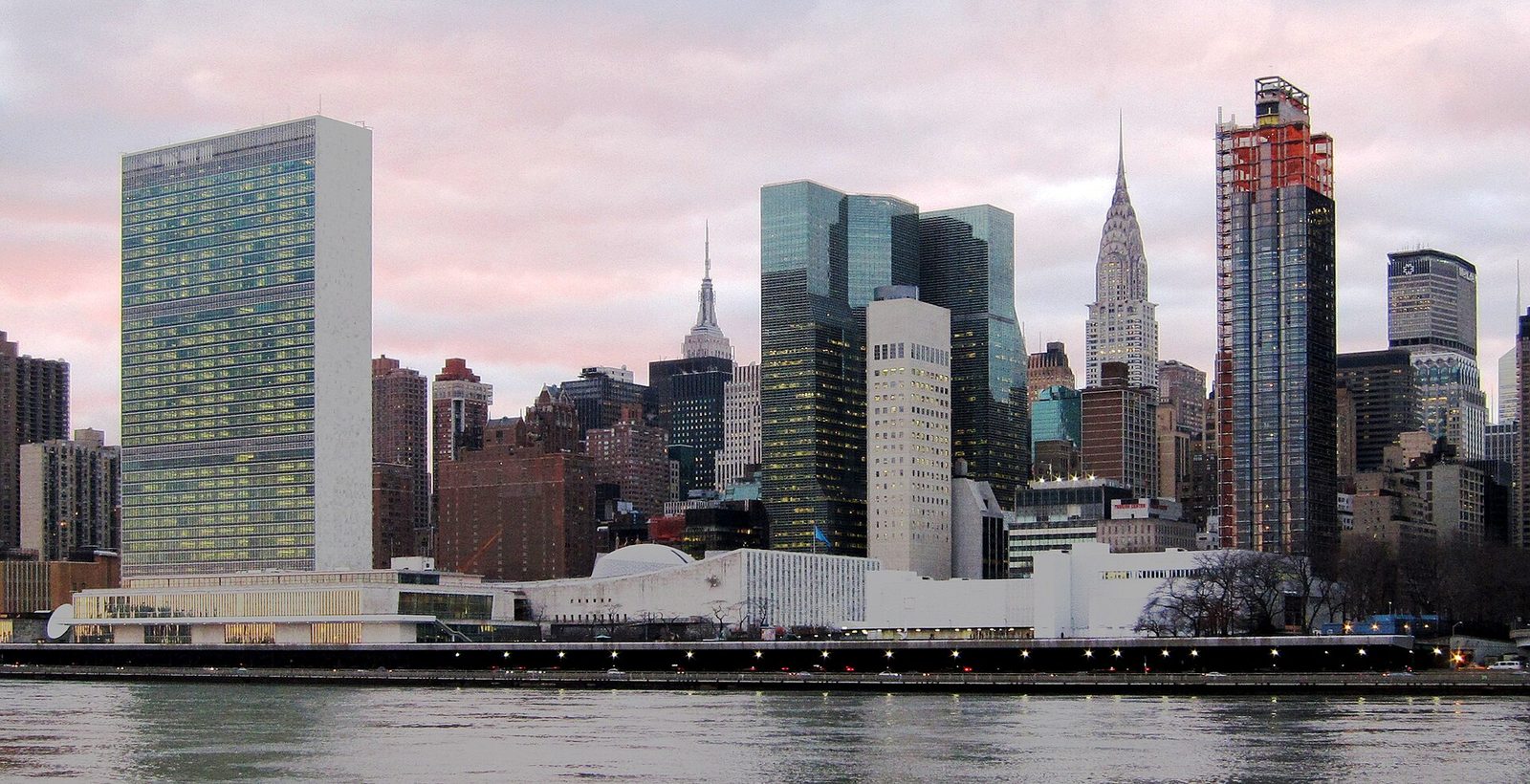
It was 10:17 PM in New York when the gavel of the President of the General Assembly, Cameroon's Philémon Yang, assisted by Annalena Baerbock, fell on the podium of the 79th session. By 141 votes in favor, 6 against — the United States, Russia, Israel, Saudi Arabia, Hungary, Argentina — and 28 abstentions, the United Nations adopted resolution A/79/L.92, titled 'States' Obligations Regarding Climate Change,' this Wednesday, May 20, 2026. A historic vote, hailed on Thursday, May 21, by international media outlets from Le Figaro to Le Monde, Le Devoir, and RFI, it enshrines the political translation of the advisory opinion rendered in July 2025 by the International Court of Justice at the request of Vanuatu.
From Vanuatu to New York, a Long Journey
The adventure began in 2019 in a classroom in Port-Vila, where about twenty law students imagined submitting the climate issue to the World Court. Seven years later, these same students were present in the General Assembly's balcony. The Vanuatuan Minister for Climate Change, Ralph Regenvanu, delivered an eight-minute speech met with a long ovation: 'For decades, we were told that climate justice was a utopia of small island states. Today, humanity has chosen the path of law.' A phrase echoed word for word by Secretary-General António Guterres, who spoke of 'a turning point as decisive as the Universal Declaration of Human Rights of 1948.'
What the Resolution Precisely States
The text, with its 31 operational paragraphs, does three essential things. Firstly, it recalls that states' emissions reduction obligations stem not only from the Paris Agreement but also from customary international law and several human rights treaties. It then establishes that any 'substantial and deliberate' failure to meet these obligations can engage the international responsibility of the offending state, opening the way for contentious actions before the ICJ. Finally, it invites national courts to integrate these obligations into their domestic legal systems and encourages the Human Rights Council to develop a specific monitoring mechanism. The resolution explicitly mentions fossil fuels as the 'primary cause' of climate disruption—a formulation hard-won from the Arab group.
The Opposition Bloc
The six states that voted against form a heterogeneous but telling group. Washington, through the voice of Deputy Representative Dorothy Shea, denounced 'a text that undermines the sovereignty of nations and corporate innovation.' Moscow spoke of a 'political maneuver by Europeans against producing countries.' Riyadh and Buenos Aires relied on economic and constitutional arguments. More unexpectedly, Viktor Orbán's Hungary publicly distanced itself for the first time from the European consensus, explaining that the resolution 'paves the way for repeated litigation against sovereign states.' Among the abstainers, notable countries include India, Brazil, Indonesia, Iran, and Mexico—a warning signal on the thorny issue of financing.
Unprecedented Legal Scope
A General Assembly resolution, unlike a Security Council decision, is not legally binding. However, by enshrining the July 2025 advisory opinion in black and white, it changes the game. According to Sandrine Maljean-Dubois, a research director at the CNRS interviewed by Le Monde, 'this text opens the way for actions before national courts based on general international law.' In fact, several NGOs announced on Thursday that they would file lawsuits next week against states that adopted the resolution but had not updated their Nationally Determined Contributions (NDCs) by COP31 in November in Belém.
France at the Heart of Negotiations
Behind the scenes, French diplomacy played a pivotal role. It was at the French Embassy in New York that the last-minute compromise on the financing issue was prepared, under the aegis of climate sherpa Brice Lalonde, which helped rally twenty-three African states. In Paris, Élisabeth Borne, now Minister of Foreign Affairs, hailed 'a success for multilateralism in an era that doubts it.' The Élysée plans an Ecological Defense Council for Monday to align France's reduction trajectory with the new UN framework. France currently emits 366 million tons of CO2 per year and will need to reduce this figure to 270 million by 2030 to meet its own commitments.
Belém in Sight
The resolution arrives exactly six months before COP31, which will be held in Belém, Brazil, from November 9 to 21, 2026. For Brazilian President Luiz Inácio Lula da Silva, who will chair the conference, it is a trump card: 'We now have the political mandate to demand commensurate commitments.' On the civil society side, Greta Thunberg hailed on social media 'a first step—no more, but no less.' More cautiously, the NGO Climate Action Network recalls that the 141 votes in favor are only meaningful through concrete implementation. And this will largely depend on public mobilization.
Editorial Opinion
One should not be intoxicated by the numbers—141 votes in favor is exactly the score obtained in 2024 for the resolution demanding a ceasefire in Gaza, with no real legal effect. But this comparison overlooks the essential: for the first time since the 2015 Paris Agreement, international law reminds states that they have not only political commitments but obligations. This is a conceptual revolution far more profound than it appears. The opponents have understood this: if Washington voted against it, it was not out of hostility to the climate but out of fear of future litigation. What remains now is the hardest part—making these obligations live in national courtrooms. This is the work of the next five years, and likely the great legal undertaking of our generation.
Key Takeaways
- Wednesday, May 20, 2026: adoption in New York of resolution A/79/L.92 on states' climate obligations.
- Score: 141 for, 6 against (United States, Russia, Israel, Saudi Arabia, Hungary, Argentina), 28 abstentions.
- Text stemming from the July 2025 advisory opinion of the International Court of Justice, initiated by Vanuatu.
- Fossil fuels identified as the 'primary cause' of disruption.
- Opens the door to contentious recourse before national and ICJ courts.
- Key step before COP31 in Belém (November 9-21, 2026).