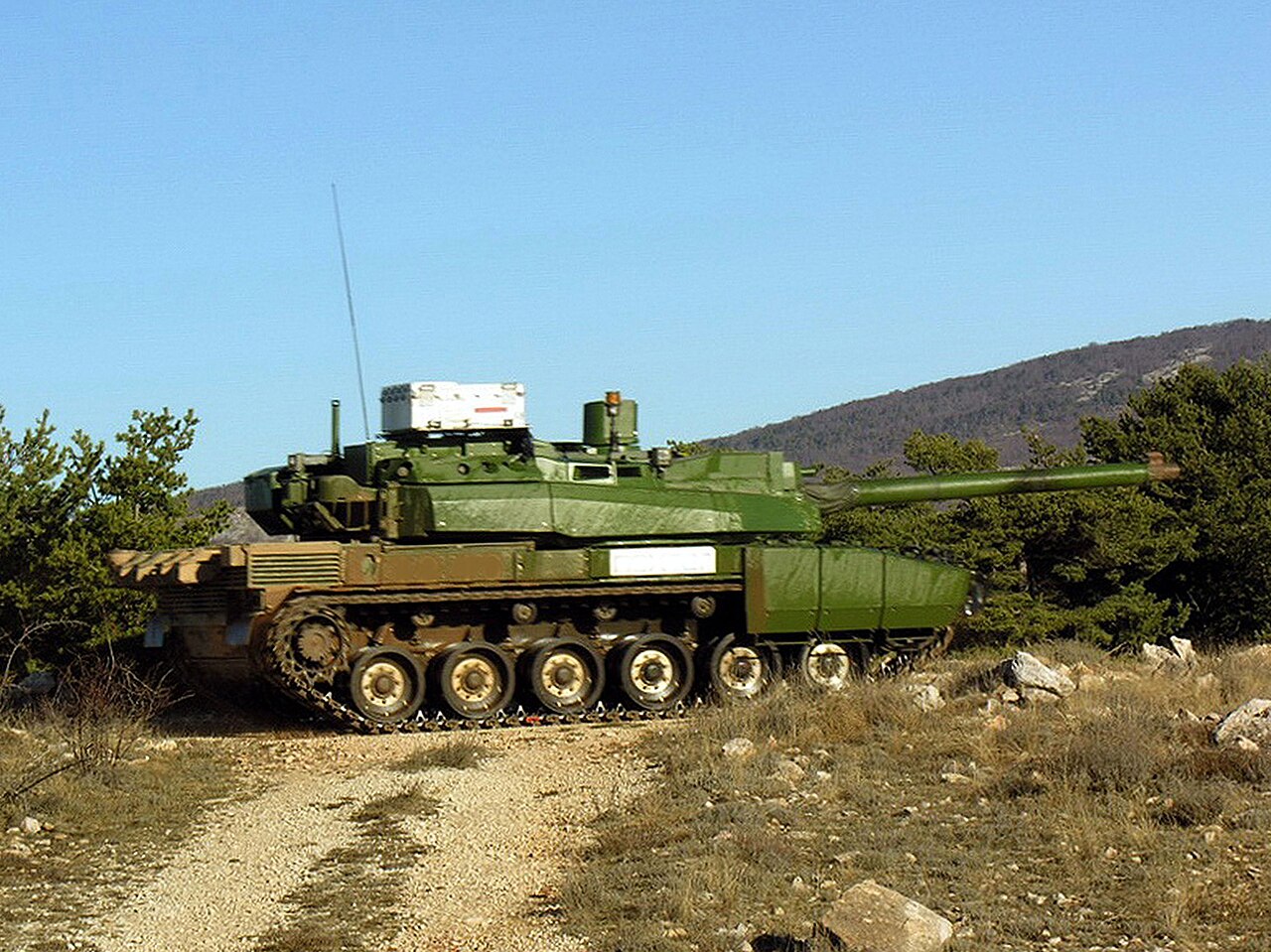
Emmanuel Macron left the Élysée early Thursday morning, April 30, 2026, heading for the Marne region, for what constitutes one of the most symbolic military deployments of his second term. At the Suippes and Mailly-le-Camp military bases, the President of the Republic attended the final phase of "Orion 2026," a joint exercise of unprecedented scale: nearly 30,000 soldiers mobilized since January, 7,000 vehicles engaged, 250 aircraft, 25 Navy ships, and the active participation of nine allied nations (Germany, United Kingdom, Belgium, Netherlands, Italy, Spain, Poland, United States, and Canada). According to the Ministry of the Armed Forces, it is "the highest intensity exercise organized on French soil since the end of the Cold War."
A Scenario: Major War Against a State
Unlike usual operations focused on counter-terrorism or external projection, "Orion" was designed around an explicit scenario: a major engagement against a state adversary of equivalent level. A fictional state named "Mercury," located to the east, attacks an allied country, "Arnland," forcing France and its NATO partners to conduct a collective defense operation under Article 5. The scenario encompasses cyber warfare, electronic warfare, drones, air defense, amphibious capabilities, and conventional nuclear engagement. The final phase, which Macron attended, simulated the recapture of enemy territory by a French armored division supported by allied aviation.
The Fire That Almost Cancelled the Visit
The incident went unnoticed by the general public but nearly derailed everything. Around 11 a.m. on Thursday morning, a fire broke out in a technical area of the Mailly-le-Camp base, where the presidential plane was scheduled to land in the early afternoon. According to Le Figaro, the fire—likely caused by the ignition of an exercise pyrotechnic device—required military firefighters for two hours. The visit was maintained, but the program was slightly modified: Macron ultimately landed in Suippes and traveled to Mailly by helicopter. The Élysée downplayed the incident, but it underscores the operational complexity of an exercise of this magnitude.
A Doctrinal Speech on Rearmament
Addressing the troops gathered at Mailly-le-Camp, Emmanuel Macron delivered a thirty-minute speech focused on France's new defense doctrine. Three key areas were detailed. First: confirmation of the budgetary commitment—€413 billion for 2024-2030 under the Military Programming Law (LPM), with priority given to munitions, drones, surface-to-air defense, and the renewal of air-land forces. Second: the operational ambition to deploy "a full division" (approximately 25,000 men) capable of engaging a high-level adversary autonomously for 30 days by 2030. Third: the moral dimension, with a call for the nation's "moral rearmament" and a strong reference to the spirit of defense. "Orion is not an exercise. It is a message," he emphasized.
Resonance with the Iranian Context
The event cannot be understood without its international context. As Donald Trump extends his naval blockade against Iran and Brent crude surpasses $125, and as European nations hold an emergency meeting in Brussels on Friday to respond to Israel's interception of the "Global Sumud" flotilla, "Orion 2026" sends a clear signal: France intends to assert its military sovereignty and its capacity to act independently of the United States if necessary. Several analysts, including Camille Grand (former NATO Assistant Secretary General), believe the exercise should be seen as a "multidirectional strategic response": primarily to Russia, then to Iran, but also—implicitly—to the American repositioning that weakens the Atlantic architecture.
Editorial Opinion
"Orion 2026" deserves to be analyzed for what it is: more than an exercise, a political act. Three readings emerge. The first is strictly military: France is finally validating its ability to conduct a high-intensity engagement after two decades spent in counter-insurgency warfare. This is an essential and overdue paradigm shift, the lessons of which were accelerated by the Ukrainian conflict. The second reading is budgetary: with €413 billion over seven years, France is undertaking an unprecedented financial effort since 1962—but remains far from American and Chinese standards, and behind Germany in terms of GDP percentage dedicated to defense. The third reading is diplomatic: the exercise establishes France as the "pivot army" for Europeans, a status it had been competing with Germany for since 2014. Our conviction: "Orion" is a tactical success but will be judged on its political transformation. If Paris succeeds in transforming this demonstration into a concrete initiative within the next six months—for example, a European naval convoy escorting the next humanitarian flotilla, or a European coalition on Iran—then Macron's second term will have found its strategic compass. Otherwise, "Orion" will remain a spectacular exercise without political follow-up.
Key Takeaways
- 30,000 soldiers, 7,000 vehicles, 250 aircraft, 25 ships, 9 allied nations.
- Scenario: Major engagement against a state adversary of equivalent level (Article 5).
- Military Programming Law 2024-2030: €413 billion (+40% over the previous LPM).
- Incident: Fire at Mailly-le-Camp before presidential arrival, no casualties.
- Strategic interpretation: a signal of sovereignty to Moscow, Tehran, and Washington.