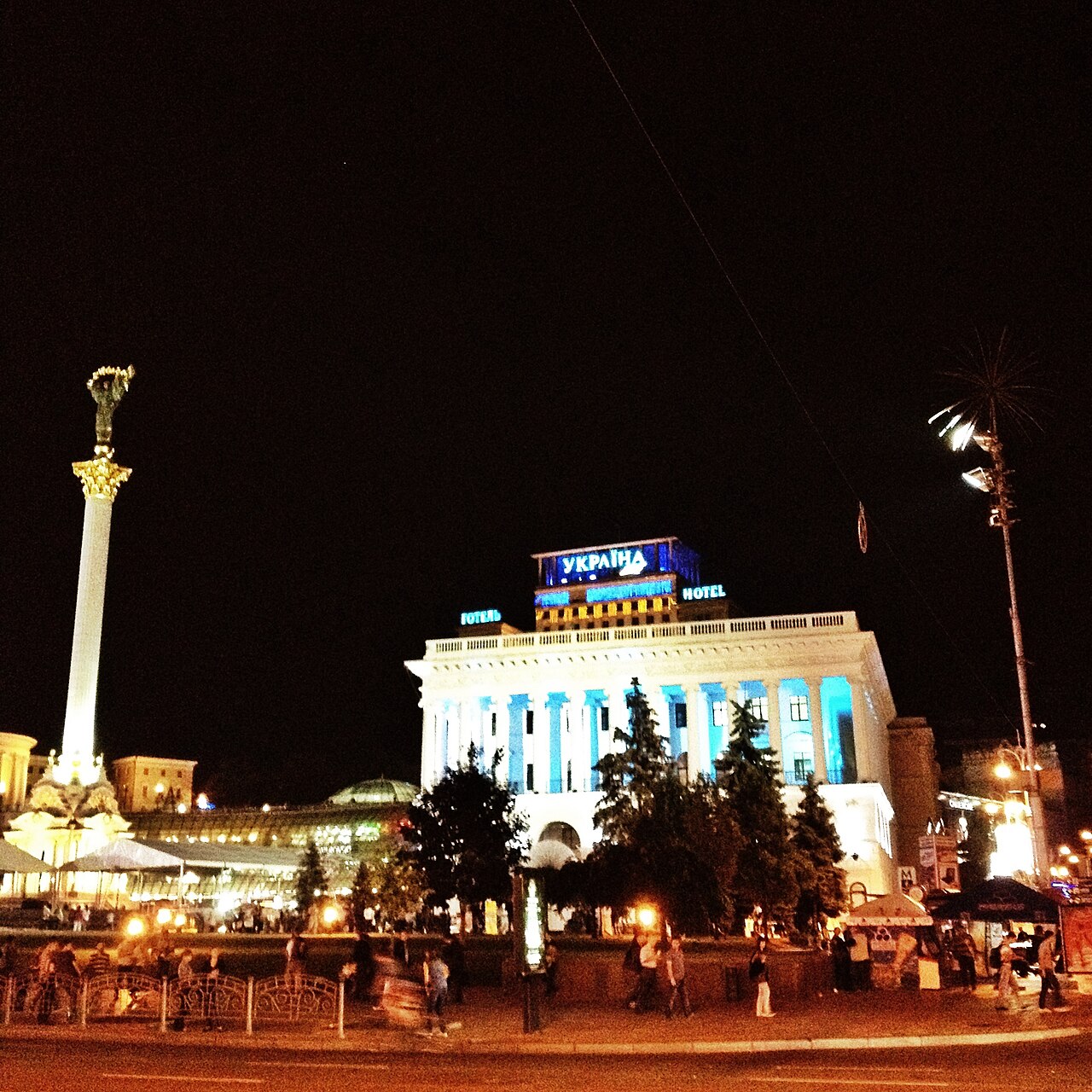
The first explosions were heard around one in the morning, Kiev time. For several hours, until the dawn of this Sunday, May 24th, 2026, successive waves of projectiles tore through the skies of the Ukrainian capital. AFP journalists present on the scene described tracer rounds slicing through the night, blasts shaking buildings, a city in shock. "It was total chaos. Children started screaming, people were panicking. It was a truly terrifying night," testified Sofia Melnychenko, a Kiev resident, quoted by AFP. In the morning, Ukrainian authorities confirmed one of the most massive aerial attacks since the beginning of the war launched in February 2022.
A Night of Terror Over the Capital
According to the Ukrainian Air Force, Russia targeted Ukraine with approximately 90 missiles of various types—ballistic and cruise—and no fewer than 600 attack drones. Of this total, 55 missiles and 549 drones were reportedly intercepted by air defense. The unneutralized vectors were sufficient to cause human and material disaster on an unprecedented scale. The official toll, as of late morning, indicated at least four deaths and over a hundred injuries nationwide. Kiev Mayor Vitali Klitschko reported on Telegram two deaths and fifty-six injuries in the capital alone, to which were added two more victims and nine injured in the region, including an infant under one year old.
The Orechnik, a Brandished Deterrent
The most disturbing element of this night centers on a single missile: the Orechnik. This intermediate-range ballistic missile with nuclear capability, developed by Russia and hitherto used with extreme parsimony, was confirmed by Moscow as being employed in this attack. This is only the third time since the start of the invasion that Moscow has deployed it: first in November 2024 against a military factory in Dnipro, then in January 2026 against an aeronautical facility in the west of the country. In both previous cases, the weapon was not carrying nuclear warheads. The same applies this night, according to initial Western analyses reported by France 24 and La Croix.
An Unambiguous Political Message
The signal sent is blunt: Russia is using its greatest non-strategic deterrent weapon to punish Ukraine. The attack comes just days after a Ukrainian drone strike on facilities in Starobilsk, in the Moscow-occupied Luhansk region, which reportedly caused several casualties according to occupation authorities. Vladimir Putin had then promised a military response. On Telegram, Volodymyr Zelensky denounced a "deliberate attack on civilians" and called for new Western sanctions, specifically naming the Kremlin and urging Washington and Brussels to increase economic pressure.
Kiev's Cultural Heritage Hit
The material destruction is striking in its symbolism. Among the buildings hit are the National Chernobyl Museum, several residential buildings, and sites in the historic center. The building of the Ukrainian Ministry of Foreign Affairs was also struck, "slightly damaged by a nearby explosion," according to Foreign Minister Andriï Sybiga. All districts of the capital were affected to varying degrees, and several fires broke out in the early morning hours, mobilizing hundreds of firefighters.
Warsaw on High Alert
In response to the scale of the attack, Poland scrambled Polish and allied fighter jets to secure its airspace, a precautionary measure Warsaw has taken for two years with each large-scale missile wave targeting western Ukraine. The operational command of the Polish armed forces specified that no incursions had been detected, but that the deployment would remain on heightened alert as long as Russian forces maintained their aerial pressure. In Brussels, several member states are calling for an extraordinary European Council meeting in the coming days.
Ukraine Exhausted, But Standing
This May 24th attack comes in the context of a war of attrition entering its fifth year. While Ukraine managed in the spring to retake several hundred square kilometers of territory as part of a limited counter-offensive in the south, Russian pressure remains intact across the entire front. The US defense budget for 2027, as currently envisioned by the Trump administration, does not provide for substantial additional funding for military assistance to Kiev—a signal not lost on Moscow. For the Ukrainian population, this night is one too many. The question is no longer solely military but political: how far is the Western world prepared to tolerate this escalation before adjusting its support?
Editorial Opinion
This night is not simply another night in an unending war. It is a demonstration: Russia is deploying its most impressive weapon—the Orechnik—not to decide a battle, but to send a message to Kiev, to Washington, to Brussels. Psychological warfare is now merging with real warfare. And the West's relative silence in the face of escalation is not wisdom—it is an invitation to continue. Kiev resists. But a people cannot be asked to resist indefinitely alone against a power that tests the limits of what is accepted a little further each week.
Key Takeaways
- Night of May 23-24, 2026: Russia launches approximately 90 missiles and 600 drones at Ukraine, primarily targeting Kiev.
- Provisional toll: at least 4 dead and over 100 injured, including an infant.
- Third confirmed use of the nuclear-capable ballistic missile Orechnik since the beginning of the war.
- 55 missiles and 549 drones intercepted by Ukrainian air defense.
- National Chernobyl Museum and areas around the Ministry of Foreign Affairs damaged.
- Poland scrambled its fighter jets to secure its airspace.