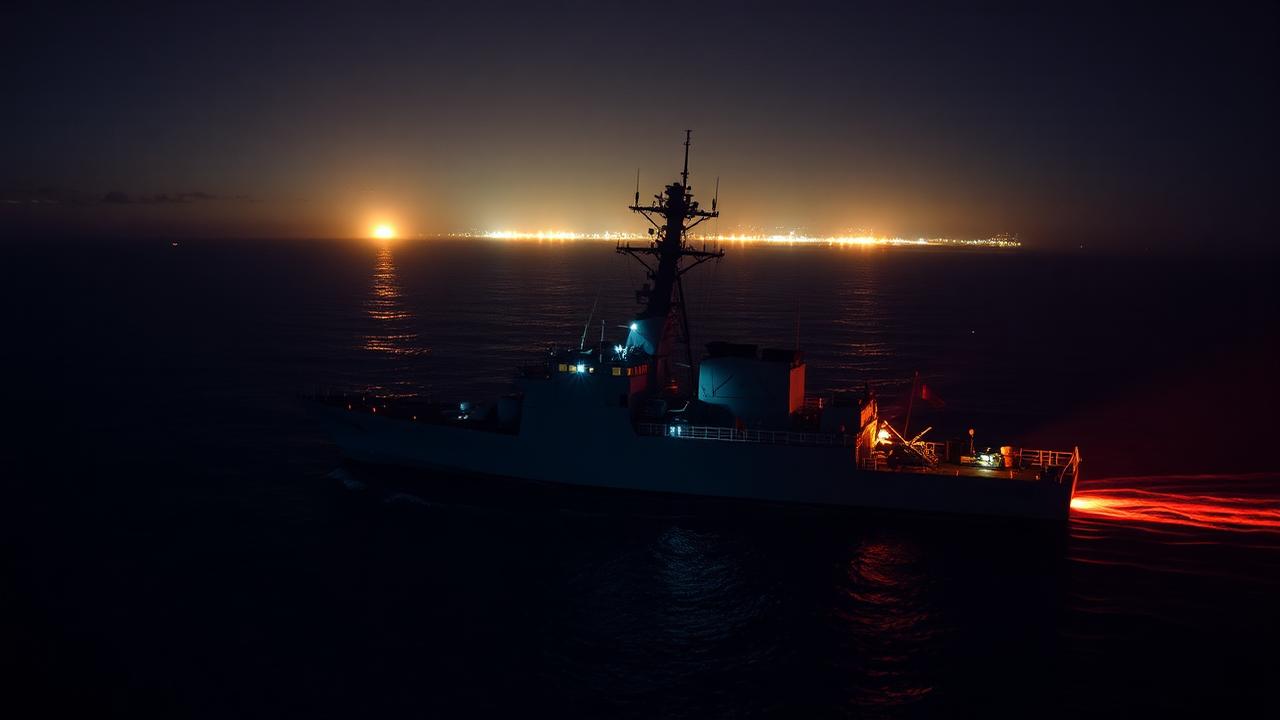
In the night of Monday, May 25 to Tuesday, May 26, 2026, the U.S. Central Command (CENTCOM) announced a series of military strikes conducted in southern Iran, in the Bandar Abbas region – a strategic choke point controlling the entrance to the Strait of Hormuz. According to the official statement relayed by CNBC and Stars and Stripes, two Islamic Revolutionary Guard Corps boats, which were laying mines in the strait, as well as a surface-to-air missile launch site that had targeted American aircraft, were struck. Captain Tim Hawkins, spokesperson for CENTCOM, spoke of 'self-defense strikes to protect our forces from threats posed by Iranian forces'.
A Troubling Simultaneity with Diplomacy
At the very moment missiles were hitting the vicinity of Bandar Abbas, a high-ranking Iranian delegation was landing in Doha, Qatar, to resume talks aimed at fully reopening the Strait of Hormuz and transforming the fragile ceasefire into a lasting agreement. Secretary of State Marco Rubio explicitly stated that 'an agreement remains possible' and presented the strikes as an 'isolated incident' with no impact on the diplomatic sequence. On Truth Social, President Donald Trump posted only three words: 'Peace Through Strength'. An old doctrine – that of Ronald Reagan – applied to a theater where the slightest strike can derail a month of discussions.
Tehran Denounces Violation of Ceasefire
The Iranian reaction was immediate. The Revolutionary Guards claim to have shot down an American MQ-9 Reaper drone in response to the strikes, and opened fire on an RQ-4 drone as well as an F-35 fighter jet that entered Iranian airspace – claims not confirmed by Washington. Tehran has officially accused the United States of a 'flagrant violation of the ceasefire' in effect for several weeks, and threatened 'legitimate retaliation'. Iranian sources also indicated to Al Jazeera's correspondent that the IRGC had also targeted a ship at sea before the American strikes – each side blaming the other for the escalation.
Global Energy Stakes
The Strait of Hormuz normally accounts for about one-fifth of global hydrocarbon trade. Since the outbreak of open warfare at the beginning of 2026, the oil flow transiting through the strait has fallen to about 30% of its usual level in the first quarter, according to estimates released by the U.S. Energy Information Administration and reported by economic news agencies. Iranian mines, when not quickly neutralized, pose a direct threat to oil tankers and weigh on the price of Brent. Negotiators gathered in Doha on May 26 must therefore address, alongside military and nuclear issues, a regional energy crisis that is impacting Europe, Asia, and even the American markets.
Three Credible Scenarios, One Equilibrium Point
In the chanceries, three scenarios are being studied. The first, optimistic, relies on a comprehensive agreement combining the withdrawal of Iranian mines, a suspension of American strikes, and strengthened guarantees on Iran's nuclear program – the political knot of any lasting settlement. The second, darker, anticipates a gradual escalation that would strengthen hardline factions in both Tehran and Washington, leading to the condemnation of any negotiation. The third, arguably the most likely in the short term, foresees the continuation of an alternating cycle of targeted strikes and discussions in Doha, neither total war nor true peace. The diplomatic window is still open on May 26 – but just barely.
Editorial Opinion
There is something profoundly cynical in the image of these bombs falling while diplomats are packing their bags for Doha. Washington masters the art of maximum pressure, but each 'defensive' strike further weakens the architecture of trust without which no agreement can be tenable. Tehran is not innocent either: laying mines in an international strait during a ceasefire is tempting fate. This conflict increasingly resembles a game of poker where both players are bluffing – but it is the rest of the world that pays the stakes, in barrels of oil and human lives.
Key Takeaways
- CENTCOM struck two IRGC boats laying mines and an SAM site in Bandar Abbas on the night of May 25-26, 2026.
- The strikes occurred as an Iranian delegation landed in Doha for talks.
- Iran denounces a 'flagrant violation' of the ceasefire and threatens retaliation.
- Oil flow through Hormuz fell to about 30% of its usual level in Q1 2026 (EIA).
- Marco Rubio calls the strikes an 'isolated incident' and maintains the negotiation schedule.