
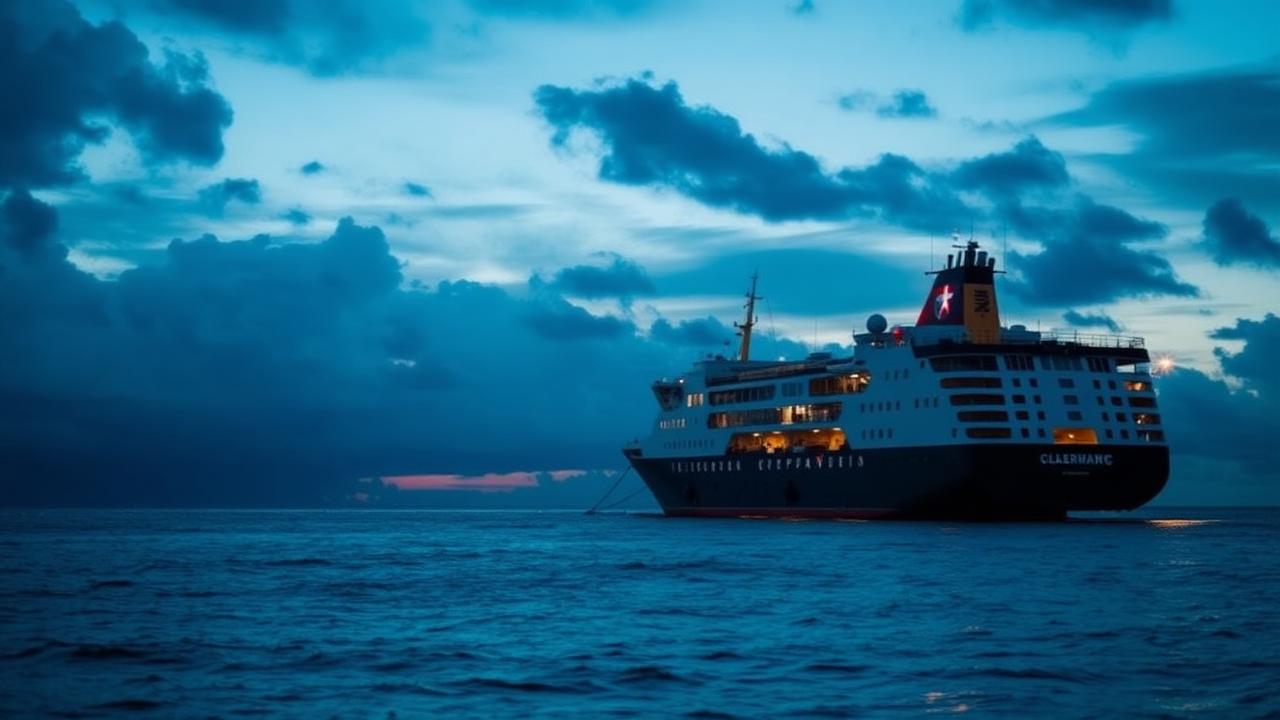
Off the coast of Cape Verde, in the Atlantic, the MV Hondius has been immobilized for several days in a nightmarish situation. This Dutch cruise ship, operated by the company Oceanwide Expeditions, is carrying approximately 150 people of 23 nationalities. Three of them have died. The cause: an outbreak of hantavirus, Andes strain—the only variant of this virus known to be transmissible from human to human, even if this phenomenon remains rare. As of Thursday, May 7, 2026, with the Canary Islands refusing to open their ports and all of Europe following the situation with concern, the human and health toll continues to rise.
What is the Andes strain of Hantavirus?
Hantavirus is normally transmitted to humans through contact with infected rodents—their urine, feces, or saliva. The Andes strain, identified in South America, is the only known variant capable of human-to-human transmission, although this ability remains very limited and requires close, prolonged contact. It causes a severe pulmonary syndrome, with a mortality rate that can exceed 35% in confirmed cases. To date, there is no approved vaccine or specific antiviral treatment.
The Journey That Triggered It All: From Ushuaia to Nightmare
On April 1, 2026, the MV Hondius departed from Ushuaia, Argentina, for a multi-week polar cruise destined for Antarctica and several isolated islands in the South Atlantic. It is a modestly sized ship: 80 cabins, a maximum capacity of 170 passengers, and a crew of about 70 people, including a doctor on board. Argentine health authorities confirmed that no passengers showed symptoms at departure, but specified that the incubation period for hantavirus can be up to eight weeks—meaning the index patient(s) could have already been incubating the disease unknowingly.
The index case is a Dutch couple. Before boarding, they had undertaken a four-month road trip through Chile, Uruguay, and Argentina between November 2025 and April 2026. The Argentine Ministry of Health has traced their movements. Hantavirus is endemic in several Argentine provinces—which recorded 28 deaths last year—so exposure likely occurred during this land-based trip.
Timeline of a Maritime Disaster
April 1, 2026 — The MV Hondius departs from Ushuaia, Argentina. No symptoms declared on board.
April 11, 2026 — Death of the first passenger on board, a Dutch national. His body is preserved on the ship.
April 24, 2026 — The deceased's body and his wife are evacuated by air from Saint Helena, a British territory, to Johannesburg.
April 26, 2026 — The wife of the first deceased collapses at Johannesburg Airport and dies in the hospital. Post-mortem test positive for hantavirus.
May 2, 2026 — Third death on board: a German national succumbs to the virus.
May 3, 2026 — The MV Hondius anchors off Praia, the capital of Cape Verde. No disembarkation authorized.
May 6, 2026 — Fernando Clavijo, president of the Canary Islands, categorically refuses to admit the ship. Switzerland confirms a case treated in Zurich. Total: 8 confirmed or suspected cases.
May 7, 2026 — A KLM flight attendant who was in contact with a deceased passenger is hospitalized in Amsterdam as a precaution.
Europe Divided: The Canaries Say No, Madrid Says Yes
The MV Hondius crisis has highlighted tensions between the Spanish central government and the autonomous region of the Canary Islands. Fernando Clavijo, the region's president, firmly refused to allow the ship to dock in any of the Canary Islands' ports: "We cannot allow the MV Hondius to enter the Canaries," he stated, citing a lack of sufficient information on the real danger of the epidemic and the deep trauma left by Covid-19 in the archipelago. Residents of the Canary Islands overwhelmingly supported this stance, aware of the islands' vulnerability to imported pathogens.
"Spain has a moral and legal obligation to assist these people, among whom are several Spanish citizens," recalled the World Health Organization. The Spanish central government has decided otherwise: Health Minister Mónica García announced that the MV Hondius would be allowed to dock in Tenerife within a few days. Once docked, passengers showing no symptoms would be repatriated to their respective countries. In the meantime, three individuals were medically evacuated from the ship on May 6 and returned to Spain by air. The WHO confirmed the nature of the strain involved: the Andes hantavirus, the only one with documented human-to-human transmission.
A Threat Spreading Beyond the Ship
The situation ceased to be confined to the ship on Thursday, May 7. A KLM flight attendant who had served on a Johannesburg-Amsterdam flight on April 26, carrying one of the deceased passengers, was hospitalized at the Amsterdam University Medical Center as a precaution. KLM stated that this passenger had been removed from the aircraft before takeoff—but the flight attendant had already been in contact with her. Dutch public health teams have launched contact tracing investigations. In South Africa, where two passengers were evacuated, health authorities are conducting similar operations.
The question posed by this epidemic is fundamental: how did a disease with rare human transmission contaminate so many people in the confined space of a ship? The WHO and Argentine epidemiologists are trying to reconstruct the precise chain of transmission. Forced proximity on board, shared ventilation systems, and the duration of the voyage are all aggravating risk factors. The answer to this question will determine health protocols for cruises to endemic areas.
Editorial Opinion
The MV Hondius crisis is a brutal revelation of our global health vulnerabilities in the era of mass mobility. While all eyes are on the Strait of Hormuz and the diplomatic standoff between Trump and the Pope, 150 people have been floating for weeks in a Kafkaesque limbo, trapped between a virus with no treatment and borders that are closing one after another. The response of the Canary Islands is not irrational; it is the result of a collective post-Covid trauma that has not disappeared. But the refusal to admit the ship also illustrates a disturbing reality: five years after the pandemic, international solidarity mechanisms remain as flawed as they were in 2020. The real lesson from this ghost ship is not viral—it is political.
Key Takeaways
- The MV Hondius, a Dutch ship with 150 people from 23 countries, has been hit by a hantavirus Andes strain outbreak since late April.
- 3 confirmed deaths: a Dutchman on board (April 11), his wife in Johannesburg (April 26), a German woman on board (May 2).
- 8 confirmed or suspected cases in total as of May 6, including one treated in Zurich and a KLM flight attendant hospitalized in Amsterdam on May 7.
- The Andes strain is the only hantavirus variant known to be transmissible between humans.
- The Canary Islands refuse to admit the ship; Madrid authorizes docking in Tenerife from May 11.
- The WHO reminds Spain of its moral and legal obligation to provide assistance.