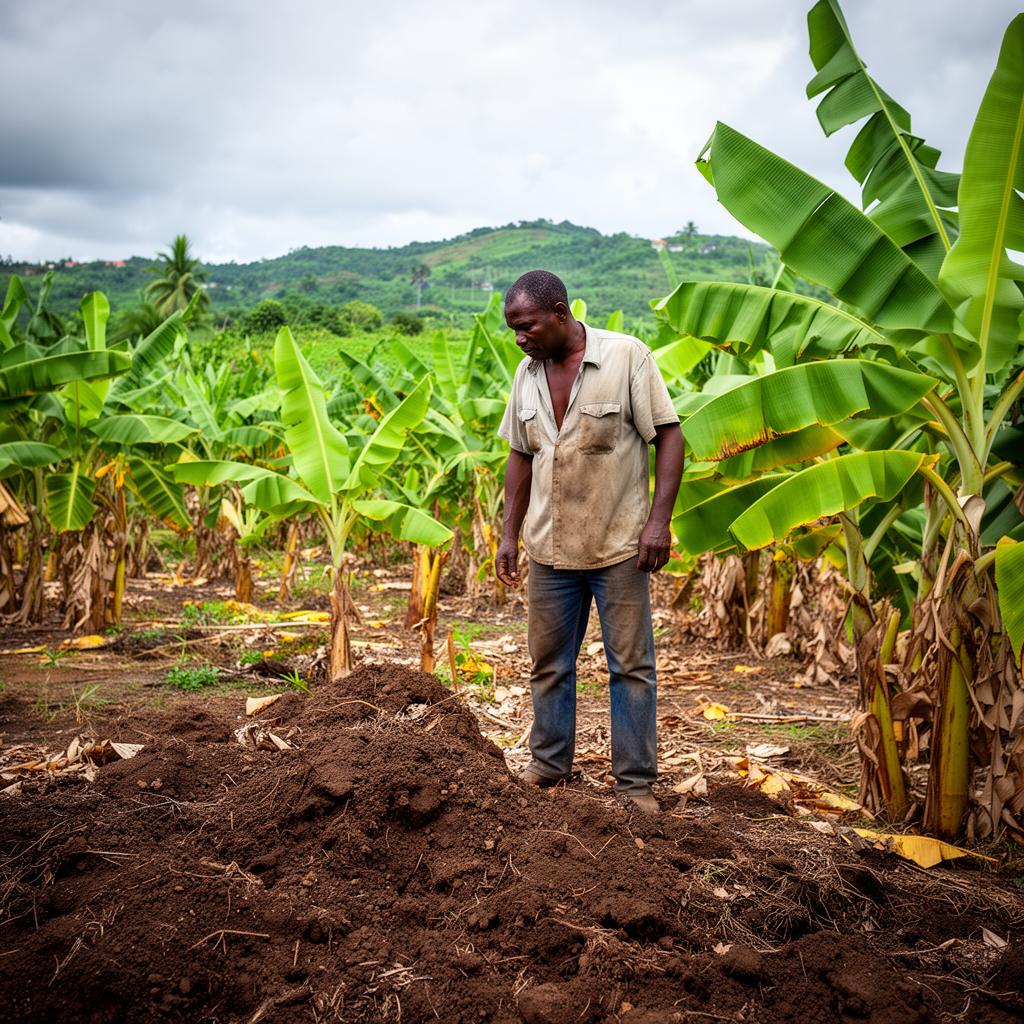
Six years after its opening, the Pesticide Victim Compensation Fund (FIVP) in Martinique remains a mechanism that is both anticipated and criticized. Established by the 2020 Social Security Financing Law and managed by the occupational accidents/diseases branch, it has offered a path to compensation since 2020 for agricultural workers professionally exposed to phytosanitary products, including chlordecone, which was legally used in French West Indies banana plantations from 1972 to 1993.
A Pollutant That Transcends Generations
According to Santé publique France, more than 90% of the adult population in Martinique and Guadeloupe shows traces of chlordecone in their blood. The health agency also highlights a link between exposure and certain pathologies, primarily prostate cancer, for which the incidence in Martinique is among the highest in the world according to territorial cancer registries. The molecule, being ultra-stable, persists in soils for decades, even centuries.
A Compensation System Deemed Too Slow
The FIVP covers, for farmers and agricultural workers, a list of recognized occupational diseases. However, on the ground, several victim associations—including Lyannaj pou dépolyé Matinik and the association of West Indies agricultural workers—denounce processing times that frequently exceed a year, rejected claims due to lack of proof of exposure decades after the fact, and a scope of compensable pathologies still considered too narrow. Several parliamentary amendments in recent years have attempted to broaden this scope.
The Scar of the 2023 Dismissal
The judicial trauma remains raw. The investigation opened in 2008 at the public health division of the Paris judicial court concluded in January 2023 with a dismissal primarily on the grounds of the statute of limitations. The decision sparked outrage in the West Indies, where it is perceived as a denial of collective responsibility by the state, manufacturers, and health authorities. Several appeals have been filed; none have so far led to a reversal of this decision.
Chlordecone Plan IV at Midpoint
The fourth "Chlordecone Plan" (2021-2027), with a budget of over 90 million euros for the period, funds research, experimental decontamination actions, support for fishermen banned from certain areas, and medical assistance. At the midpoint, the assessment, presented in May 2026 at the steering committee in Fort-de-France, shows progress in soil screening and mapping, but persistent disappointment regarding effective decontamination, for which techniques remain experimental. For Martinique associations, the question remains: how to compensate with dignity, when the contamination itself continues?