
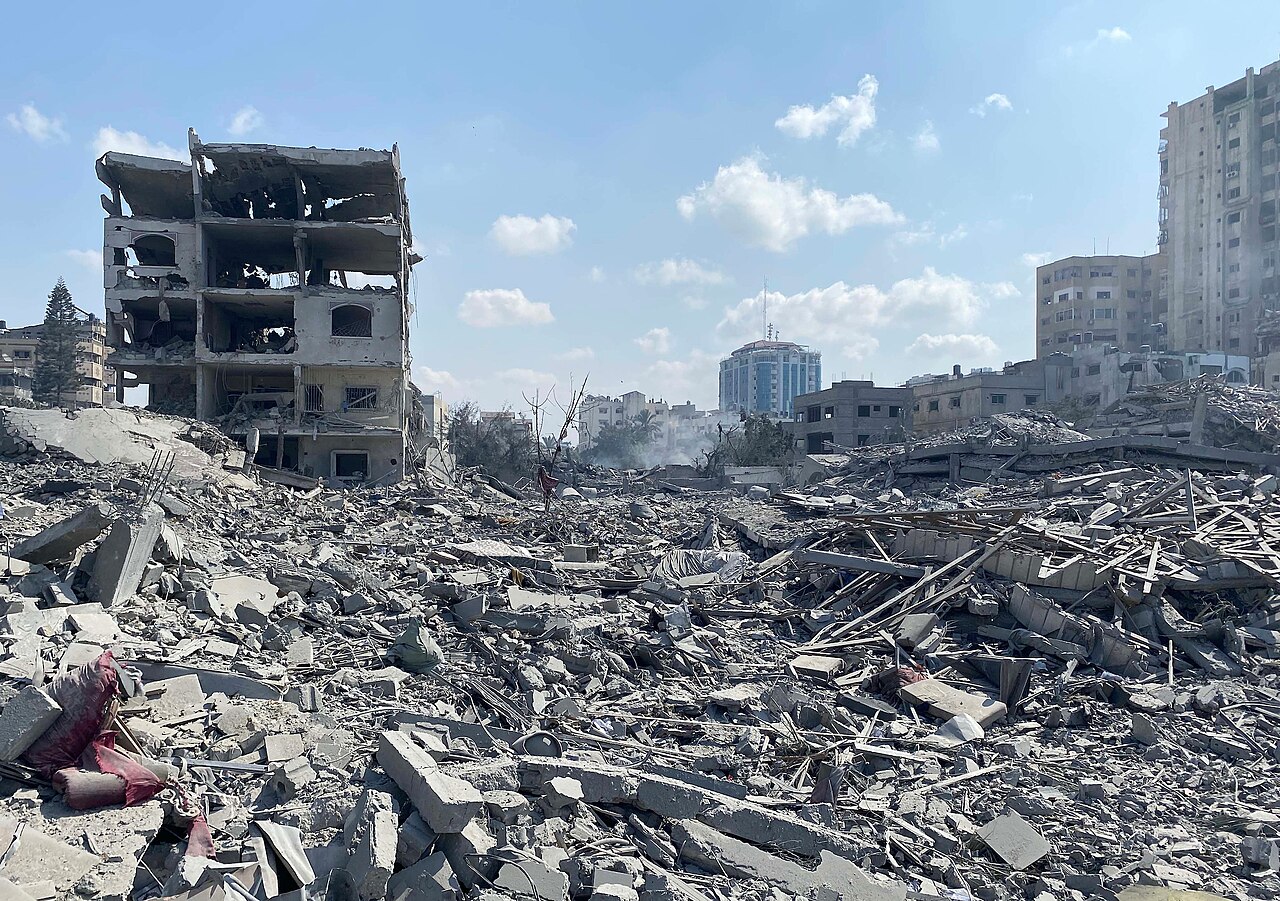
Signed in October 2025 under the auspices of Washington, the Gaza ceasefire has never truly stopped resembling a war. Seven months later, on May 21, 2026, Nickolay Mladenov, high representative of the Board of Peace founded by the United States to oversee the transition in Gaza, came to state this before the United Nations Security Council. His warning, relayed by Al Jazeera, Al-Monitor, The National, and the UN itself, is unequivocal: "The current status quo in Gaza risks becoming permanent."
A Ceasefire on Paper, a War in Reality
Since the agreement came into effect in the fall of 2025, following two years of Israeli offensives related to the Hamas attack of October 7, 2023, the international community had hoped for a lasting de-escalation. But on the ground, violations are accumulating. The Gaza government's media office, like several NGOs, has documented hundreds of strikes, shootings, and deadly incidents since the agreement. The figures provided by local authorities and OCHA vary, but converge on one point: the ceasefire has never been fully respected, and the number of civilian deaths, particularly children, continues to rise month after month.
Mladenov Sounds the Alarm
Before the Security Council, Mladenov painted a stark picture of the situation. According to the report published by the United Nations in Palestine, the envoy warned that delays in implementing the transition plan "will only exacerbate suffering" and risk creating a state of permanent limbo. The envoy called on all Council members—starting with the United States, the sponsors of the agreement—to exert real pressure for the steps of the plan, particularly those related to security and civilian governance, to be implemented without further delay.
A Rhetorical Shift on Hamas
When questioned about Hamas's future role, Mladenov made statements that surprised some observers. Quoted by The National, the envoy spoke of the need to differentiate between the movement's military wing, which he believes must disarm as part of the plan, and its political existence. This phrasing marks a shift from the Board of Peace's initial discourse, and some analysts interpret it as the beginning of a political compromise aimed at avoiding an institutional vacuum in Gaza. The Israeli side immediately contested these remarks; the Palestinian side received them with caution.
Strangled Humanitarian Aid
While diplomacy fumbles, the humanitarian situation remains catastrophic. According to OCHA and UN agencies, only a fraction of the aid coming from Egypt and other crossings actually manages to be distributed within the Gaza Strip. Humanitarian operations are hampered by restrictions on the import of spare parts, generators, and fuel, by infrastructure damage, by damaged roads, and by the continued presence of gunfire and strikes in several areas. In overcrowded camps, children play mere meters from the tents that aid workers must spray to combat the proliferation of insects.
The Risk of De Facto Partition
Mladenov's warning takes on a formidable geopolitical dimension. Several analysts point out that Israel, by maintaining reinforced military control over a significant part of the enclave without a clear withdrawal timeline, is de facto creating a partition of the territory. In the north, areas under reinforced military control. In the south, a space partially accessible to humanitarian aid but unstable. And everywhere, a population of over two million people with no prospect of returning to normal life. Without any real diplomatic leverage, the October 2025 ceasefire remains what it is today: a fragile legal fiction.
Editorial Opinion
A ceasefire that continues to produce deaths every week is not a ceasefire. It is a war with another name. What Mladenov states in diplomatic terms, any lucid person can translate: without real American pressure on Israel, without a mechanism of constraint and without a timeline, the October 2025 agreement will lead nowhere. The "permanent division" the envoy speaks of is not a hypothesis—it is what is being built, brick by brick, checkpoint by checkpoint. The world watches. The world counts the dead. The world does little. Perhaps this is the real news this Sunday.
To Remember
- May 21, 2026: Nickolay Mladenov warns the UN Security Council of the risk of a "permanent" status quo in Gaza.
- Ceasefire signed in October 2025 under American auspices, never fully respected.
- Catastrophic human toll: hundreds of deaths, including many children, since the agreement.
- Humanitarian aid hampered by restrictions on fuel, spare parts, and roads.
- Rhetorical shift: Mladenov now distinguishes between the military and political wings of Hamas.
- Israel maintains reinforced military control over a significant part of the enclave.