On Monday, May 4th, 2026, at 4:43 PM, a blast rocked the Huasheng Fireworks factory in the city of Liuyang, the millennia-old cradle of global pyrotechnics. Twenty-six dead, sixty-one injured, neighborhoods razed. Xi Jinping has spoken. Officials have been arrested. But the structural issues remain unresolved.
4:43 PM: The Black Powder City Trembles
There is something cruel in Liuyang's destiny. This city of 1.5 million inhabitants, nestled in the hills of Hunan province in central China, is the world capital of an art born here fourteen centuries ago. According to the Guinness Book of Records, it was the Buddhist monk Li Tian who, during the Tang Dynasty (618-907 AD), is said to have invented the first firecracker in history by inserting gunpowder into hollow bamboo stems.
Today, the city produces about 60% of the fireworks sold on the Chinese domestic market, and some 70% of those exported worldwide. Every fireworks display illuminating an Olympic stadium, a New Year's Eve celebration, or a state ceremony somewhere on the planet is, with a high probability, manufactured here.
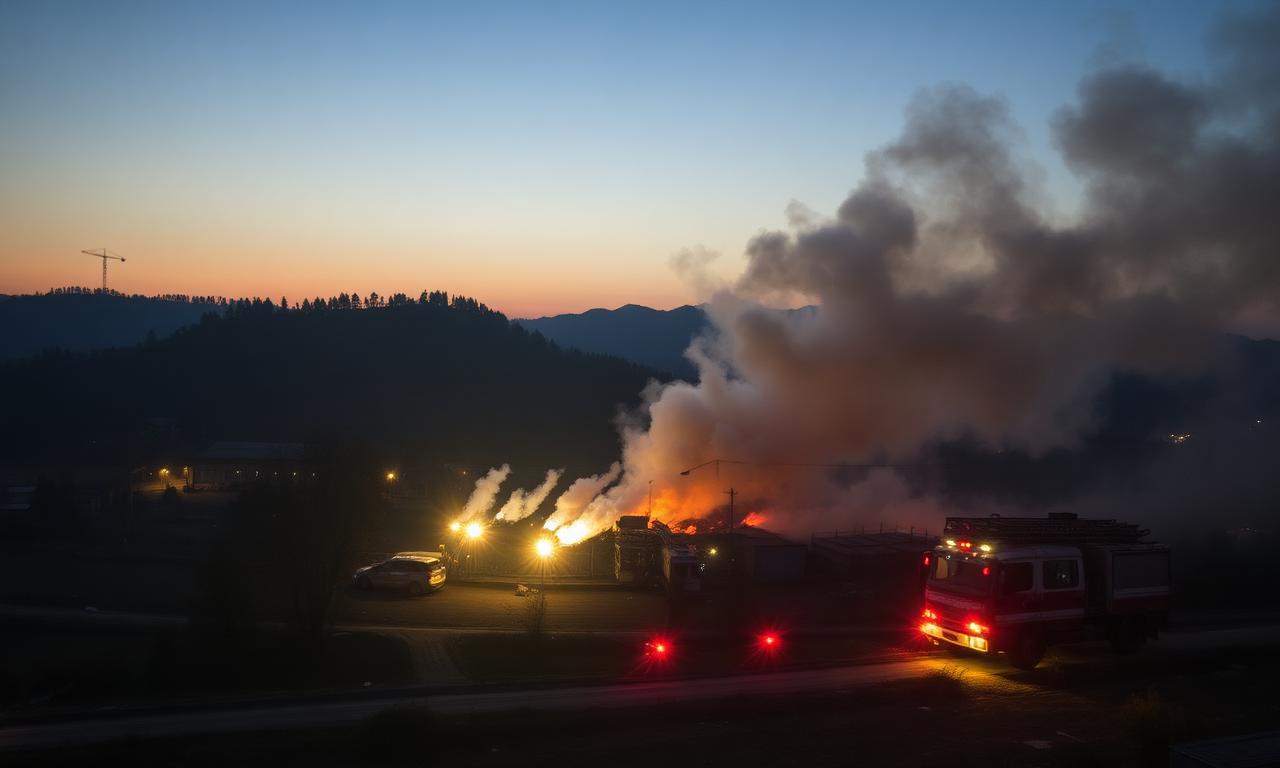
On Monday, May 4th, 2026, at 4:43 PM local time — 08:43 GMT — an explosion of extreme violence ripped through the Huasheng Fireworks Manufacturing and Display Co. site, one of the sector's largest manufacturers, located in the Guandu district on the outskirts of Liuyang. Videos released by People's Daily, the organ of the Chinese Communist Party, showed buildings collapsed over several blocks, overturned cars, and streets covered in rubble and charred materials. The blast was heard for several kilometers. Smoke was visible from the city center.
The Rising Toll: 21 Dead, Then 26
Authorities immediately activated a multi-level emergency response, mobilizing provincial, municipal, and township structures. Five teams totaling 482 rescuers were deployed within the hour following the explosion. Three specialized intervention robots were engaged to search the most dangerous areas, inaccessible due to the risk of secondary explosions in adjacent explosives storage facilities. To neutralize these risks, teams used high-pressure water jets and intensive humidification of the at-risk areas. An evacuation perimeter of nearly three kilometers was established around the site. Residents of the district were urgently relocated to temporary centers.
The death toll evolved in two stages. An initial count conducted at the beginning of the night confirmed 21 dead and 61 injured, all transferred to regional hospitals. Then, following a second wave of searches in the debris, the mayor of Changsha — to which Liuyang is administratively subordinate — Chen Bozhang announced on Tuesday morning at a press conference that the number of victims had risen to 26 dead. The exact number of missing persons remained unknown by mid-morning, as verification of identities and victim counts continued throughout the day.
Xi Jinping Intervenes — and Officials Are Arrested
Chinese President Xi Jinping was quick to respond. As early as Tuesday morning, he ordered "maximum efforts" to find any survivors and, above all, demanded that "those responsible be held accountable," according to terms reported by the official Xinhua agency. In Chinese political language, this wording generally means that a wave of arrests and criminal prosecutions is underway. Indeed, police took the company's leaders into custody within hours of the explosion.
The central government's swift reaction is partly explained by an embarrassing precedent. In 2019, a similar explosion in another Liuyang factory had killed thirteen people. That time, local authorities had announced seven deaths, before a provincial investigation revealed the real number. The lie had triggered a wave of anger on Chinese social media. Seven years later, the executive appears to have learned its lesson: communication was faster, more transparent, and directly managed by the central level rather than by local officials, who are often motivated to minimize industrial disasters to protect their administrative records.
A Millennial Industry, Systemic Risks
The Liuyang accident raises a question that no one really wants to ask aloud: can you concentrate 70% of the world's production of a potentially deadly product in an urban area of a few dozen square kilometers without creating systemic risk? Industrial safety experts unanimously answer in the negative. Gunpowder, pyrotechnic compositions, and propellant charges do not forgive human error, mechanical failures, or storage imprudences. Liuyang has accumulated these risks for centuries, in a local economy whose prosperity depends entirely on this unique industry — and which therefore has no economic interest in reducing its scale.
The issue of subcontracting and quality control is also central. In the Chinese pyrotechnic sector, large brands often outsource manufacturing stages to smaller, less well-equipped, and less well-inspected workshops. Huasheng Fireworks' exact role in this value chain — integrated producer or final assembler? — remains to be clarified by the ongoing investigation. What is known is that the last catastrophe of this type in Liuyang occurred in 2019. That's less than seven years ago. An interval that is too short for an industry that claims to be under control.
Editorial Opinion
OrChair refuses to treat this catastrophe as mere "disaster news." 26 dead in the world's fireworks capital, seven years after the 13 deaths in 2019 — the recurrence is overwhelming. Xi Jinping can demand accountability as much as he wants: as long as Liuyang's economy relies entirely on this industry, local incentives to relax safety controls will remain stronger than Beijing's directives. The real solution is structural: economic diversification, independent inspection, and limitation of storage density in urban areas.
Key Takeaways
- 26 dead and 61 injured in the explosion of the Huasheng Fireworks factory in Liuyang (Hunan) on May 4th, 2026.
- 482 rescuers and 3 robots deployed; 3 km evacuation perimeter around the site.
- Xi Jinping demands that those responsible "be held accountable" — company leaders arrested.
- Liuyang produces 60% of the Chinese domestic market and 70% of global fireworks exports.
- Precedent in 2019 in Liuyang: 13 deaths, with initial concealment of the toll by local authorities.