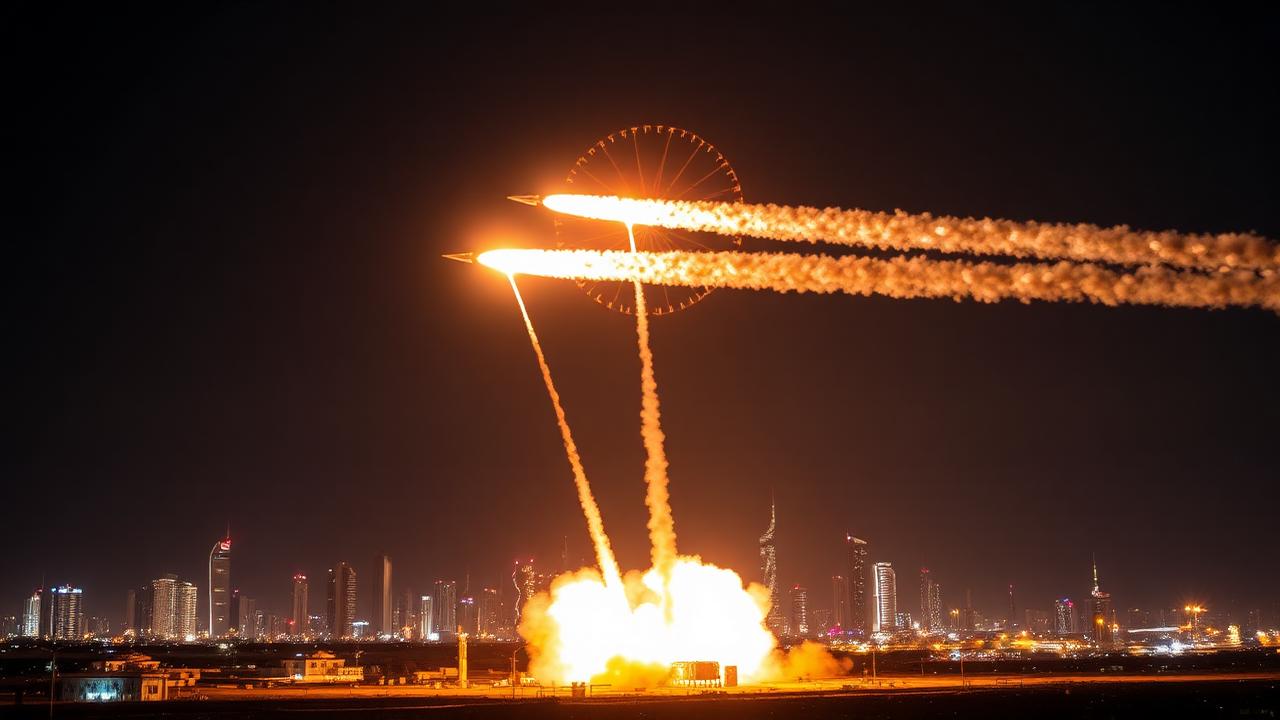
The United Arab Emirates experienced one of the most intense barrages since the start of the conflict between the US-led coalition and Iran this weekend. According to the Emirati Ministry of Defense, air defense systems intercepted twelve ballistic missiles, two cruise missiles, and nineteen drones on April 5, followed by nine ballistic missiles, one cruise missile, and fifty additional drones on April 6. In total, over 90% of the projectiles were neutralized before reaching their targets. Four people were injured by falling debris.
The escalation is spectacular. On April 4, Iran had already launched a record barrage of 79 projectiles—23 ballistic missiles and 56 drones—at the UAE, testing the limits of the THAAD and Patriot missile defense systems deployed by the Americans in the Arabian Peninsula. Since the war began on February 28, thirteen people have been killed in the Emirates by Iranian strikes, making the country the most affected in the region after Iran itself and Israel. Emirati authorities have joined Bahrain in calling for urgent action from the United Nations Security Council on the situation in the Strait of Hormuz.
In Dubai Marina, debris from an intercepted missile damaged the facade of a residential building without causing casualties, according to The National. In Abu Dhabi, the industrial area of Musaffah was also hit, causing one minor injury. Emirates and Etihad airlines announced the temporary suspension of several regional routes, while schools in Sharjah and Fujairah remained closed on Monday as a precaution. Abu Dhabi International Airport briefly interrupted operations before resuming normal service late in the morning.
The targeting of the UAE by Iran is explained by the country's geographical position—located opposite the Strait of Hormuz—and by its hosting of American military bases, notably Al Dhafra Air Base. Tehran accuses the Emirates of serving as a logistical platform for the US-led military operation, which Abu Dhabi categorically denies, presenting itself as a collateral victim of the conflict. The Emirati ambassador to the United Nations denounced "unjustifiable aggression against a sovereign state" and called for the establishment of a humanitarian corridor for the civilian populations of the east coast.
The economic consequences for the Emirates are already measurable. The tourism sector, which accounts for approximately 12% of Dubai's GDP, has seen a 35% drop in hotel bookings since the start of the conflict. Dubai's stock market index (DFM) has lost 18% since the end of February. The real estate sector, a pillar of the Emirati economy, is observing a freeze in transactions in residential areas near affected sites. Authorities are attempting to reassure international investors by highlighting the effectiveness of the missile shield, but geopolitical uncertainty is heavily weighing on confidence.