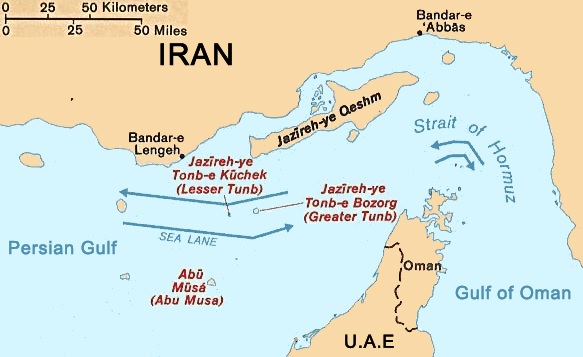
There is a spot on the world map that today concentrates all the anxieties of markets, governments, and households: the Strait of Hormuz. This 54-kilometer-wide maritime corridor, squeezed between Iran to the north and Oman to the south, is the throat of the global economy. And since February 28, 2026, this throat has been constricted. Sixty-two days later, on this Saturday, May 2, 2026, nothing has moved – except the Brent curves, which have crossed the $126 a barrel mark for the first time in four years.
The Chronology of a Foretold Catastrophe
It all began on February 28, 2026, when the United States and Israel launched an aerial campaign against Iran, subsequently assassinating Supreme Leader Ali Khamenei. Tehran's response was immediate and strategic: unilateral closure of the strait. The Revolutionary Guard Corps (IRGC) multiplied attacks on merchant ships, laid naval mines, and issued warnings to global shipping companies. Overnight, 20% of the world's crude oil supply and 20% of global liquefied natural gas (LNG) were paralyzed. The International Energy Agency (IEA) called the event "the largest supply disruption in the history of the global oil market."
The "Double Blockade," or the Paradox of Mutual Strangulation
Since April 13, the United States has intensified its response by establishing a naval blockade of Iranian ports. The situation is now described as a "double blockade" by analysts: Iran blocks the Gulf, Washington blocks Iran. President Trump rejected the Iranian proposal to reopen the strait on May 1, stating he wants to "win by a bigger margin." The direct result on the markets: Brent reached $126 a barrel last Thursday. Gasoline in the United States is peaking at $4.30 a gallon, a four-year record. In Europe, inflationary pressure is accelerating again; in France, the liter of diesel crossed the symbolic bar of 2.15 euros on Wednesday.
Who is Really Suffering?
The economies of South Asia are the primary victims. The Philippines, which imports 98% of its oil from the Middle East, declared a national energy emergency on March 24. India has raised taxes on diesel and aviation fuel exports to preserve its domestic reserves. Bangladesh is queuing at gas stations. In Africa, the fertilizer shortage – whose production relies heavily on Iranian gas – already threatens several agricultural seasons. UN Secretary-General António Guterres presented three scenarios to the General Assembly: in the best-case scenario, immediate reopening would still lead to a decline in growth and a rise in inflation; if the blockade persists until mid-2026, 32 million people would fall into poverty and 45 million into extreme hunger; if the conflict continues throughout 2026, the impact would be civilizational.
Trump, Escalation, and Military Options
According to Axios, President Trump is expected to receive a briefing in the coming days from General Brad Cooper, commander of CENTCOM, on new military options, including "short and powerful" strikes against Iranian infrastructure. Trump has publicly stated he wants to "win by a larger margin" while asserting that the Iranian navy and air force have been "destroyed" – an assessment contradicted by US intelligence officials who state that Iran retains significant military capabilities. Vice President JD Vance, who led negotiations in Islamabad, confirmed the failure: Tehran has not provided an "affirmative commitment" to renounce nuclear weapons.
Oil as a Geopolitical Weapon
What is at stake in the Strait of Hormuz goes beyond a war between two states. It is the very model of energy globalization that is being tested. The dependence of the global economy on this single corridor illustrates a systemic vulnerability that experts have been warning about for decades. Shipping companies have already suffered direct damage – the CMA CGM Everglade was hit by a rocket off the coast of Oman. Amazon, FedEx, and USPS have introduced fuel surcharges. Airlines are increasing baggage fees to absorb the 95% rise in kerosene prices. And Iran, whose 90 million inhabitants have been cut off from the internet since the start of the war – one of the longest digital shutdowns in modern history – is economically drained but politically inflexible.
Editorial Opinion
The Strait of Hormuz has become the mirror of our illusions about peace. For thirty years, globalization has built an economic architecture on trust in open maritime corridors. This trust now costs $126 a barrel. What is striking in this crisis is less the conflict itself than the systemic inability to resolve it: neither diplomacy, nor threats, nor blockades are loosening the grip. OrChair observes that civilian populations – in Iran, the Philippines, Bangladesh – are paying the price for decisions made by men who will never have to queue at a gas station. Our conviction: without an open de-escalation corridor by May 15, the crisis will shift from economic to humanitarian, and the IEA will have to consider for the first time since 1973 a coordinated rationing system among member countries.
Key Takeaways
- The Strait of Hormuz has been blocked since February 28, 2026, disrupting 20% of global oil and LNG.
- The United States and Iran maintain a "double blockade" that has been self-sustaining since April 13.
- Brent has reached $126/barrel; American gasoline is peaking at $4.30/gallon.
- 32 million people risk falling into poverty if the blockade lasts until mid-2026.
- New American strikes are being evaluated at the White House.