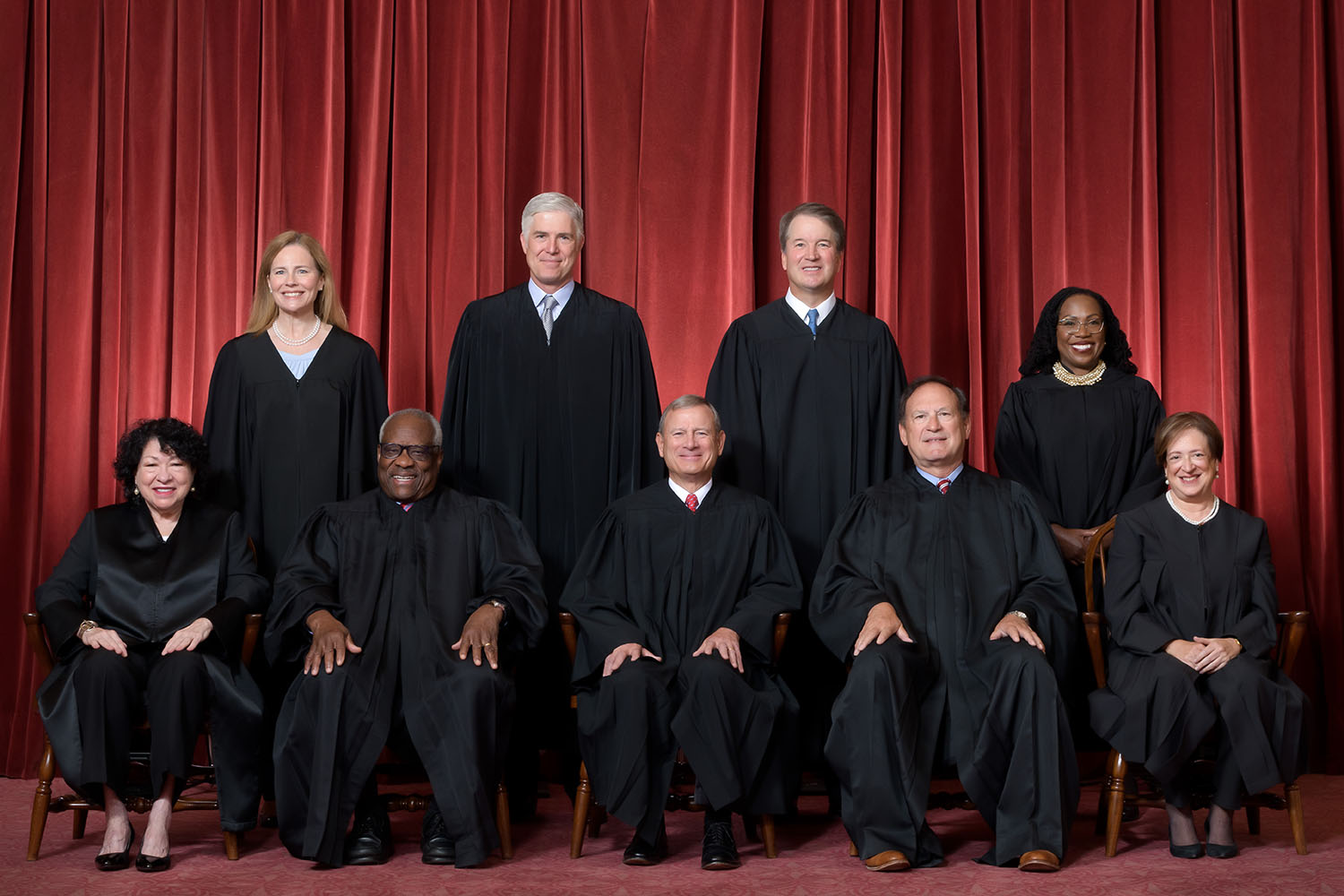
April 29, 2026, will join the great dates in American constitutional history. On that day, the U.S. Supreme Court rendered its decision in the case of *Louisiana v. Callais*—and by six votes to three, invalidated Louisiana's electoral map that created a second majority-Black district. More seriously: in doing so, the court has practically neutralized Section 2 of the Voting Rights Act of 1965, the iconic text stemming from the Civil Rights Movement, considered for sixty years to be the shield against racial discrimination in voting access.
Understanding the Court's Decision
The genesis of this case dates back to the 2020 census. In 2022, a federal judge had ruled that Louisiana's electoral map violated the Voting Rights Act by not creating a second majority-Black district reflecting the real demographic weight of the state's African American community. Louisiana then redrew its districts to create this district—it is this new map that was challenged by a group of "non-African American" voters as unconstitutional racial gerrymandering. A district court sided with them. The Supreme Court has just confirmed. In his 36-page opinion, Justice Samuel Alito wrote that the Constitution 'almost never allows the federal government or a state to discriminate on the basis of race.' The question was whether compliance with the Voting Rights Act could constitute a 'compelling interest' justifying the use of race in redistricting—and the conservative majority's answer was no.
A Decision with Cascading Consequences
Justice Sonia Sotomayor, in her scathing dissent, stated that this decision 'greenlights redistricting plans that will cripple minority communities.' She is right on at least one point: the effects will be immediate. With Section 2 of the VRA thus weakened, Republican-majority states like Tennessee, Alabama, or Georgia could redraw their districts before the November 3, 2026, midterms, potentially eliminating majority-Black or Latino districts that their current representatives—often African American Democrats—have held for decades. The decision comes in an already explosive context: the Trump administration actively supported the plaintiffs' position before the Court. In Louisiana, the Republican governor immediately tried to use the decision to suspend an ongoing election, provoking an emergency response from civil rights organizations. The ACLU filed an emergency injunction request on May 1st.
A Gradual Dismantling of the VRA
This decision does not arrive ex nihilo. It is part of a long sequence of weakening the Voting Rights Act by the same Court. In 2013, *Shelby County v. Holder* had removed the requirement for certain states to submit their electoral changes to prior federal approval—the so-called 'preclearance' mechanism. In 2021, *Brnovich v. DNC* had restricted the scope of Section 2 for restrictions on polling places. Today, *Louisiana v. Callais* nearly completes the work by making the construction of majority-minority districts almost impossible. Three decisions, thirteen years, and a foundational text of political equality gradually stripped of its substance.
The Midterms at Stake
The practical question is that of timing. Most states have already closed candidate filings for the November midterms. Redrawing districts takes time, trials, and extraordinary legislative sessions. Analysts estimate that the impact will be more profound on the 2028 elections than on 2026. But the political shockwave is already there: Democrats are trying to frame the battle as existential for democracy; Republicans see it as confirmation that the Constitution is 'color-blind.' Speaker Mike Johnson hailed a decision 'that restores equal treatment among citizens'; Democratic leader Hakeem Jeffries sees it as 'the end of sixty years of effort to build an inclusive democracy.'
A Variable-Geometry Democracy
What is most troubling about this decision is its timing. It arrives as the United States prepares for its 250th anniversary on July 4, 2026, celebrating 'the world's oldest democracy.' The irony is striking: at a time when Washington sings of freedom, its Supreme Court erodes one of the foundational texts of political equality. The marches in Selma, the Edmund Pettus Bridge, the blood spilled in 1965—all that collective memory is, in one April day in 2026, legally rewritten.
Editorial Opinion
Six justices appointed for life have decided the fate of millions of voters. This is the normal functioning of American democracy—but it is also its most obscene paradox. The Voting Rights Act of 1965 was born from the blood of the Selma marches. It has taken sixty years to extinguish it through law. Crucially, ORChair notes that in modern democracies, gerrymandering has become the most legal mass destruction weapon there is. And that when minority representation is weakened, it is the legitimacy of the entire system that erodes—slowly, silently, legally. Our conviction: if Democrats fail to turn this decision into electoral mobilization by November, they will permanently lose their capacity for counter-power in the South—and the 250th anniversary of the United States will be celebrated in a two-tiered democracy.
To Remember
- The Supreme Court invalidated Louisiana's majority-Black electoral map on April 29 by 6 votes to 3.
- Section 2 of the Voting Rights Act of 1965 is practically neutralized by this decision.
- Republican states could redraw their districts before the November 2026 midterms.
- The ACLU filed an emergency injunction request on May 1st to block the Louisiana governor's maneuvers.
- The decision is part of a decade of progressive weakening of the VRA by the same Court.