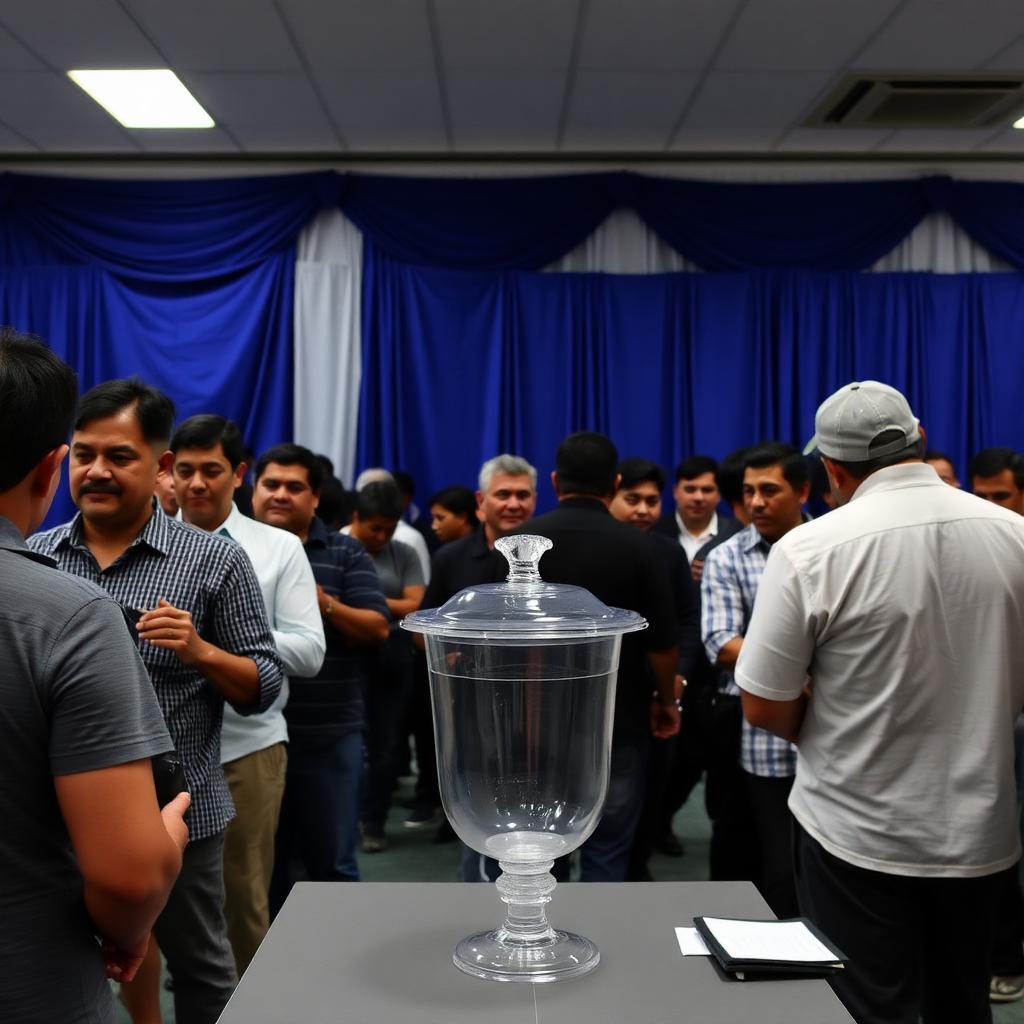
Some 41 million Colombians are called to the polls this Sunday, June 21, 2026, to decide between the two presidential finalists: criminal lawyer and businessman Abelardo de la Espriella, candidate for a hard right openly supported by Donald Trump, and senator Iván Cepeda, a historic figure of the Colombian left and political heir to outgoing president Gustavo Petro. Polling stations close at 9 p.m. GMT.
A Tight First Round, a Transfer of Votes Favoring the Right
Nicknamed "El Tigre," Abelardo de la Espriella, 47, took the lead in the first round with 43.74% of the votes, ahead of Iván Cepeda who received 40.9%—a historic score for the left in the first round, but insufficient to avoid a runoff. The transfer of votes from traditional right-wing candidate Paloma Valencia, who came in third, is expected to favor De la Espriella, as is the declared support of several conservative figures on the continent.
Two Visions for Colombia
De la Espriella advocates for a tough security approach, a significant tax reduction, and close diplomatic alignment with Washington. Iván Cepeda, on the other hand, claims continuity with the social policies of the Petro government, maintaining budgetary efforts for health, education, and the energy transition, and a diplomacy more focused on Latin American neighbors. On the peace agreement with the FARC, the two camps are in head-on opposition: firm implementation and relaunched negotiations for the left, hardening and revision for the right.
An Election Amidst Persistent Violence
Ten years after the Havana peace agreement, the country remains marked by a surge in violence in several regions—Catatumbo, Cauca, Nariño—where FARC dissidents, the ELN, and drug trafficking-linked groups coexist. At this stage, neither candidate appears capable of fully reassuring the most exposed territories. Voting security has been reinforced by the armed forces and the national police.
A Test for All of Latin America
The Colombian presidential election is being closely watched in a region torn between the pro-Trump conservative wave that has spread from Argentina to El Salvador, and the progressive legacies embodied by Lula in Brazil, Sheinbaum in Mexico, and, until now, Petro in Bogotá. A victory for De la Espriella would consolidate the continental conservative axis; a victory for Cepeda would give a political reprieve to the Latin American left.
Editorial Opinion
The real issue tonight is not just who wins, but whether the loser will accept the result. The climate of electoral mistrust observed since the first round, the extreme polarization of public debate, and the rhetoric of fraud used by both sides suggest that, as soon as the results are announced, the candidates' reactions will be closely followed, even before those of the markets.