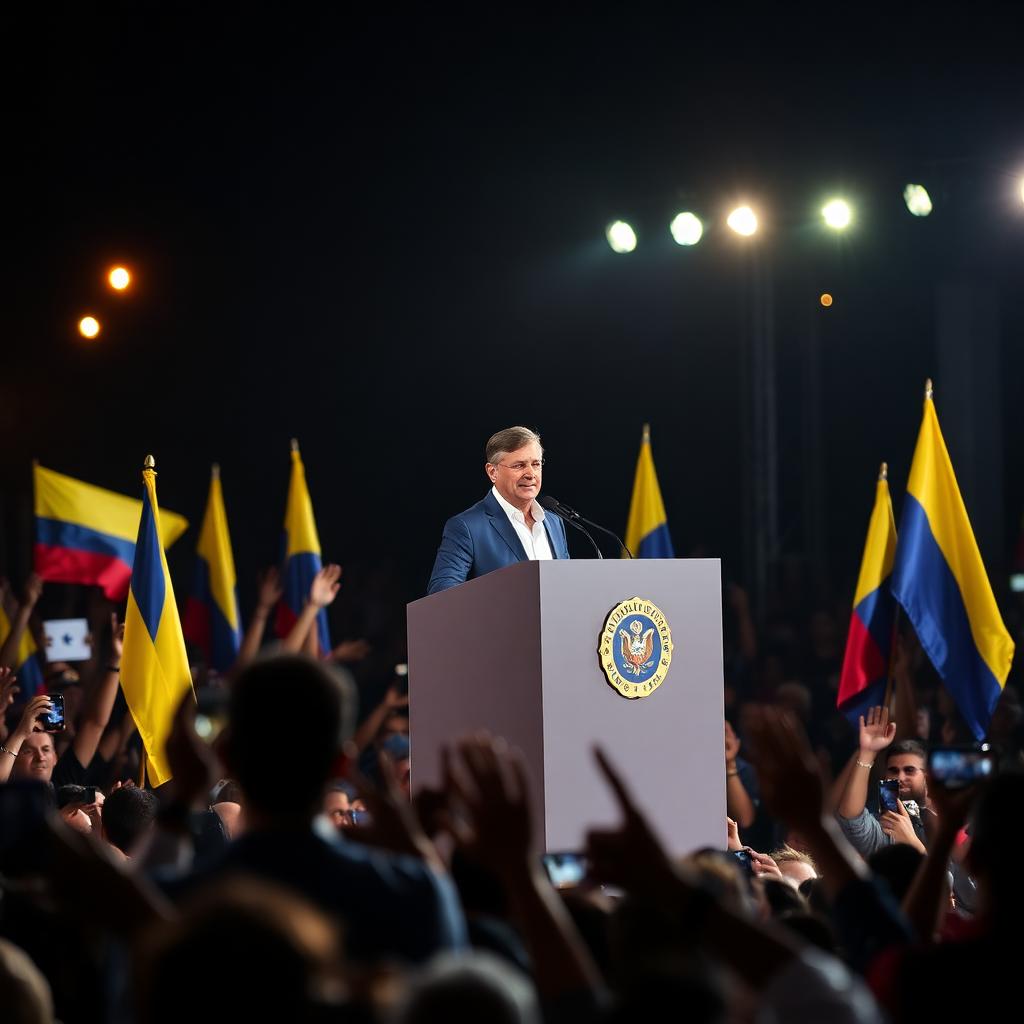
This is a political earthquake in Latin America. Abelardo de la Espriella, a 47-year-old lawyer and businessman, new to politics and supported by the United States, won the second round of the Colombian presidential election on Sunday, June 21. According to preliminary results released overnight, he won by a narrow margin with 49.7% of the vote against left-wing senator Iván Cepeda, who received 48.7% and is allied with outgoing president Gustavo Petro. The winner, nicknamed 'El Tigre' (The Tiger), will take office on August 7.
A brutal shift after the first left-wing government
The victory marks a turning point for a country that, for the first time in its history, was led by the left. De la Espriella won with an aggressive discourse against guerrillas, drug trafficking, and the ruling left, promising stronger security measures, tax cuts, and closer ties with Washington. The reversal ends, after only one term, the progressive experiment launched by Gustavo Petro in 2022.
Trump and Rubio in the front line
Donald Trump hailed the result on his social media, and Secretary of State Marco Rubio immediately spoke of future strengthened cooperation on regional security and the fight against illegal immigration. Colombia thus joins the conservative wave that has already won in Javier Milei's Argentina, Chile, and Ecuador, reshaping the diplomatic balance of a continent divided between two blocs.
A contested victory
The transition promises to be tense. Iván Cepeda refused to concede defeat before the final count and intends to contest the results from tens of thousands of polling stations, even though national and international observers have not identified any major fraud at this stage. In several cities, demonstrations erupted as soon as the results were announced; in Cali and Bogotá, clashes occurred between protesters and law enforcement, with no official casualty toll at this time.
Inheriting a polarized country
'El Tigre' takes the reins of a deeply polarized Colombia, which remains the world's largest producer of cocaine. Regarding the implementation of the 2016 peace agreement with the FARC, anti-drug policy, taxation, and relations with Caracas, room for compromise with the opposition appears narrow. Financial markets opened higher in Bogotá, anticipating a pro-business policy.
Editorial opinion
The real test will not be the score, but the new president's ability to avoid the spiral of post-election protests that plagues polarized Latin American democracies. The reaction of the Cepeda camp in the coming days will weigh more heavily on the country's stability than the economic decisions announced during the campaign.