The United States has issued a new warning about the accelerated expansion of China's nuclear arsenal. According to the Pentagon's annual report on Chinese military power and recent State Department statements, China has "massively expanded" its nuclear weapons stockpile and reportedly loaded over 100 intercontinental ballistic missiles (ICBMs) into silo fields, according to exclusive Reuters information citing US intelligence sources. (
The Pentagon estimates that China now possesses approximately 600 operational nuclear warheads, up from 500 a year ago, and could reach 1,000 to 1,500 warheads by 2035. This pace of expansion is described as "unprecedented in modern history" by Defense Department analysts. Beijing flatly denies these figures and accuses Washington of justifying its own nuclear modernization. (
A particularly concerning element for US intelligence services: suspicious explosive tests detected by satellite at the Lop Nur site in western China, which the CIA and DIA associate with the development of an "entirely new" nuclear arsenal, possibly based on new thermonuclear charge technologies. Beijing assures compliance with the Comprehensive Nuclear-Test-Ban Treaty (CTBT) and calls these allegations "pure fabrication." (
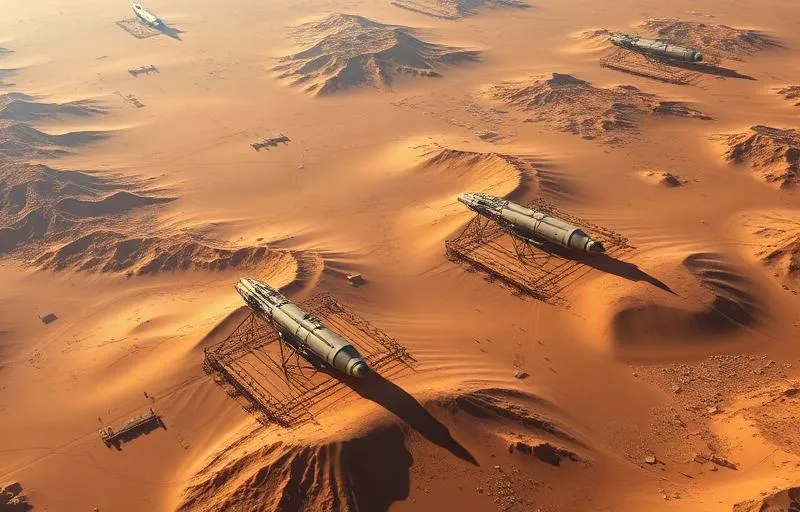
The construction of three ICBM silo fields in the Inner Mongolian desert (Yumen, Hami, and Ordos), each containing about 120 silos, has been documented by satellite imagery since 2021. The latest Pentagon report confirms these silos are now "very likely operational" and loaded with DF-41 missiles, capable of striking the American continent with a range of over 12,000 kilometers and the capacity to carry up to ten independently targetable re-entry vehicles (MIRVs). (
This context is aggravated by the expiration in February 2026 of the New START treaty—the last nuclear arms limitation agreement between the United States and Russia. Washington now demands that any future arms control treaty include China, a position Beijing firmly rejects, arguing that its arsenal remains far inferior to those of the two historical nuclear superpowers (the United States and Russia each possess around 5,000 to 6,000 nuclear warheads). (
For analysts, China's nuclear expansion is part of a broader military modernization strategy aimed at projecting Beijing's power in the South China Sea, the Taiwan Strait, and space. Combined with the ongoing conflict in the Middle East and the Russo-Ukrainian tensions, it paints an increasingly unstable geostrategic landscape. The US-Russia-China "nuclear triangle" replaces the Cold War bipolarity and significantly complicates any disarmament attempts. (