
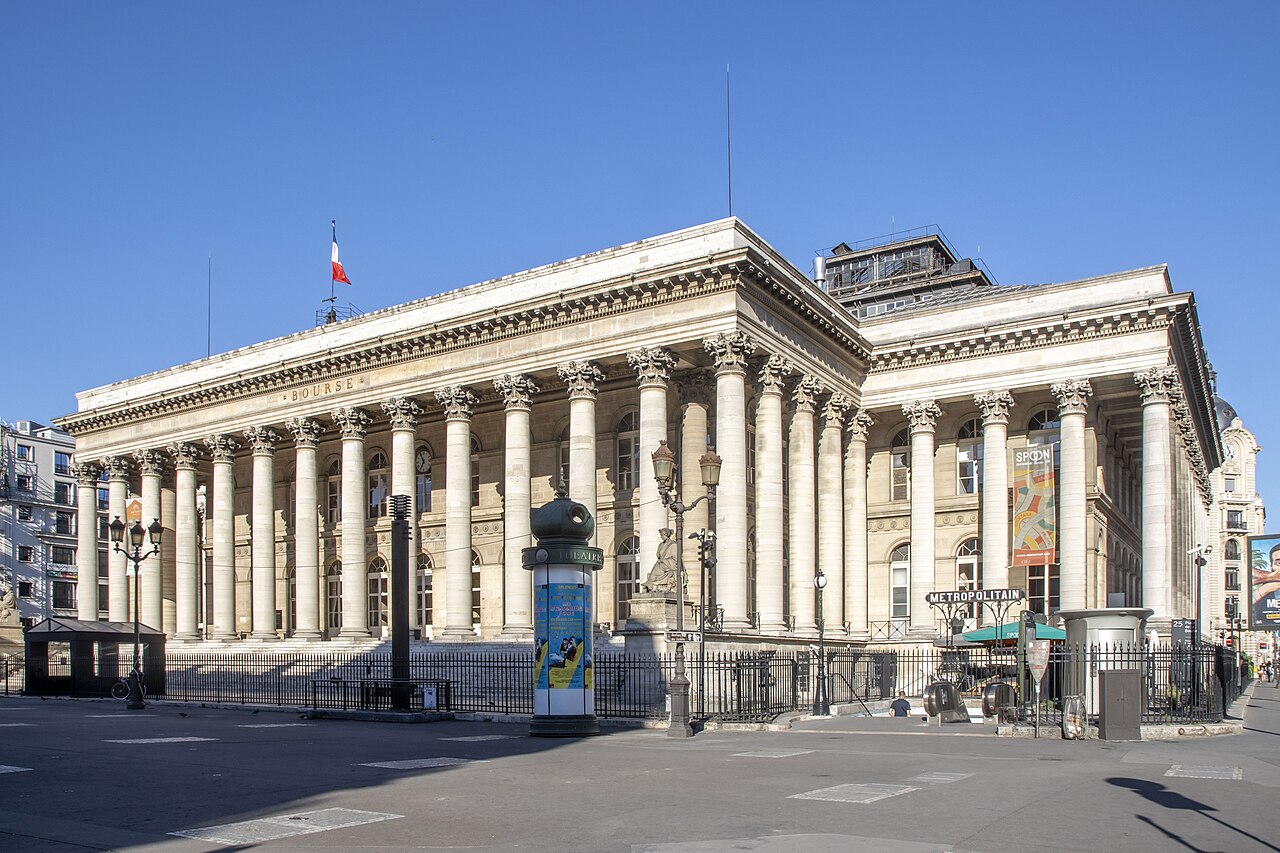
The trading session of Friday, April 24, 2026, will be remembered as one of the most difficult of the spring for the Paris Stock Exchange. From the opening, the CAC 40 lost 0.67% to 8,171.93 points, before deepening its losses throughout the morning and closing down 1.12% at 8,159.40 points. For the entire week, the decline reached 3.07%, and since January 1st, the Parisian flagship index now limits its progression to 0.21%. This performance is far from the record levels reached in March (8,540 points). Traded volume: 4.2 billion euros, slightly above the 20-day moving average. The European picture is unanimous: Frankfurt fell by 0.89%, Milan by 1.03%, London held up better at -0.42%.
Hormuz, the Geopolitical Blind Spot
The main driver of the decline has a name: Hormuz. The Iranian Pasdaran's attacks on three merchant ships in the early morning revived the risk premium on energy. Brent crude gained 4.2% to $99.40 a barrel at the start of the European session, reaching its highest level since April 18th. WTI followed at $95.80. Société Générale analysts raised their central scenario for the average 2026 Brent price from $84 to $92, anticipating a long-term "maritime cold war.". Unsurprisingly, energy-related stocks outperformed: TotalEnergies +1.8%, CGG +3.1%. Conversely, air transport stocks were hit hard: Air France-KLM -2.9%, IAG -3.2%, Lufthansa -2.7%.
A Mixed Q1 Earnings Season
The other major contributor to the Parisian drop: the barrage of quarterly publications. Saint-Gobain disappointed by reporting first-quarter 2026 revenue of 11.84 billion euros (a 2.3% organic decrease), penalized by the European construction market and an unfavorable currency effect of 250 million euros. The stock shed 4.7%. Carrefour also disappointed in terms of volumes in France (-1.1% at comparable stores) despite a rising gross margin, losing 3.2%. Sanofi reported results in line with expectations but confirmed cautious guidance for 2026, with the stock falling 1.9%. The only good surprise of the day: BNP Paribas, which announced a net profit of 3.11 billion euros (+8.2% year-on-year), driven by its investment banking arm, and gained 2.4%.
Wall Street Swept Up in the Movement
The opening of Wall Street at 3:30 PM Paris time did not reverse the trend. The S&P 500 was down 0.68%, the Nasdaq 0.94%, and the Dow Jones 0.61% in the first hour of trading. On the stock front: Tesla, shocked by the SEC's press release regarding pressure from Elon Musk for a new options plan, lost another 3.8% over the week. Microsoft held steady (+0.2%) ahead of its quarterly results on Tuesday, April 28th. Apple fell 1.1% before its results next Thursday. The yield on US 10-year Treasury bonds eased to 4.11%, a sign of a flight to quality. Gold surged to $3,240 an ounce, just 2% shy of its all-time record.
A Fragile Euro, a Safe-Haven Dollar
In the foreign exchange market, the US dollar played its traditional safe-haven role. EUR/USD lost 0.42% to 1.0612, its lowest since March 17th. The British pound shed 0.38% to 1.2480. The yen, another safe haven, gained 0.52% against the dollar at 153.40. Bitcoin, which had shown "pseudo-safe haven" behavior at the beginning of the Iranian crisis, logically retreated by 2.1% to $91,200, in the wake of tech stocks. Overall volatility, measured by the VIX, rose to 21.4 – a "moderately nervous" level according to Goldman Sachs, but well above the 14 observed at the start of the year.
Editorial Opinion
The April 24th session crystallizes an observation that is now becoming apparent in the markets: geopolitical risk premium is no longer an event, it is a regime. For three decades, investors have operated under the implicit assumption that regional conflicts only marginally and durably impact financial assets. This assumption has just died in the Strait of Hormuz. As long as Iran maintains its maritime disruptive capacity, and as long as the United States maintains its naval blockade, stock markets will continue to oscillate around the daily news, with a structurally higher energy premium. For French savers, the lesson is clear: geographic diversification towards Asian stock markets (which corrected less), physical gold, and inflation-linked bonds is becoming a necessity, not an option. As for the earnings season, it confirms that beyond macroeconomics, the fundamentals of European companies remain weakened by a sluggish consumption cycle. The CAC 40 at 8,200 points had something euphoric about it in March. Today, it has rediscovered its nature: that of a nervous barometer of a broken world.
Key Takeaways
- CAC 40 down 1.12% to 8,159.40 points on Friday, April 24, 2026.
- Weekly decline of 3.07%; YTD performance reduced to +0.21%.
- Brent at $99.40/barrel (+4.2%), driven by Iranian attacks in Hormuz.
- Disappointing Q1 results: Saint-Gobain -4.7%, Carrefour -3.2%, Sanofi -1.9%.
- Good surprise from BNP Paribas: profit +8.2% to €3.11bn, stock +2.4%.