The art world was supposed to be a truce. The Venice Biennale, founded in 1895, has always aspired to be a space above conflicts, where even warring nations meet under the same roof of the Giardini to discuss other matters. This illusion has just spectacularly shattered.
On Thursday, May 1, 2026, nine days before the opening of the 61st edition, the entire international jury of the oldest and most important contemporary art fair in the world resigned. President Solange Farkas and her four colleagues — Zoe Butt, Elvira Dyangani Ose, Marta Kuzma, and Giovanna Zapperi — stepped down without official explanation. An unprecedented act in the century-old history of the event.
The Toxic Return of the Russian Pavilion
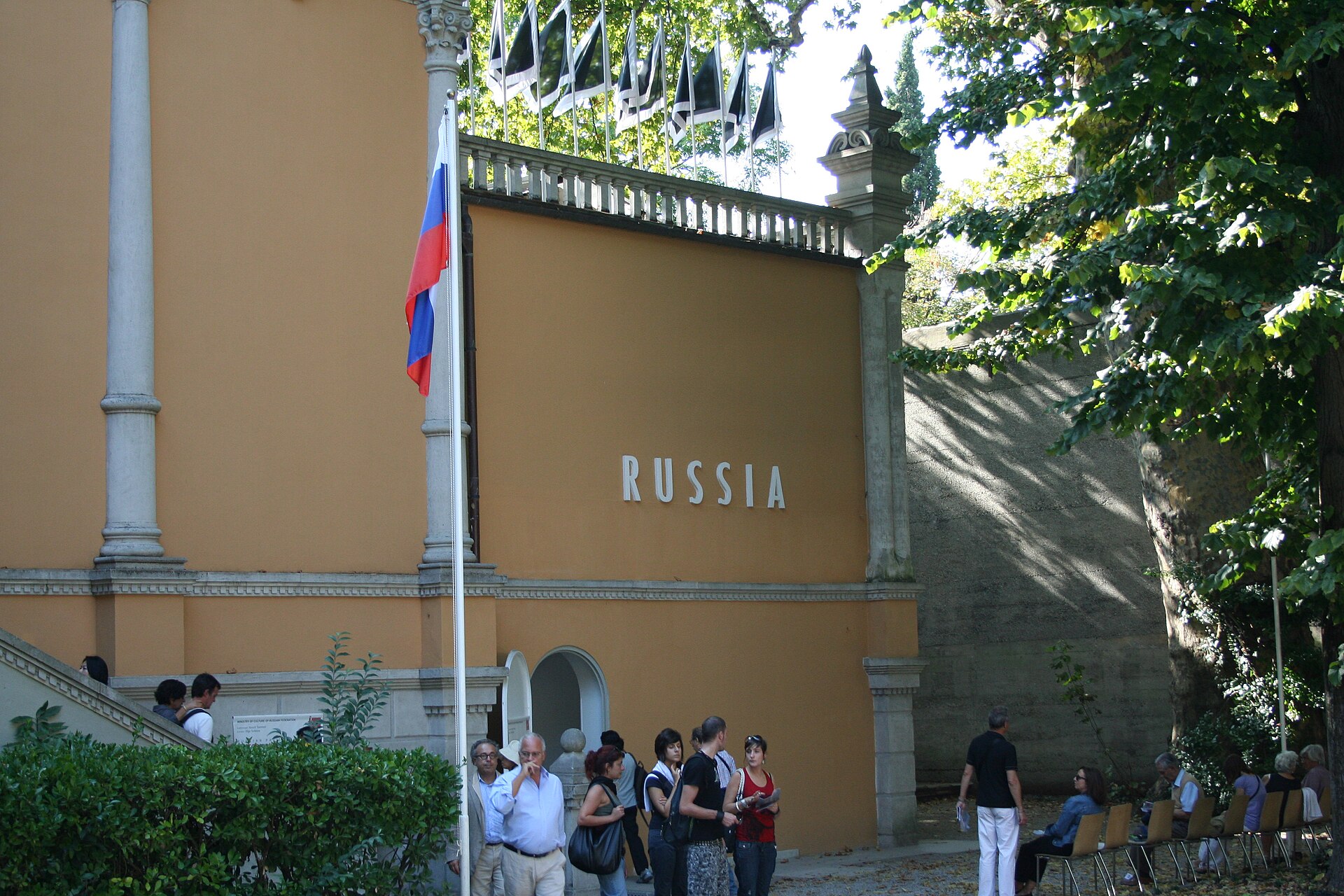
To understand, we must go back a few weeks. The Biennale, directed by Pietrangelo Buttafuoco — appointed by the Meloni government —, decided to readmit Russia this year, for the first time since 2022. Russian artists had voluntarily withdrawn their participation after the invasion of Ukraine. In 2024, Russia had lent its historic 1914 pavilion to Bolivia. In 2026, Buttafuoco considered that the Biennale could not legally prohibit a country recognized by the Italian Republic from participating. The Russian pavilion therefore reopened. The reaction was immediate. The European Union cut 2 million euros in subsidies to the Biennale. Minister of Culture Alessandro Giuli announced he would not attend the opening. Finland boycotted the official ceremony. European chief diplomat Kaja Kallas stated: 'While Russia is bombing museums, destroying churches, and seeking to erase Ukrainian culture, it should not be able to exhibit its own.'
The Fuse Ignited by the Jury
A few days before resigning, the jury made a decision that further inflamed the situation: it announced that it would not award prizes to countries whose leaders are subject to arrest warrants from the International Criminal Court (ICC). This clause explicitly targeted Russia — Vladimir Putin has been under an ICC arrest warrant since March 2023 — but also Israel, whose Prime Minister Benjamin Netanyahu is the subject of a warrant issued in November 2024. Minister Giuli had actively supported Israel and had a solidarity phone call with the artist of the Israeli pavilion. The tension between the jury's position and the government's had become untenable. The Ministry of Culture sent inspectors to the site on Wednesday — officially to 'collect documents' as part of an EU request. The next day, the jury resigned.
A Golden Lion Without a Jury
The Biennale announced an unprecedented alternative solution: visitors will vote for two awards, the 'Best Participant' of the main exhibition titled *In Minor Keys* — curated according to the plan of the late Koyo Kouoh, who passed away before the opening — and the 'Best National Participation' among the 100 pavilions. The award ceremony, initially scheduled for May 9, has been postponed to November 22, the closing day. Deputy Prime Minister Matteo Salvini found the initiative 'democratic'. Giorgia Meloni praised the Biennale's autonomy while reaffirming her disagreement with the Russian choice. Buttafuoco, himself, is not backing down.
Art as the Last Frontier of the Cultural Cold War
What is unfolding in Venice is symptomatic of the times. Culture has become an additional front in conflicts that refuse to be confined to battlefields. Excluding or including a country from the Biennale is a political act as much as an artistic one. The question now haunting the century-old institution is this: can a space for cultural dialogue survive in a world where even dialogue has become a stance? The exhibition *In Minor Keys* — 'minor keys' — takes on an almost prophetic resonance. Global art finds itself in a minor key: beautiful, fragile, and played out in a context that surpasses it.
Editorial Opinion
The Biennale had a simple and sublime rule: art as a truce. This rule has just exploded under the pressure of states. It is not the return of Russia to the Giardini that shocks OrChair the most — it is the speed with which governments, institutions, and juries have transformed 130 years of cultural diplomacy into a minefield in less than two weeks. When art loses its neutrality, there is not much left between peoples. Visitors will vote for the Golden Lion. This may be the only sound decision in all this chaos. Our conviction: the 2026 Biennale will be a critical failure but a popular success — and this paradox will redefine, for the next decade, the role of major international biennales in a fractured world.
Key Takeaways
- The jury of the 61st Venice Biennale resigned en masse on May 1, 2026, nine days before the opening.
- Main cause: the controversial return of the Russian pavilion, absent since 2022.
- The EU cut €2 million in subsidies; the Italian Minister of Culture refused to attend the opening.
- The jury had excluded Russia and Israel from awards due to ICC warrants against their leaders.
- For the first time, visitors will vote for the awards on November 22.