
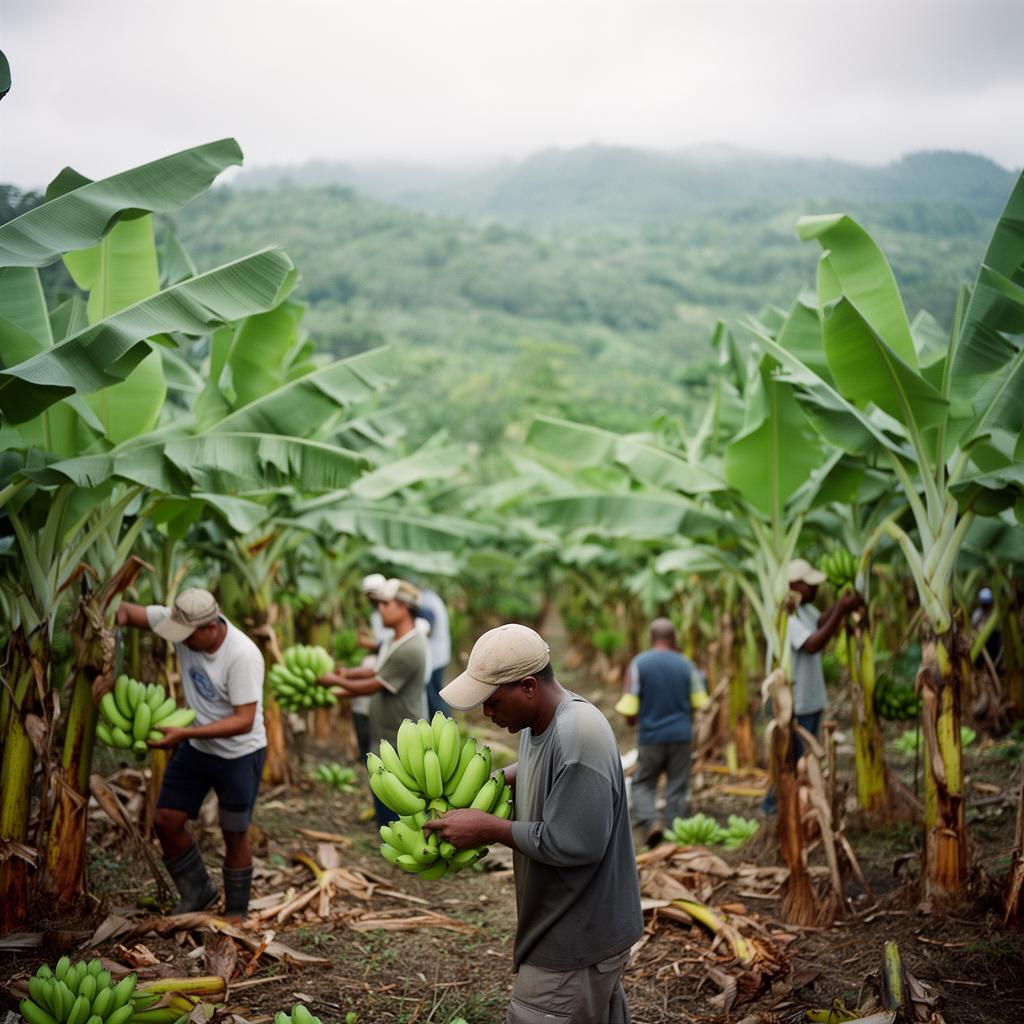
Meeting in assembly on June 10, 2026, under the auspices of the Union of Guadeloupe and Martinique Banana Producer Groups (UGPBAN), Martinique growers presented a worrying assessment of their season. The French West Indies banana, the island's primary agricultural export, travels exclusively to the European market, where it faces increasingly aggressive dollar competition from Ecuador, Colombia, and Costa Rica.
A Protected but Fragile Production Model
For a long time, West Indies bananas have benefited from specific European mechanisms – Posei Agricole, compensatory aid for outermost regions – aimed at offsetting a structurally higher production cost than that of the dollar zone. French social and environmental standards, geographical remoteness, high labor costs, and freight prices explain a differential that public aid reduces but does not eliminate.
A Tense Economic Equation
Producers are warning of three cumulative pressures. The price of inputs – fertilizers, packaging, energy – has never returned to pre-2022 levels. The cost of maritime transport, after the pandemic surge, remains higher than in 2019. Finally, the euro-dollar parity favors South American bananas, which yield better returns in local currency as soon as the dollar weakens. Several medium-sized Martinique farms are now at break-even or even operating at a loss.
The Sword of Damocles of the WTO
The sector also lives under the threat of a challenge to European tariff preferences. Successive trade agreements between the European Union and Latin American producing countries have already brought the customs duties applied to dollar bananas closer to those of the West Indies. Any further concession would be, according to UGPBAN, "unbearable" for French farms, which still employ several thousand direct workers between Martinique and Guadeloupe.
Towards Measured Diversification
The Territorial Collectivity of Martinique, the Ministry of Agriculture, and the Office for the Development of Overseas Agricultural Economies (Odeadom) are concurrently supporting diversification programs – pineapples, fresh fruits, local vegetables, organic sectors – to reduce dependence on monoculture. However, none of these productions, in the short term, approach the economic weight of bananas, which still represents, according to Iedom figures, the overwhelming majority of the island's agricultural exports.