The Amazon-Anthropic duo has just reached a historic milestone. On Wednesday, April 22, 2026, the two groups announced a major extension of their strategic partnership signed in September 2023: up to 5 gigawatts (GW) of additional computing power will be secured on AWS infrastructure to train and deploy future Claude models. Five gigawatts. A figure that may not mean much to the general public, but which roughly corresponds to the annual electricity consumption of a country like Portugal, or to the combined output of four third-generation nuclear reactors. This extension brings the total dedicated Amazon-Anthropic partnership allocation to over 13 GW, making the duo the world's leading private consumer of AI-dedicated electricity.
Computing Power, the New Standard of Measurement
The announcement confirms a major semantic shift in the industry. Where two years ago we spoke in billions of parameters or teraflops, we now reason in gigawatts of dedicated infrastructure. This transition reflects a brutal physical reality: training a model of the Claude 4 Opus class requires, according to Anthropic, the equivalent of 70,000 Trainium 3 chips operating in parallel for 90 days, representing an electricity consumption of 1.4 terawatt-hours (TWh). This is for the training of a single model. The inference phases—the billions of user requests processed daily—then multiply this need tenfold.
The Trainium Bet Against Nvidia
Remarkably, the bulk of this computing power will rely on Amazon's proprietary chips, the Trainium 3, rather than on the Nvidia H200 and B200 GPUs that dominate the market. According to GBHackers, Amazon is investing an additional $12 billion in the design and manufacturing of the next-generation Trainium 4, with tape-out expected in September 2026. The objective is twofold: to reduce dependence on Nvidia (whose GPUs cost up to $40,000 each) and to create a closed value chain. Anthropic thus becomes the reference client to validate the technical competitiveness of Trainium against Nvidia, in exchange for preferential access at prices significantly below market rates.
Water and Energy, the Real Bottlenecks
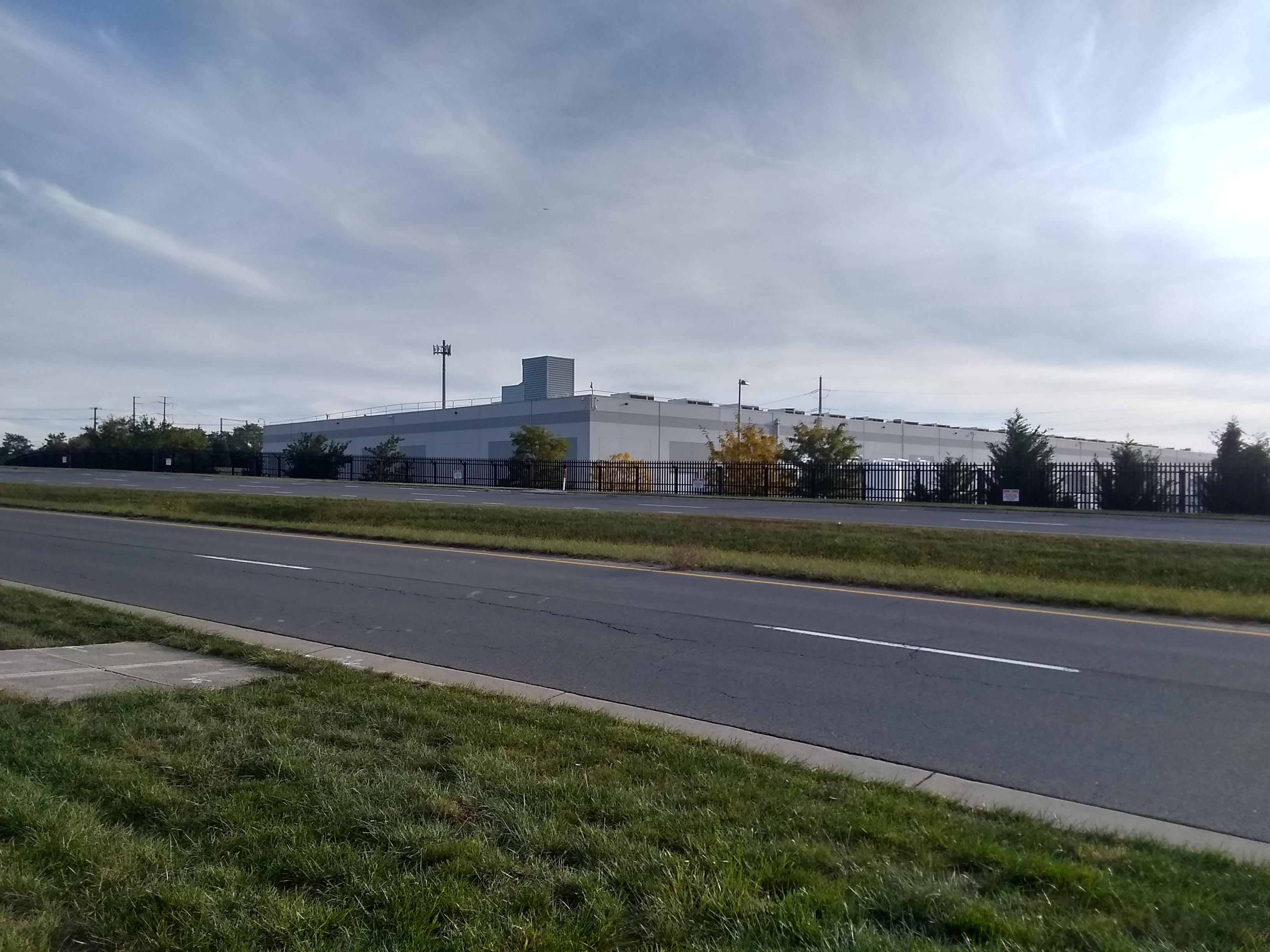
This energy gigantism now raises concrete land-use planning questions. The new campuses dedicated to Anthropic will be distributed across five main sites: three in Virginia (the "historic cluster" of AWS), one in North Carolina, and one in Indiana. Each campus will require the construction of new high-voltage lines, dedicated water treatment plants for cooling, and – for two of them – a direct connection to small modular nuclear reactors (SMRs), through a parallel partnership with Westinghouse. According to the Electric Power Research Institute (EPRI), the total electricity demand of US data centers is expected to grow from 4% to 12% of national consumption by 2030, primarily under the pressure of AI.
Anthropic Positions Itself for Post-Claude 4
On the Anthropic side, this expansion confirms the ambition to push Claude beyond its current boundaries. The startup co-founded by Dario and Daniela Amodei, valued at $183 billion in its last funding round in March, is preparing two major generations for 2026 and 2027. Claude 5, expected in September, should cross the symbolic "AGI score" threshold of 95 on the SWE-bench Verified benchmarks. Claude 6, scheduled for mid-2027, will natively integrate multi-agent planning and long-term persistent memory. None of these models could be trained without the additional 5 GW announced this morning.
OpenAI and Google Forced to Respond
The infrastructure escalation puts considerable pressure on competitors. OpenAI, allied with Microsoft, utilizes approximately 6 GW of dedicated capacity according to The Information's estimates, and is currently negotiating a similar partnership with Oracle to add another 4 GW by 2027. Google, which has its own TPUs v6, utilizes approximately 8 GW dedicated to Gemini. Mistral AI, despite support from Eviden and Schneider Electric, is capped at less than 600 MW – only a tenth of the Anthropic allocation. The infrastructure gap between Anglo-Saxon players and others is becoming dizzying, and openly raises the question of European sovereignty in AI.
Editorial Opinion
Today's announcement is not just an industrial deal: it's a geopolitical signal. By locking in an additional 5 GW, Amazon and Anthropic are gaining an advantage that no European player can catch up to without massive state intervention. France and Germany, combined, have about 320 MW of dedicated sovereign AI capacity. To remain relevant in this race, Europe needs to build an "AI Airbus" with a 10-year, 50 GW plan – representing 200 billion euros in public and private investment. Without it, the scenario is set: we will be customers of Claude, ChatGPT, and Gemini, just as we are customers of AWS, Azure, and Google Cloud. The window is closing. Quickly.
Key Takeaways
- Amazon and Anthropic secure an additional 5 GW of computing power for Claude.
- Cumulative total: over 13 GW dedicated, equivalent to Portugal's consumption.
- Will rely predominantly on in-house Trainium 3 chips rather than Nvidia.
- Five new campuses in Virginia, North Carolina, and Indiana.
- The infrastructure gap with Europe reaches a record level (Mistral capped at 600 MW).