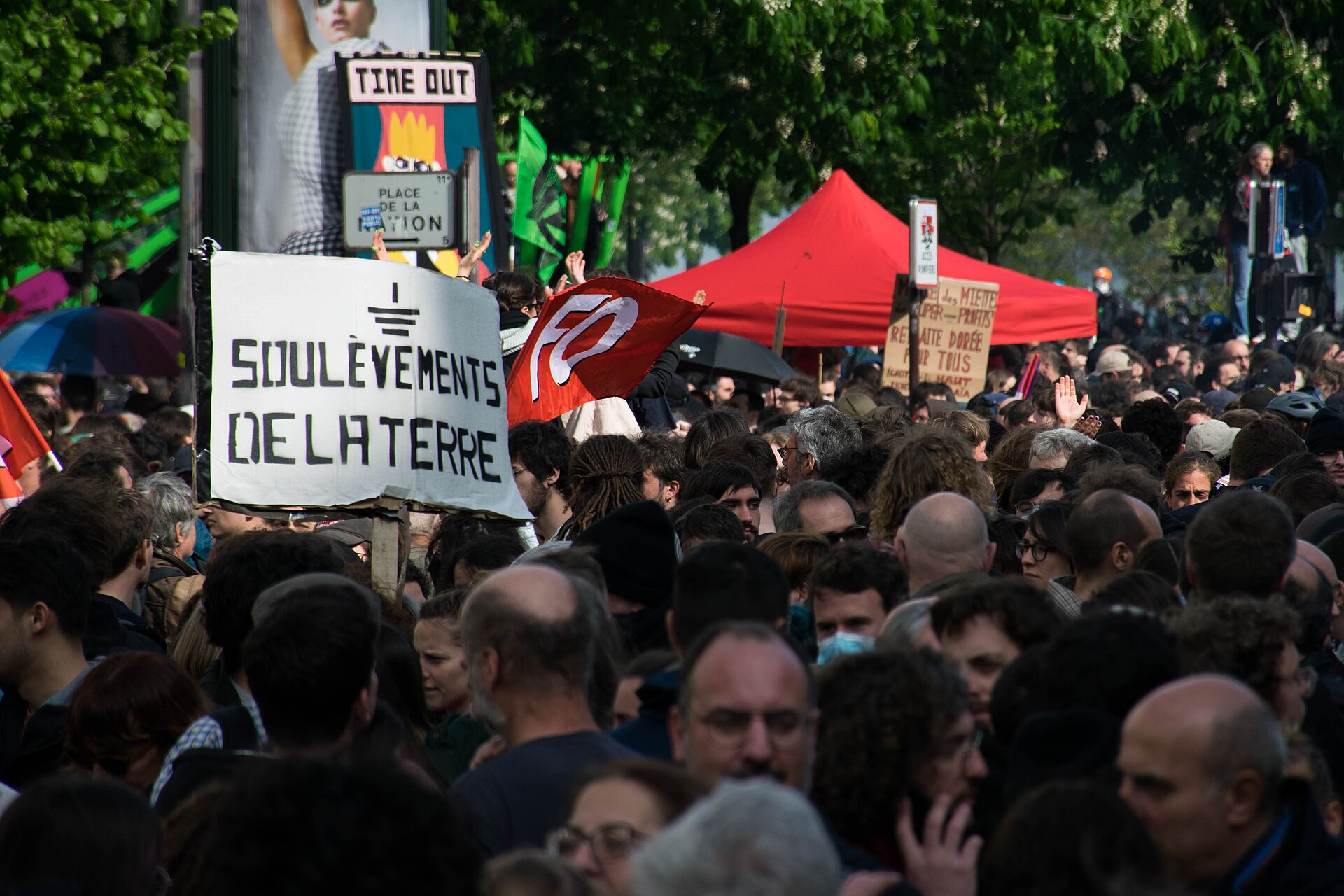
Every May 1st since 1889, International Labour Day has transformed the world's streets into a social thermometer. May 1st, 2026, was no exception—but it reached a rarely seen dimension. This year, the processions were not just chanted with salary or union demands. They bore the mark of an era fractured by war, energy inflation, American migration policy, and a simmering anger against ruling classes perceived as disconnected.
Europe on the Brink of Energy Crisis
In Europe, the European Trade Union Confederation (ETUC), representing 93 trade union organizations in 41 countries, set the tone with a phrase that went viral on social media: 'Workers refuse to pay the price for Donald Trump's war in the Middle East.' The message is direct and politically charged: America—its president, its war—is held responsible for the rising energy costs that erode European purchasing power each month. In Paris, processions drew hundreds of thousands of demonstrators under a hybrid banner: wage increases, but also opposition to American foreign policy and a demand for French neutrality in the Iran-USA-Israel conflict. In Madrid, workers held smoking torches in front of cameras. In Rome, agricultural unions denounced the fertilizer shortage—directly caused by the closure of the Strait of Hormuz, which cuts off access to Iranian gas exports, the basis of global urea production.
In the United States, a Break with Tradition
May is not a public holiday in the United States. But the May Day Strong coalition orchestrated a call for an 'economic blackout day' this Friday: no school, no work, no shopping. Organizers mobilized thousands of actions across the country under the slogan 'Workers Over Billionaires.' Two themes dominated: the Trump administration's migratory repression, a direct legacy of the 2006 protests that saw nearly a million people march in Chicago, and opposition to what many now openly call 'Trump's war in Iran.' Labour Secretary Lori Chavez-DeRemer was fired by the White House that very Friday—a calendar coincidence that did not fail to fuel union speeches about the executive's disconnection from the world of work.
Asia and South America: Hunger Fueling Anger
In Manila, Philippines, protesters marched to the American embassy to denounce the United States' role in the Iranian war. The country, which imports 98% of its oil from the Middle East, has been under an energy state of emergency since March 24th. 'No troops, no bases, no war games, resist US-led wars' read the banners. In Indonesia, Pakistan, Jakarta, and Colombia, similar crowds chanted similar slogans. In Seoul, Korean unions demanded a minimum wage increase and an end to unpaid overtime. In Santiago, Chile, masked demonstrators invoked the memory of economic dictatorships. In Brazil, the CUT union called for reduced dependence on hydrocarbon imports.
The Return of a Political May Day
What distinguishes May 1st, 2026, from previous editions is the recomposition of protest alliances. Traditionally, Labour Day aggregates economic demands—wages, pensions, social protection. This year, it also aggregated geopolitical stances: against war, against migration policies, against an energy transition deemed unfair because it is paid for by the working classes and not by the large corporations recording record profits from soaring oil prices. American oil majors indeed published exceptional quarterly results the same week—while the price of gasoline hit record highs. This juxtaposition did not go unnoticed in the processions.
Haymarket, 1886—And Now?
May 1st finds its origin in the Haymarket Square riots in Chicago in 1886, where workers demonstrated for an eight-hour workday. A monument commemorates them with the inscription: 'Dedicated to all the workers of the world.' In 2026, these workers have the same enemy as in 1886—a world where the economy is organized against them. But this enemy has changed its face: it now wears the colors of oil at $126 and algorithms that decide layoffs.
Editorial Opinion
This May 1st had a special flavor: that of a world waking up simultaneously and in anger, across all time zones. What strikes OrChair is the transnational thematic unity: from Manila to Paris, the same causes—war, energy, inequality—produce the same processions. Globalization has not succeeded in homogenizing cultures, but it has perfectly succeeded in synchronizing angers. It may be the only success it leaves as a legacy. Our conviction: if the war in Iran continues beyond the summer, May 1st, 2027, will no longer be a day of demonstration but an entire political season—and executives who have not anticipated this synchronized anger will be swept away.
Key Takeaways
- May 1st, 2026, mobilized millions of people worldwide, from Paris to Manila.
- The war in Iran and the energy crisis dominated demands, alongside wages.
- In the United States, the May Day Strong coalition organized a national economic boycott.
- The ETUC (93 European unions) directly blamed Trump for the rising cost of living.
- Record profits for oil companies amid soaring prices fueled popular anger.