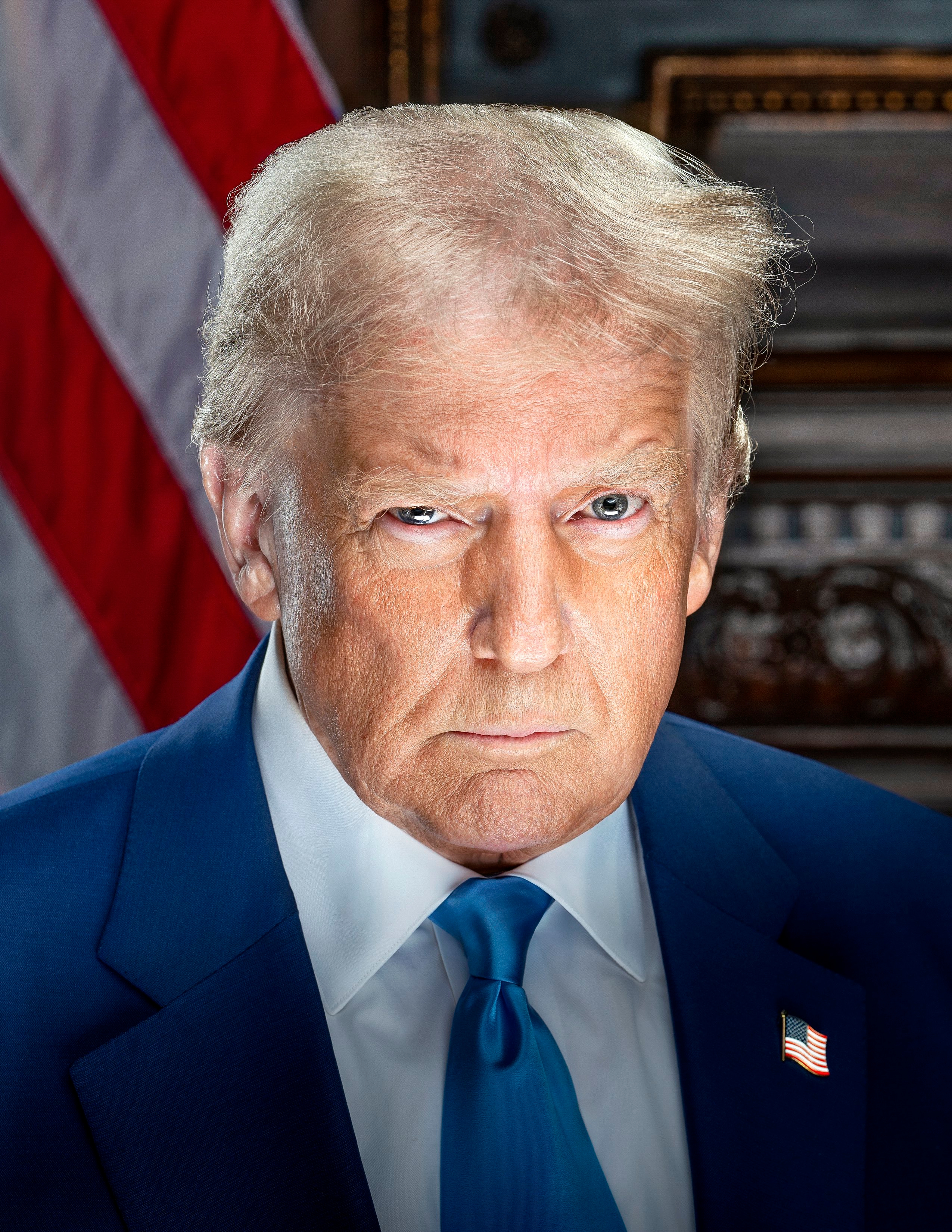
Donald Trump has ultimately opted for strategic caution. Hours before the deadline he himself imposed, set to expire at midnight Washington time on Tuesday, April 21, 2026, the US president announced on Truth Social the indefinite extension of the truce observed with Iran since April 8. However, this suspension of hostilities is accompanied by the full maintenance of the naval blockade imposed on Iranian ports, starting with Bandar Abbas, the hub for 70% of the country's oil exports. "Iran is on the brink of financial collapse," Donald Trump stated emphatically on his platform on Wednesday morning, indicating that he would "patiently observe" the internal developments of the Islamic Republic.
A Last-Minute Decision
The behind-the-scenes details of this announcement, recounted by Le Parisien and Reuters overnight, reveal a decision reached after more than eight hours of meetings in the Situation Room. Secretary of State Marco Rubio argued for an immediate resumption of targeted strikes on the residual sites of Natanz and Fordo. Secretary of Defense Pete Hegseth, politically weakened by the Pentagon's revelations on April 14, conversely advocated for a return to diplomacy to avoid opening a third front amidst a military reorganization campaign. It was ultimately Vice President JD Vance, supported by CIA Director John Ratcliffe, who reportedly carried the decision by citing "the unacceptable political cost of a prolonged war six months before the midterm elections."
The Blockade, a Massive Economic Weapon
The maintenance of the naval blockade is not a minor detail. According to the International Institute for Strategic Studies (IISS), Iranian oil exports have fallen from 1.4 million barrels per day in March to less than 110,000 barrels in the second half of April, a 92% drop. Deprived of its foreign exchange earnings, the Iranian rial has collapsed to 1.18 million rials for one dollar on Tehran's parallel market, an all-time record. Food inflation is nearing 78% year-on-year, according to official figures released Tuesday by the Central Bank of Iran. President Massoud Pezeshkian is set to address the nation on Thursday to announce an emergency plan, the outlines of which remain unclear.
France's Powerlessness
In Paris, the event resonates as a diplomatic humiliation. The President of the Senate, Gérard Larcher, regretted on Public Sénat on Wednesday morning that "France does not exist today in the Middle East conflict," pointing to the absence of an invitation to the trilateral USA-Iran-UK summit scheduled to be held in Muscat in the first week of May. Maud Bregeon confirmed that "no direct channel" has existed between Paris and Tehran since the rupture of diplomatic relations in 2022. The French position is now reduced to active support for Omani mediation and constant calls for "de-escalation."
Tehran Plays for Time
On the Iranian side, the official silence remains deafening. No official from the Ministry of Foreign Affairs has publicly reacted to Donald Trump's announcement, twelve hours after its publication. According to a diplomatic source cited by Tasnim, Supreme Leader Ali Khamenei reportedly convened an emergency meeting of the Supreme National Security Council on Wednesday to evaluate three options: accept the economic humiliation of the blockade while awaiting the end of Trump's term, negotiate a partial nuclear dismantling in exchange for gradual lifting, or play the card of frontal rupture by striking an American asset in the Gulf. None of these options are without cost.
Markets Reassured in the Very Short Term
Financial markets have reacted to the news with measured relief. Brent crude oil fell by 3.1% on Wednesday to settle at $100.4 per barrel around 2 p.m. Paris time, down from a peak of $117 last week. The S&P 500 was up 0.9% in early New York trading, led by GE Vernova, Boston Scientific, and Boeing. However, analysts at Goldman Sachs and JP Morgan unanimously emphasize that this détente is "extremely fragile," as any incident in the Strait of Hormuz could instantly reignite the upward spiral.
Editorial Opinion
Donald Trump's decision is strategically shrewd in the short term and dangerous in the medium term. Shrewd, because it avoids a military quagmire that Washington can no longer afford. Dangerous, because it gambles on the internal collapse of a regime that has shown for four decades its ability to transfer economic suffering onto its population without yielding politically. Recent history—Cuba, North Korea, Venezuela—demonstrates that no authoritarian regime falls through sanctions alone. By betting everything on the blockade, Donald Trump risks repeating Obama's strategic error in 2015: extending a hand too late to an Iran that is already irreversibly nuclear. The diplomatic window is closing faster than the markets think.
Key Takeaways
- Trump extends the truce "indefinitely" but maintains the blockade of Iranian ports.
- Iranian oil exports have fallen by 92% since April 8.
- Food inflation at 78% in Iran, rial at 1.18 million to the dollar.
- Brent crude falls to $100.4 per barrel, markets show measured relief.
- France remains excluded from the Muscat summit planned for early May.