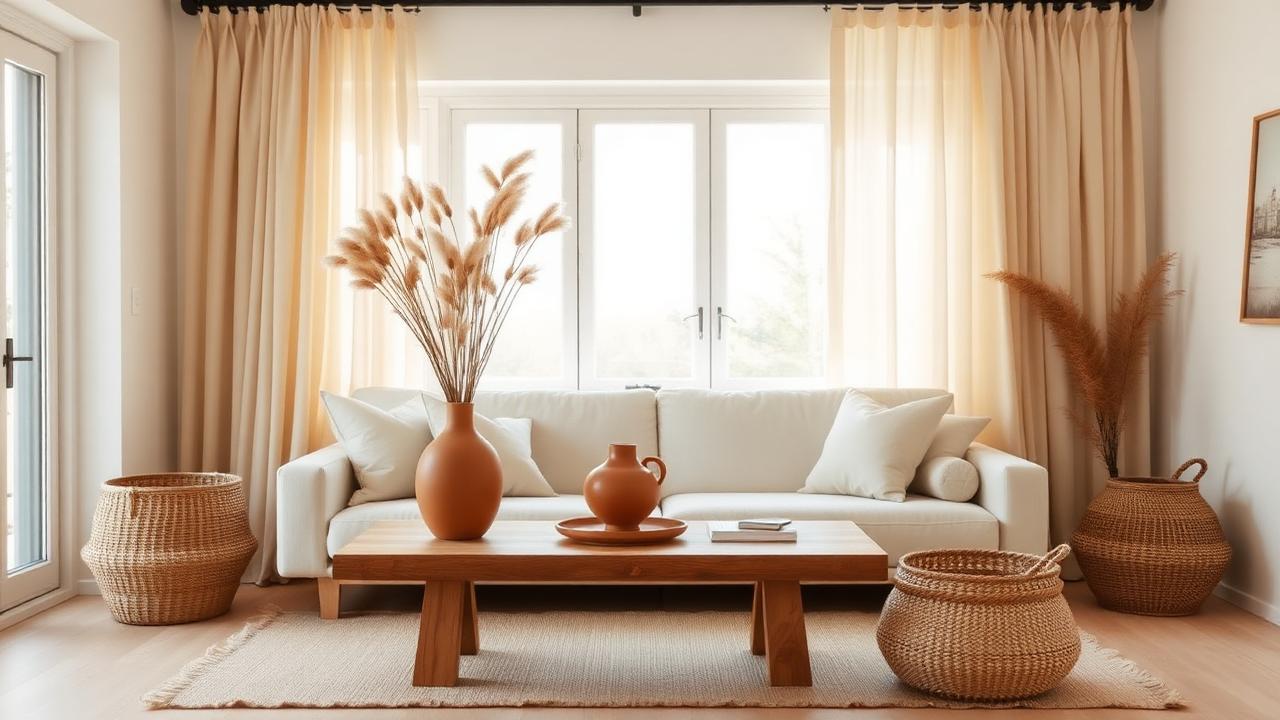
Goodbye icy interiors with polished marble, hello enveloping living rooms in ecru linen and light wood. This is the major decorating trend confirmed this spring 2026 by three surveys published in quick succession: Vogue published its overview of "11 Key Interior Design Trends for 2026," Maison & Travaux highlighted the return of warm minimalism in a column on April 9th, and Le Journal de la Maison listed "9 Trends That Will Transform Your Interior" in March. The consensus is clear: so-called "warm" minimalism is becoming the visual signature of the year.
A Reaction to Cold Minimalism
Since the mid-2010s, so-called "Japandi" minimalism—a fusion of Scandinavian rigor and Japanese sobriety—has dominated decor pages. But according to recent surveys, interior designers are observing a clear rejection of immaculate white spaces, gray sofas, and smoked glass kitchens. The pandemic, remote work, and the energy crisis have profoundly changed our relationship with our homes: the house has once again become a sensory refuge, not a showcase. This shift is reflected in a growing demand for warm and tactile materials.
The Codes of Warm Minimalism
In concrete terms, this trend translates into several recurring elements identified by Maison & Travaux and Le Journal de la Maison: earthy palettes (ochre, terracotta, sand beige, chocolate brown), raw wood left natural (solid oak, walnut, chestnut), curved and organic shapes (bolster sofas, round mirrors, pebble tables), tactile natural materials (washed linen, boiled wool, jute, rattan), abundant vegetation (perennial plants, dried herbs, branches), and indirect lighting with low color temperature. All within an anti-saturation logic: you remove more than you add.
Key Pieces of the Year
Le Journal de la Maison identifies several "marker" objects of the season: the curved ecru boucle sofa, the handmade raw ceramic vase, the travertine coffee table, the vintage Berber rug. French brands are heavily capitalizing on these codes: AM.PM, La Redoute Intérieurs, Sézane Maison, and Tikamoon have aligned their recent collections with this aesthetic, a sign that the trend extends far beyond the realm of prescriptive magazines to become established in French mass-market decor.
A Trend Rooted in Sustainability
This warm minimalism is not just a matter of aesthetics. According to the analysis published by Soumission Rénovation, it accompanies a growing demand for durable, local, and repairable materials. The return of limewash walls, lime plasters, and clay-based paints also reflects this quest for authenticity. Good news for French artisans specializing in traditional techniques, whose know-how is regaining visibility after several decades of relative marginalization in favor of standardized industrial materials.
AI's Opinion
This trend is not just a decorative cycle: it is a profound psychological response to a decade of cold screens and visual overconsumption. Warm minimalism works because it combines what was right about Japandi minimalism—sobriety, light—with a sensoriality that reassures the body as much as the eye. However, beware of the trap: if reproduced identically everywhere, this style risks becoming the new visual uniformity itself. True luxury in 2026 will be about personalization, embracing imperfection, and letting spaces age gracefully.
To Remember
- "Warm minimalism" is establishing itself as the major decor trend for spring 2026.
- Three converging
- Codes: terracotta, ochre, sand beige palettes; raw wood; curved shapes; natural materials.
- Explicit reaction to the cold minimalist decade of 2010-2020.
- Winning French brands: AM.PM, La Redoute Intérieurs, Sézane Maison, Tikamoon.