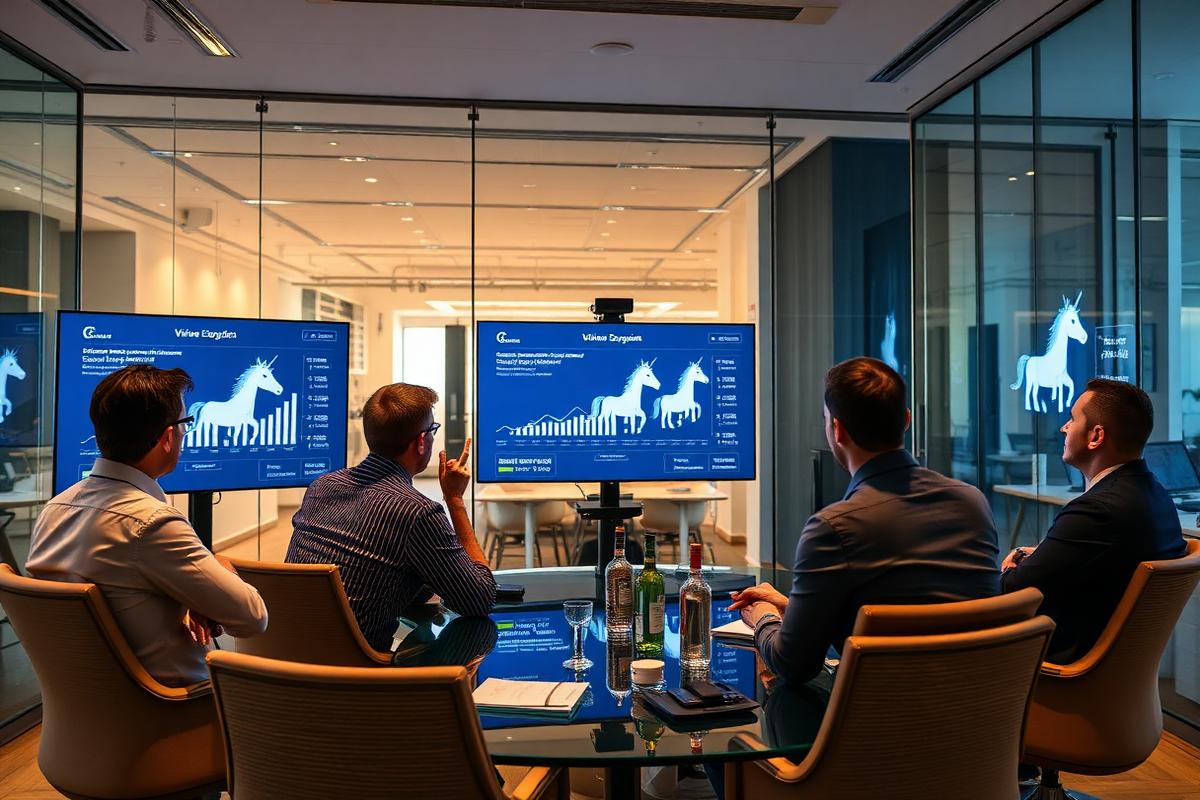

According to TechCrunch (January 2026), over 100 new startups achieved unicorn status in 2025, the majority being related to artificial intelligence. This figure marks a significant recovery after the slowdown of 2022-2023, although it remains below the 2021 peak (over 500 unicorns created in the post-COVID euphoria).
AI is the main driver of this wave. Companies such as Perplexity AI (AI-powered search), Mistral AI (French language models), Anthropic (Claude), and numerous applied AI startups (health, finance, cybersecurity) have crossed the billion-dollar valuation mark in record time. Mistral AI, founded in Paris in April 2023, reached this status in less than a year.
Europe is asserting itself in the ecosystem. France, propelled by Mistral AI, Hugging Face, and others, has become a major AI hub in Europe. Germany (Aleph Alpha, DeepL) and the United Kingdom (Stability AI, before its difficulties) complete the European picture. Paris is regularly cited among the top five global hubs for AI startups.
Venture capital investors have massively reoriented their portfolios towards AI. According to PitchBook data, VC investments in AI exceeded $100 billion in 2024-2025 globally. However, voices are rising to warn of a possible bubble, recalling that current valuations are often based on modest revenues.
The most dynamic sectors: AI for health (diagnostics, drug discovery), cybersecurity (real-time threat detection), fintech (compliance, fraud detection), and productivity tools (copilots for developers, legal assistants, marketing automation).
The failure rate remains high. Several highly valued AI startups have encountered difficulties (Stability AI, Jasper AI). Experts remind us that technology alone is not enough: a viable business model, solid product-market fit, and rigorous execution remain the keys to entrepreneurial success, even in the age of AI.