Paris Saint-Germain has just taken a historic step in integrating technology into professional football. Since March 31, 2026, an advanced artificial intelligence system has been deployed throughout the Parisian campus facilities, making PSG the first European football club to integrate AI on such a scale. The contract, valued at 15 million euros over three years, covers real-time tactical analysis, optimization of players' physical performance, and the revolutionizing of recruitment methods.
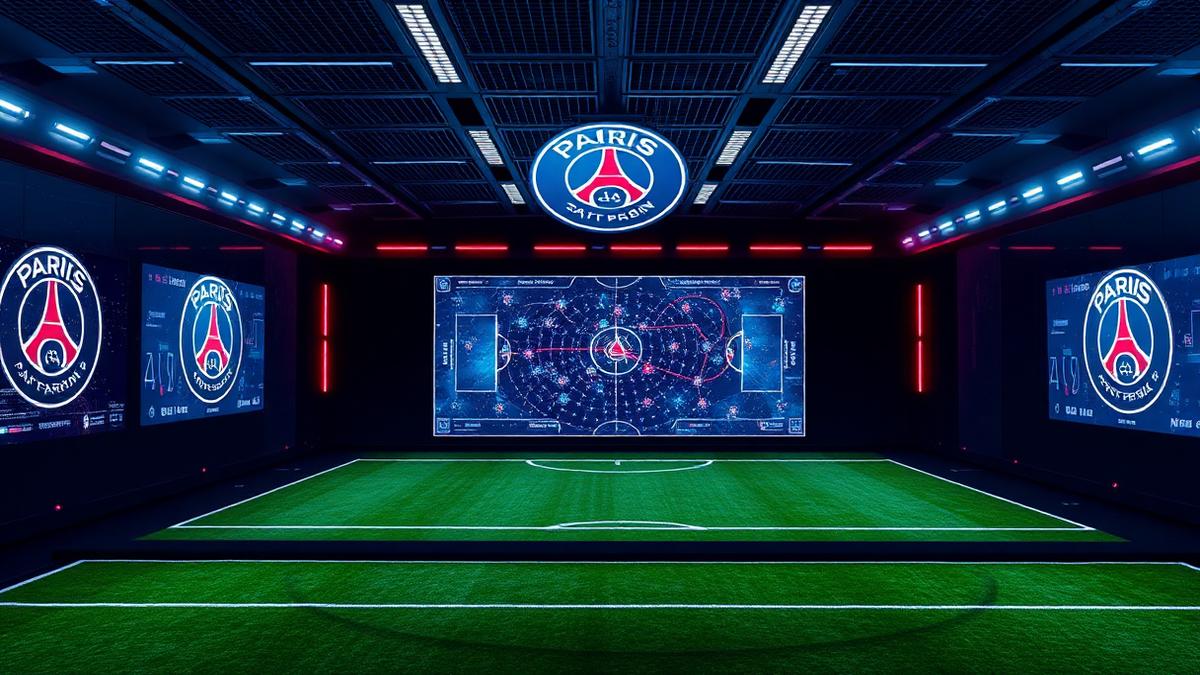
The tactical analysis tool is the centerpiece of the system. Thanks to a network of high-definition cameras and sensors installed on the training pitches at the PSG Campus, the system processes real-time data on the positioning, speed, and acceleration of each player. The AI generates 3D visualizations of tactical schematics, identifies opponent weaknesses by analyzing thousands of matches, and proposes customized strategic adjustments for each confrontation. Coaches receive a pre-match report of unprecedented accuracy, including success probabilities for each offensive and defensive combination.
The recruitment aspect is equally revolutionary. The system analyzes the performances of over 200,000 professional and semi-professional players worldwide, cross-referencing statistical data with automated video analyses. The AI assesses not only players' technical and physical abilities but also their compatibility with PSG's playing style, their potential for progression, and even their psychological profile based on filmed interviews. Sporting Director Luis Campos stated that this technology "does not replace the human eye, but gives it a 360-degree vision."
The optimization of physical performance represents the third pillar of the partnership. Each player wears connected devices that transmit continuous biometric data: heart rate, sleep quality, muscle fatigue indices, nutrition. The AI generates individualized training programs and alerts the medical staff in case of injury risk, allowing for a preventive approach that could reduce injury absences by 30%. This approach contrasts with the catastrophic experience of Robert Moreno in Sochi, where AI was used excessively, depriving players of sleep.
This partnership is part of a broader trend transforming world football. FIFA has announced the deployment of AI and semi-automatic offside technology for the 2026 World Cup, while David Beckham has partnered with Lenovo to develop football-applied technology solutions. PSG, by taking a lead over its European competitors, hopes that this technological revolution will translate into results on the field – notably a Champions League title, which has eluded them since its inception in 1970. The football of the future is played as much in data labs as it is on the pitch.