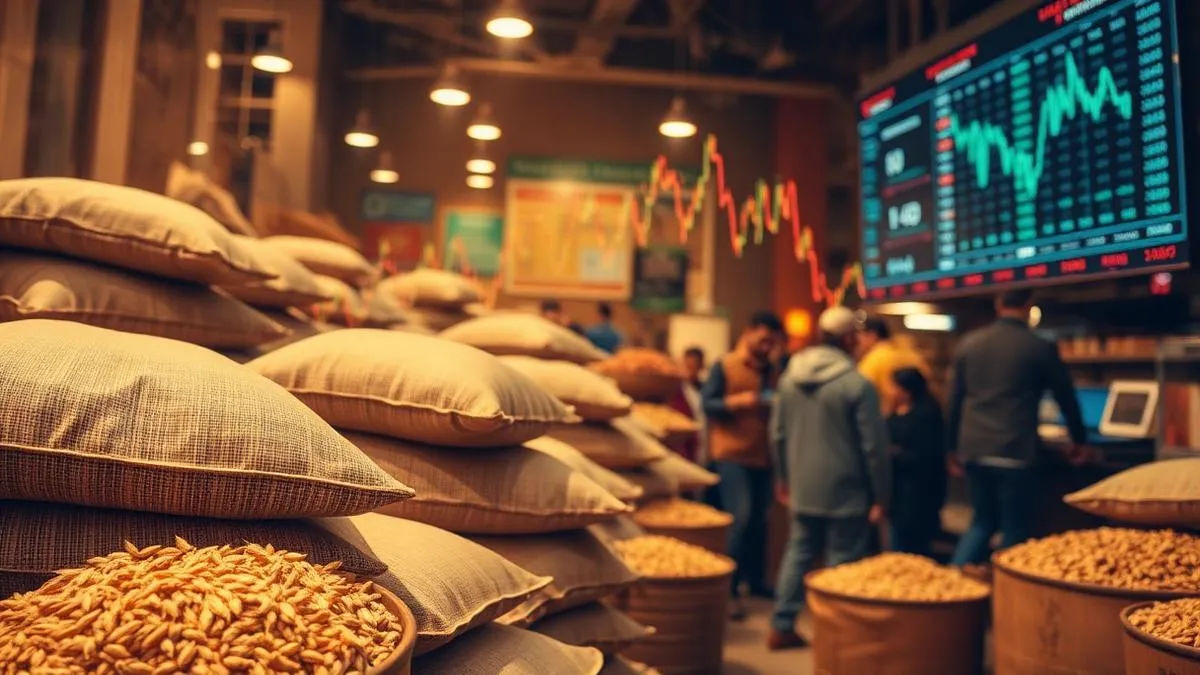
The Food and Agriculture Organization of the United Nations (FAO) published its monthly global food price index on April 3, and the figures confirm the fears: staple foods increased for the second consecutive month in March, driven by cereals (+4.2%) and vegetable oils (+6.1%). The overall index stands at 138.7 points, up 3.8% from the previous month.
The primary cause is geopolitical. The conflict in Iran and the partial blockade of the Strait of Hormuz are disrupting fertilizer supply chains – Iran and Gulf countries represent 18% of global urea production, a key component of nitrogenous fertilizers. If farmers cannot procure fertilizers at affordable prices, they will reduce cultivated areas, warns the FAO.
Prices remain, however, 20% below the March 2022 peak, reached in the weeks following the Russian invasion of Ukraine. But the trajectory is worrying: Rabobank analysts estimate that if the Iranian conflict extends beyond the third quarter of 2026, the FAO index could exceed its all-time record. Wheat, in particular, is under pressure: Russian and Ukrainian exports, which account for 28% of world trade, remain disrupted.
The most vulnerable countries are those in Sub-Saharan Africa and the Middle East, where food imports sometimes represent more than 50% of national consumption. The World Food Programme (WFP) has launched an emergency funding appeal of $2.4 billion to address the crisis. Egypt, the world's largest wheat importer, has already drawn on its strategic reserves.
For European consumers, the impact is being felt gradually: the price of a baguette in France has increased by 8% since January, according to INSEE. Retailers are still absorbing part of the increase but warn that their margins are "at the limit." The next G7 Agriculture meeting, scheduled in Turin on April 20, is expected to place food security at the top of the agenda.