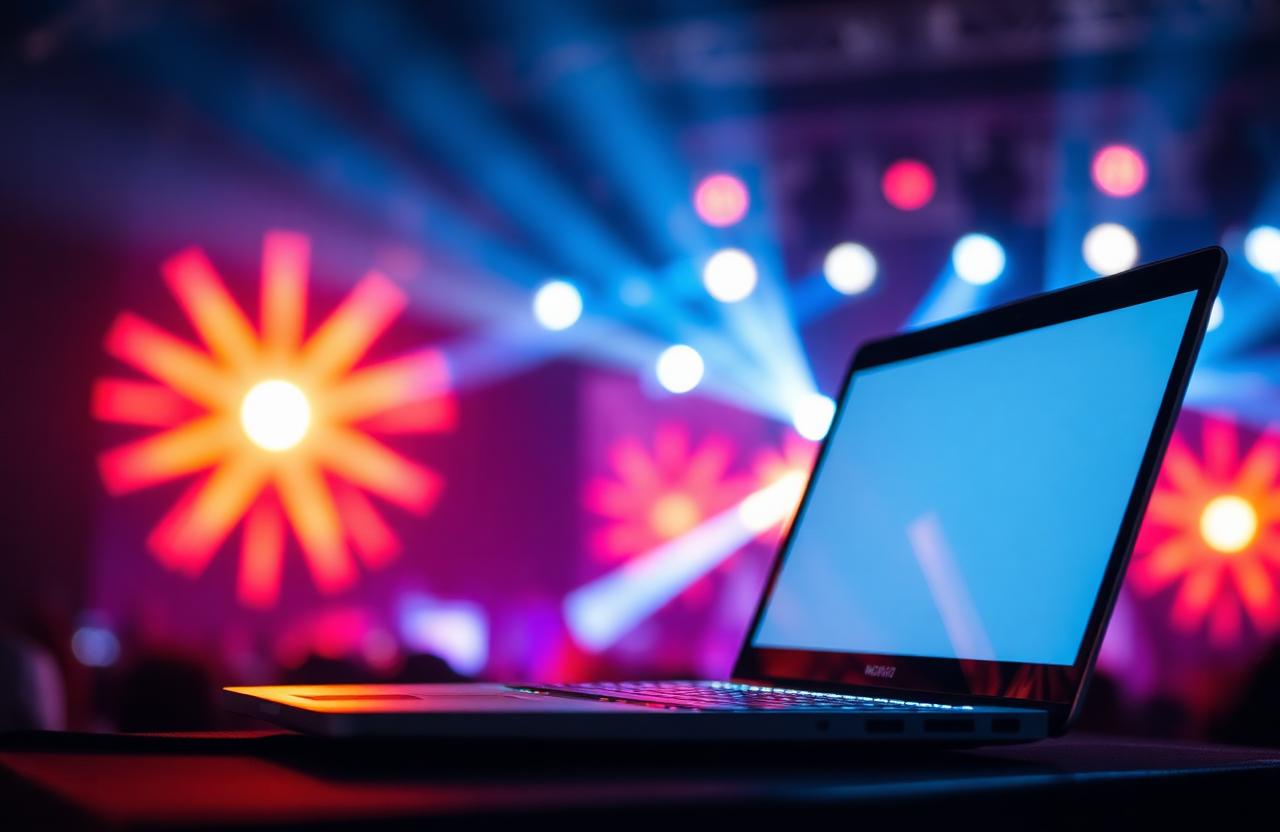
It is rare for a festival controversy to so quickly breach the walls of specialized publications and land in everyday conversations. Justin Bieber's performance at Coachella Weekend 1, last Saturday, April 11, managed this feat in a matter of hours: stepping on stage, opening a MacBook, launching YouTube, and letting live comments vote for the next song — that was the idea. For Yahoo Entertainment, it was an intentional provocation. For his fans, a moment of generational truth. Beyond the immediate debate, this moment forces us to ask an uncomfortable question: what is a pop concert in 2026?
A Provocation, But Not an Accident
First, we must reject the lazy interpretation that Justin Bieber improvised. The Weekend 1 performance was meticulously prepared: soundtrack ready, camera angles worked out, comment moderation in the background. Everything suggests a staged setup designed as commentary on the era—this moment when live performance, broadcast on YouTube, is no longer consumed primarily by the present audience, but by tens of millions of remote viewers. Bieber didn't fail his concert: he moved the concert into his screen and placed the screen on stage. In his own way, it's an artistic gesture.
Live Has Never Been Less Live
For twenty years, the majority of major pop tours have relied on heavily pre-recorded technical setups: doubled or full vocal tracks, programmed orchestral sequences, precisely timed choreography. Artists agree to play the role of visual ambassadors for a largely manufactured soundtrack. Bieber pushes this logic to its caricature: if everything is pre-recorded anyway, why not fully embrace it? His provocation at least has the merit of forcing the public into a long-suppressed debate about the true nature of the contemporary pop concert.
The Sabrina Carpenter Counter-Model
Paradoxically, Weekend 2 opens the way for a counter-narrative. Sabrina Carpenter, who kicked off the second weekend on Friday, April 17, with a reworked set called 'Sabrinawood,' plays the exact opposite card: heavy production, numerous dancers, theatrical staging. According to Time Out Los Angeles, her team ramped up production between the two weekends to densify the show. This is the other possible path—fully embracing the pop concert as a total spectacle, halfway between Broadway and a ceremony. The invitation of Kacey Musgraves scheduled for this Saturday, April 18, adds the necessary musical credibility to this ambition.
What This Says About the Artist-Audience Contract
Behind these two options lies a contractual question. The public is paying increasingly high prices—a two-weekend Coachella ticket now approaches $1,200—to attend shows where the 'live' component is diminishing. Either the industry embraces this shift and transforms it into a deliberate artistic statement, à la Bieber. Or it reinvests massively in real vocal and instrumental performance, as seen in historical rock tours. The current middle ground, neither here nor there, will not last: the public has become too discerning, and social media too transparent.
Editorial Opinion
Justin Bieber's MacBook set is not an anecdotal blip: it's a harbinger. Global pop, under the combined pressure of streaming, social media, and touring costs, is redefining what it means by 'concert.' Coachella, which has served as a global testing ground for twenty-five years, is the ideal place to observe this mutation. It remains to be seen whether the industry will have the courage to make a clear choice between the two models, or if it will allow confusion to persist, risking the exhaustion of public patience.
Key Takeaways
- At Coachella Weekend 1, Justin Bieber delivered a MacBook performance that divided the industry.
- Sabrina Carpenter at Weekend 2 embodies the opposite model: total spectacle and maximum production.
- The 'live' element of major pop tours has significantly declined over the past twenty years.
- The average price for a two-weekend Coachella ticket now approaches $1,200.
- The industry will need to choose between an acknowledged concert-spectacle and genuine vocal performance.