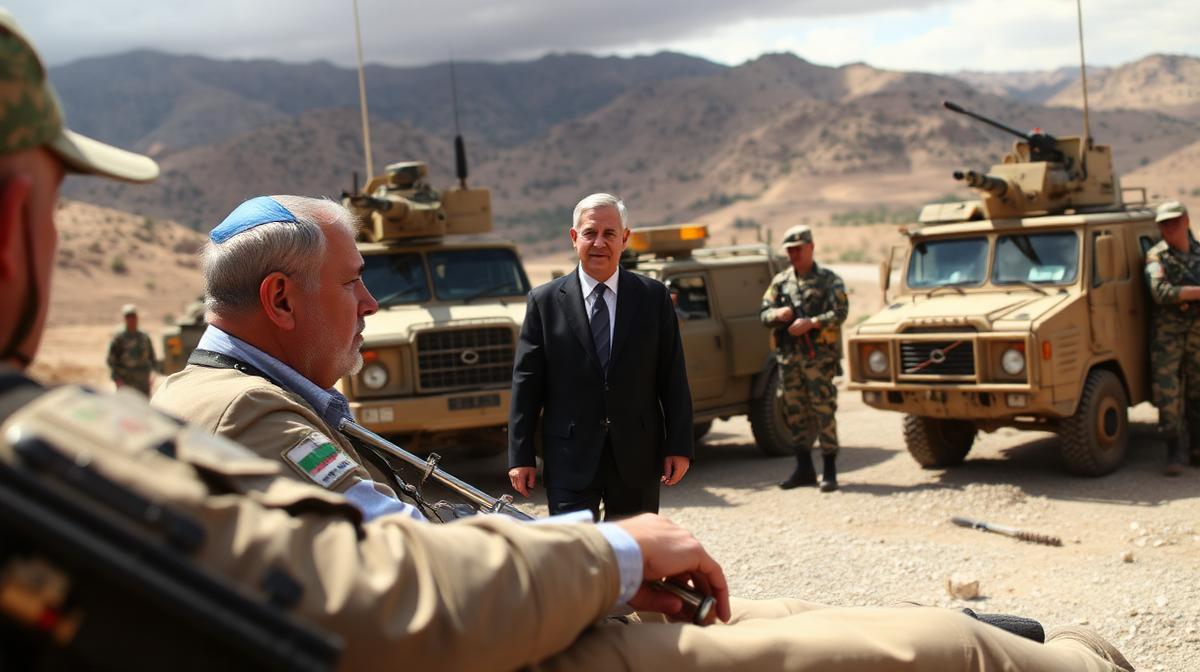
Israeli Prime Minister Benjamin Netanyahu visited troops deployed in southern Lebanon on Sunday, April 13, 2026, reports Open The Magazine. Accompanied by his chief of staff, he declared that "the war is far from over" and that Israel's enemies are "now fighting for their survival." This visit comes amid heightened tensions, with the United States concurrently launching a blockade of the Strait of Hormuz.
The Extended Buffer Zone
Israel has significantly expanded its military presence in southern Lebanon since March 2026. Reuters reported at the end of March that Netanyahu had ordered the expansion of the buffer zone to the Litani River, about 30 kilometers into Lebanese territory. This expansion aims to prevent Hezbollah from launching rockets against northern Israel, a threat that persists despite repeated Israeli airstrikes. The Israeli army claims to have destroyed hundreds of tunnels and arms caches in the area.
A Message to Multiple Recipients
Netanyahu's visit to Southern Lebanon also carries a political message. Mid-Day notes that it comes just days before potential discussions on a ceasefire in Lebanon, separate from Iran-US negotiations. By visiting the front lines, Netanyahu signals that Israel is not ready for territorial concessions. The Jerusalem Post also reports that the Prime Minister reaffirmed his commitment to "continue to crush the terrorist regime in Iran," explicitly linking the Lebanese front to the broader conflict with Tehran.
International Reactions
The international community remains divided. While the United States openly supports the Israeli military operation as part of "Operation Epic Fury," launched in late February with Israel against Iran, France and several European countries are calling for the withdrawal of Israeli forces from Lebanon in accordance with UN Resolution 1701. UN Secretary-General António Guterres reiterated that the Israeli military presence in Lebanon constitutes a "violation of Lebanese sovereignty" and urged all parties to de-escalate.