A two-page statement was all it took to turn global markets upside down. On Thursday, May 14, 2026, at 9:03 AM Paris time, less than an hour after the joint Trump-Xi statement was read in the Great Hall of the People, Brent crude futures dropped 4.3% to $104.80, their lowest level since April 9. At the same moment, S&P 500 futures rose 1.7%, paving the way for a potential all-time record at the Wall Street open. In Frankfurt, the DAX broke its own closing record, and in Paris, the CAC 40 surpassed 8,250 points for the first time in three months.
Oil, the Primary Barometer of the Beijing Summit
Since the Strait of Hormuz closure on March 4, 2026, oil prices have served as a cardiogram for the Iran-US conflict. Every rumor of de-escalation causes the barrel price to drop, and every incident in the Gulf makes it surge. This Thursday, a combination of three factors triggered the downturn: the UN mention in Beijing's statement, the repositioning of Greek and Qatari oil tankers towards Al Fujairah, and the cessation – confirmed by the Pentagon at 8:45 AM – of the 5th Fleet's exercises off the coast of Manama.
Goldman Sachs analysts released a note in the morning, raising their 12-month target for Brent to $92, down from $105 previously. JP Morgan analysts went further: if the Franco-British resolution passes the Security Council next week, the barrel could fall back towards $85 by the end of June. Conversely, a summit failure on Saturday, May 15, would reintroduce a geopolitical risk premium of $15 to $20.
Wall Street: Record in Sight
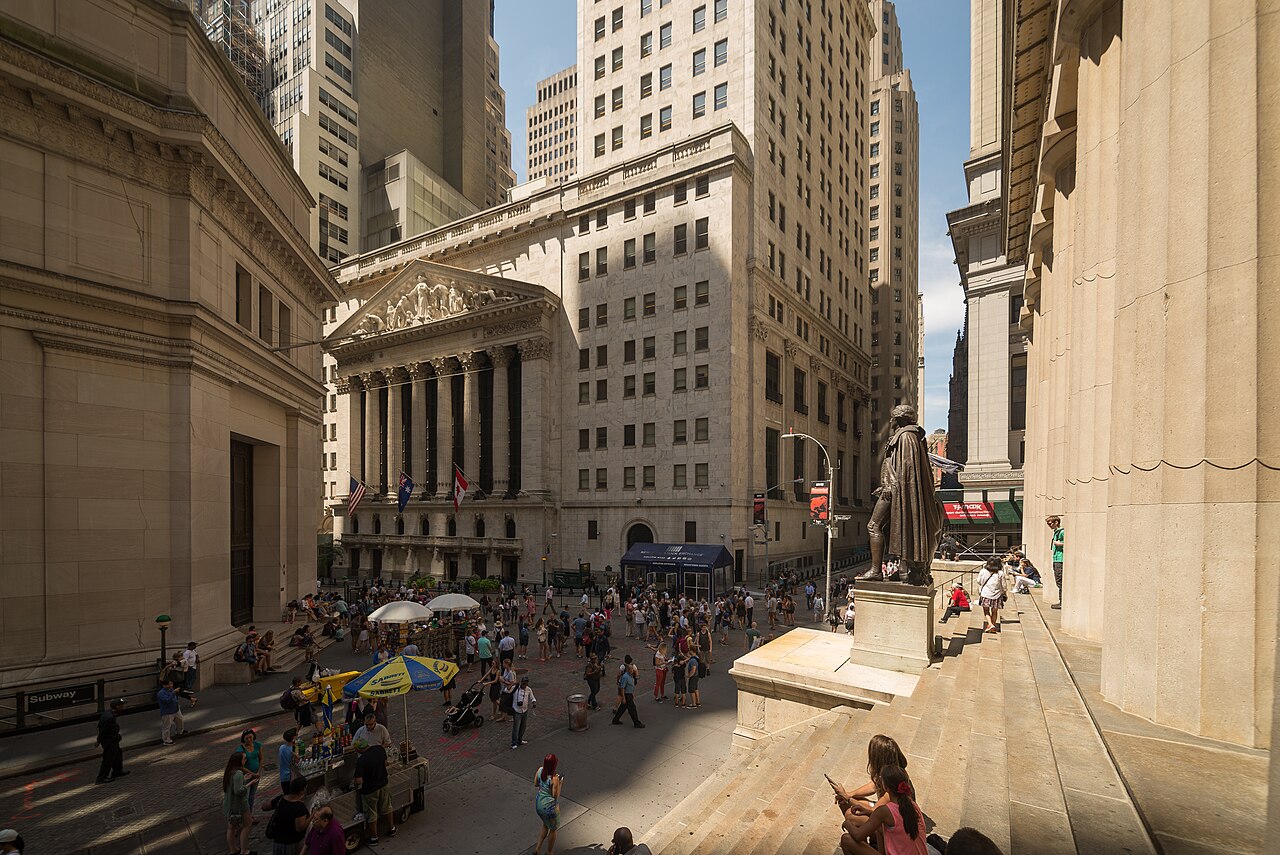
At 2:30 PM Paris time, when the New York Stock Exchange bell rings, the S&P 500 will open around 5,720 points, less than 1.5% from its all-time record of February 19, 2026. Three sectors are drawing attention: semiconductors (Nvidia +3.8% pre-market, AMD +3.2%), boosted by the partial lifting of export restrictions to China; luxury goods (LVMH +2.9%, Hermès +2.4%), a mechanical beneficiary of Sino-American normalization; and aerospace (Boeing +4.1%), fueled by the prospect of a Chinese order for 200 aircraft discussed on the sidelines of the summit.
Conversely, traditional defensive stocks are plunging: ExxonMobil is down 3.4%, Chevron 3.1%, Lockheed Martin 2.8%. The market is brutally shifting from a war premium to a peace premium, as it knows how to do.
Europe: Paris and Frankfurt Leading the Way
In Paris, the CAC 40 was up 1.9% mid-morning, driven by TotalEnergies (+0.8% only, held back by the oil price drop), STMicroelectronics (+4.2%), Stellantis (+3.1%), and the entire luxury sector. In Frankfurt, the DAX gained 2.2%, led by Siemens, SAP, and BMW. London, more exposed to oil companies, underperformed with a modest FTSE 100 gain of 0.7%.
The euro, meanwhile, was regaining its strength: $1.1138 against the dollar at 11 AM, compared to $1.1042 the previous evening. The European Central Bank, set to release its new forecast on June 12, sees its task easing: if the Brent trajectory holds, Eurozone inflation could fall below 2.3% as early as the summer, paving the way for another rate cut in July.
Asia: The Session Already Set the Tone
The Asian reaction had preceded the European one. In Tokyo, the Nikkei 225 closed up 2.4%, its largest gain in three months. In Hong Kong, the Hang Seng added 3.1%, driven by Tencent (+4.8%), Alibaba (+5.2%), and BYD (+4.1%). The Shanghai Composite, more modestly, rose 1.4%, indicating that mainland traders remain cautious until the final communiqué is signed.
In Seoul, Samsung and SK Hynix gained 3.2% and 4.7% respectively, anticipating a relaxation of export rules for high-end memory chips. In Mumbai, the Sensex rose 1.8%, with India identified as one of the major logistical beneficiaries of a reopening of Hormuz.
Areas of Uncertainty
However, two signals contradict the euphoria. Firstly, gold – a safe haven – has barely moved: $2,412 per ounce at 11 AM, compared to $2,418 the previous day. If traders truly believed in an end to the conflict, the yellow metal would be falling significantly. Secondly, the VIX, Wall Street's fear index, is down only 1.2 points to 17.8: significant, but far from the crash one would expect if hedging capitulations were occurring.
Another point of attention: the yield on the 10-year German Bund is rising to 2.68%, and that of the US Treasury to 4.42%. Geopolitical détente immediately revives the specter of stronger growth, thus tighter monetary policy. The bond market thus signals that a partial diplomatic victory could, in the long run, come at the cost of higher long-term rates.
Editorial Opinion
Markets have short memories and quick enthusiasm. What they are buying this morning is not peace, but the promise of a framework. Beijing's statement freed no sailors from Bandar Abbas, towed no cargo out of Hormuz, and signed no ceasefire. It simply replaced silence with a formula. Diplomatically, this is significant. For a trader valuing a barrel in six months, it is little. Our conviction: the current window, marked by Brent around $105 and the S&P 500 within reach of a record, is fragile. It could hold until Saturday noon, the time of the final communiqué. Beyond that, the market will become binary again: either the UN resolution passes and the barrel settles below $90; or the summit ends with nothing, and the war premium returns within forty-eight hours. At this stage, optimism is rational, but it is not yet comfortable.
Key Takeaways
- Thursday, May 14, 2026: Brent falls 4.3% to $104.80, its lowest since April 9.
- The S&P 500 targets an all-time record at the Wall Street open.
- CAC 40 +1.9%, DAX +2.2%, Nikkei +2.4%, Hang Seng +3.1%.
- Goldman Sachs lowers its 12-month Brent target to $92 (vs. 105); JP Morgan targets $85 in the event of a UN agreement.
- Gold is almost stable and the VIX at 17.8 show that distrust has not completely disappeared.
- The 10-year German Bund yield rises to 2.68%, the Treasury yield to 4.42%.