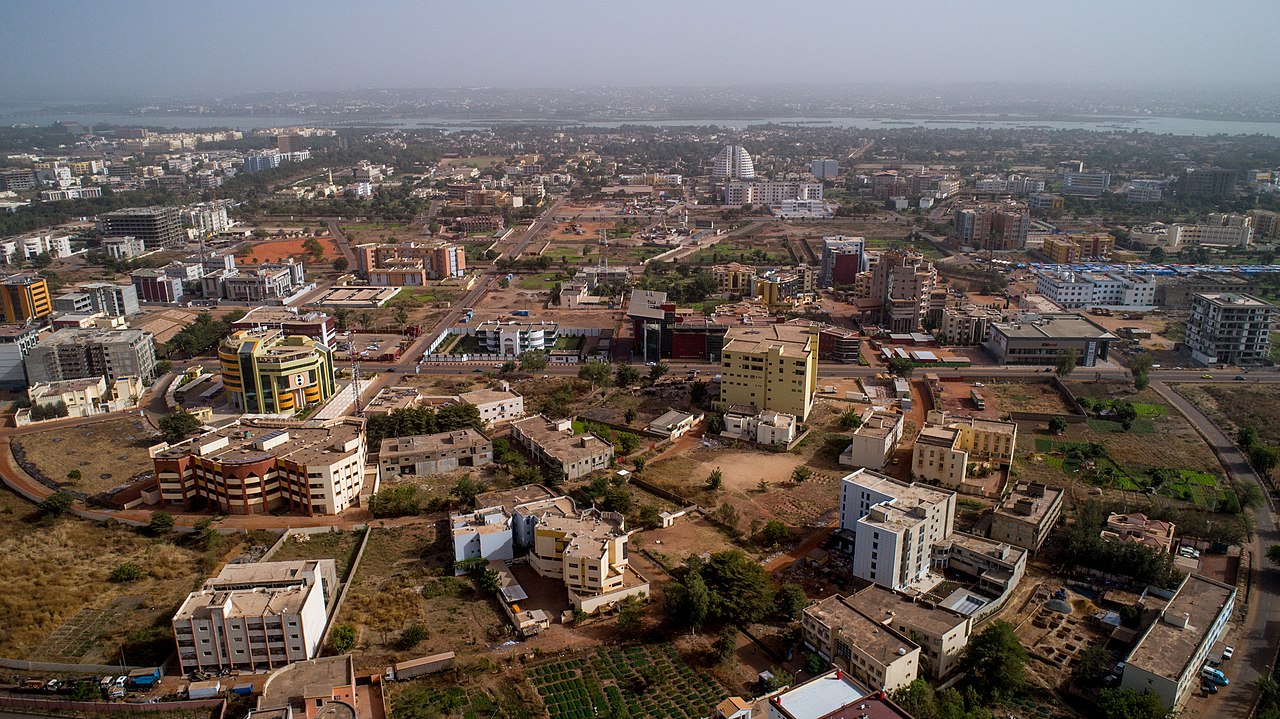
It was barely 5 AM on Saturday, April 25, 2026, when the first heavy gunfire was heard in Kati, about fifteen kilometers northwest of Bamako. The town houses the military camp that serves as the official residence of General Assimi Goïta, head of the junta in power since the May 24, 2021 coup d'état. At the same moment, explosions were heard over 1,500 kilometers away, in Kidal, Gao, and Sévaré. For the first time since the military takeover, the Malian state faces a coordinated armed offensive across its entire territory—a demonstration of operational capability that fundamentally changes the nature of the conflict.
An Operation Designed as a Show of Force
According to initial information gathered by RFI, France 24, and Jeune Afrique, the offensive involves "several hundred, if not more" combatants. The attacks simultaneously target symbolic objectives—the Kati camp for the junta, the regional capitals in the North for the central state—and opportunistic targets such as isolated gendarmerie posts in the center of the country. The Group for the Support of Islam and Muslims (JNIM), affiliated with Al-Qaeda and led by Iyad Ag Ghali, claimed responsibility for the operation that morning via its Telegram channels, speaking of a "national campaign" aimed at "liberating Mali from tyranny." The movement had already carried out several large-scale attacks in recent months, but never so synchronously.
Kidal: The Tuaregs' Offensive Return
In the North, the offensive has a different signature. The Permanent Strategic Framework—Political Declaration and Action (CSP-DPA), a Tuareg rebel coalition, claims to control several districts of Kidal, a city recaptured by the Malian army and its Russian auxiliaries from Africa Corps (formerly Wagner) in November 2023 at the cost of deadly fighting. If confirmed, the loss of Kidal would be a major strategic setback for Bamako. In Gao, fighting is concentrated around the military camp and the airport. Humanitarian NGOs present on site report heavy weapons fire and a complete shutdown of mobile communications, making any assessment impossible by midday.
A Weakened Junta, Russian Support in Retreat
The attack comes at the worst possible time for Assimi Goïta's regime. Since the death of Commander Sergueï Tchoubko and dozens of Wagner fighters in the Tinzaouatène ambush in July 2024, the Russian presence in Mali has been reduced and professionalized under the Africa Corps banner, but without regaining its initial volume. The Malian army, for its part, is paying the price for four years of political purges, cuts in training, and a war effort focused on Turkish Bayraktar TB2 drones—effective in open areas, but of little relevance in urban combat. In Bamako, rumors of a possible internal power grab exploiting the chaos circulated throughout the morning on social media, without confirmation at this stage.
The Region Holds Its Breath
Mali's neighbors—Burkina Faso, Niger, Mauritania, Senegal, Algeria—immediately reinforced their border security. ECOWAS, from which Mali withdrew in early 2024 along with its Alliance of Sahel States partners, issued a statement calling for "restraint and the protection of civilians." Paris remained silent by midday, with the French embassy in Bamako content to recommend its 4,200 nationals remain confined. Washington announced that Africa Command was monitoring the situation. More disturbingly, an UN telegram consulted by AFP mentions a risk of the conflict spilling over westward, towards Kayes and the Senegalese border, where JNIM's presence has intensified since autumn 2025.
Editorial Opinion
The April 25, 2026 offensive is not just another raid: it is the culmination of a patient strategy, prepared for at least eighteen months by JNIM and its tactical allies. By striking Kati, Kidal, and Gao simultaneously, the armed groups signal their entry into a new phase—that of a decentralized conventional war, rather than a guerrilla war of ambushes. The Malian junta, weakened by its geopolitical choices (rupture with France, Russian dependence) and by the erosion of its military capabilities, finds itself exposed to a threat it has long underestimated. For the entire Sahel, the unfolding scenario is that of a Libyan or Somali-style collapse, but on a different scale. The international community, particularly the African Union, cannot continue to look away for much longer: a Mali delivered to JNIM is the antechamber of a migration, security, and humanitarian crisis from which Europe will sooner or later pay the price.
Key Takeaways
- Coordinated attacks at dawn on April 25, 2026, targeting Kati, Bamako, Kidal, Gao, and Sévaré.
- JNIM (Al-Qaeda affiliated group) claims a "national campaign."
- Tuareg CSP-DPA claims partial control of Kidal.
- Kati military camp attacked: this is General Assimi Goïta's residence.
- Russian presence (Africa Corps) reduced since Tinzaouatène (July 2024).