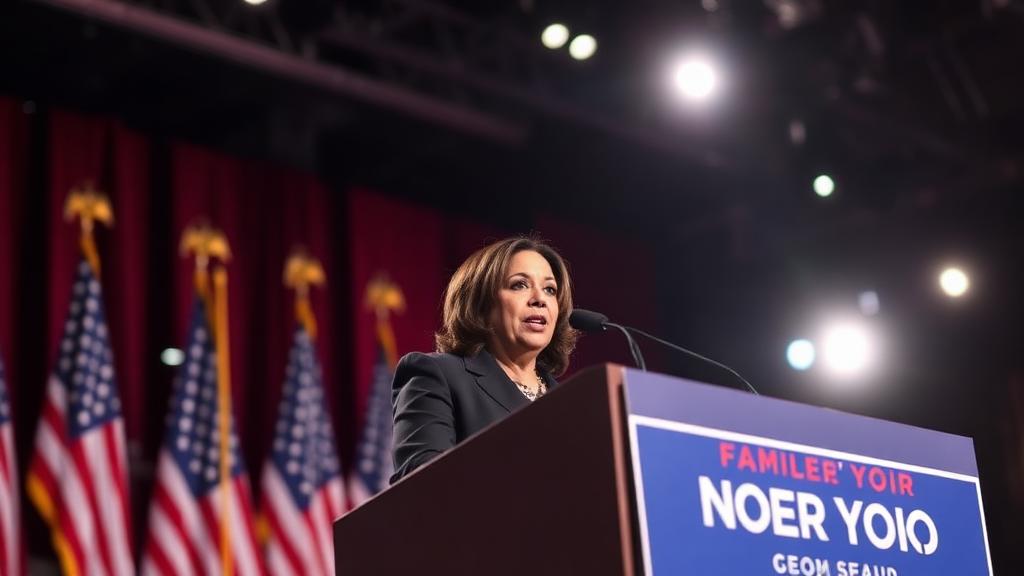
Former US Vice President Kamala Harris made the week's political headline by stating on Friday, April 10, 2026, that she was "thinking about" running for the US presidency in 2028. The announcement was made during an interview with Reverend Al Sharpton, on the sidelines of the National Action Network (NAN) annual convention in New York. "I might run. I know what it takes," she confided in an exchange broadcast by CNN, adding, "I know the weight of this office, the sacrifices it demands, and I am not afraid of this fight."
This potential comeback comes in a deeply polarized American political context. Defeated by Donald Trump in the November 2024 presidential election, Harris had left active political life without ruling out a future return. According to an Epoch Times/Rasmussen poll published in April 2026, she remains the Democratic voters' first choice for 2028, ahead of California Governor Gavin Newsom and Michigan Senator Elissa Slotkin. Her popularity with the African-American electorate and women gives her a structural advantage in the Democratic primaries.
Political observers highlight the strategic timing of this declaration. Trump's term, marked by the conflict with Iran, trade tensions with China, and persistent inflation, offers Democrats substantial grounds for attack. Harris, moreover, used her speech at NAN to criticize the Trump administration's foreign policy, calling the bombings in Iran "a dangerous escalation that jeopardizes the security of Americans." She also called for "restoring America's moral leadership on the international stage."
On the Republican side, the reaction was immediate. The spokesperson for the Republican National Committee called a potential Harris candidacy a "gift to the Republican party," recalling her 2024 defeat. But CNN analysts note that Harris benefits from an asset few candidates possess: direct White House experience. Four years as Vice President and California Attorney General, a career that gives her rare institutional credibility.
The race for 2028 has only just begun, but Harris's statement is already its first foundational act. The Democratic primary calendar will not be set until mid-2027, but donors and grassroots organizations are already getting to work. Harris is expected to increase her public appearances in the coming months, particularly in key states like Michigan, Pennsylvania, and Wisconsin. For Democrats, the stakes are existential: to retake the White House after two consecutive Trump terms.