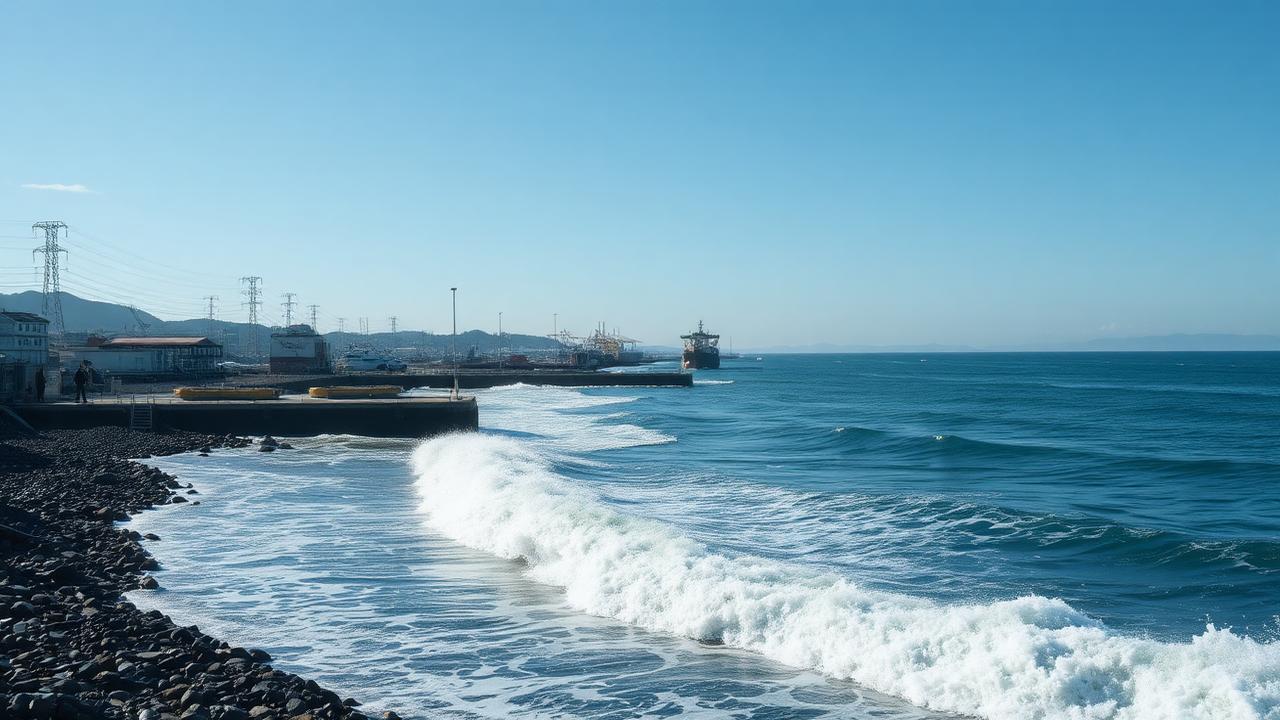
The feared heavy toll has fortunately been contained. Japan's Emergency Management Agency announced midday on Tuesday, April 21, 2026, that the powerful magnitude 7.7 earthquake that hit off the northeast coast of Japan, off the coast of Iwate Prefecture, on Monday, resulted in only six injuries, two of them serious, and caused "no major damage," according to information confirmed by La Presse, Le Parisien, and Yahoo Actualités France. The tsunami alerts, which had been issued for the coasts of Tohoku and Hokkaido, were downgraded in the morning after a maximum wave of only 80 centimeters was recorded in the port of Kuji, compared to the three meters initially feared.
Collective Discipline Saves Lives
This exceptional outcome for a tremor of this magnitude is primarily explained by the centuries-old preparation of Japanese society. Within minutes of the fault rupture, mobile phones across the northern archipelago rang simultaneously, thanks to the Earthquake Early Warning (EEW) system, operational since 2007. High-speed Shinkansen trains automatically stopped in less than fifteen seconds, elevators in buildings over ten stories positioned themselves at the nearest floor, and operators at nuclear power plants simultaneously received the instruction to initiate emergency shutdowns. In Sendai, the most exposed city, residents reached higher ground in less than twelve minutes—a timeframe shorter than the median in simulated drills.
"Mega-Quake" Alert Maintained, A Historic First
However, the episode is far from over. The Japan Meteorological Agency (JMA) is maintaining its "major earthquake" alert issued Monday evening, indicating that the probability of a replica with a magnitude greater than 8 within seven days has statistically "significantly increased" due to Monday's tremor. This is only the second time such an alert has been issued since its creation in 2017, according to Le Monde. The first occurred in August 2024, after a magnitude 7.1 earthquake in southern Japan, with no major aftershocks ultimately occurring. But seismologists, exercising caution, remind us that the Japan Trench subduction zone, the site of the March 11, 2011 mega-quake (magnitude 9.1, nearly 19,000 deaths), remains one of the most active in the world.
Nuclear Power Plants: Operational Flawlessness
The Onagawa plant, operated by Tohoku Electric and located on the front line of the Miyagi coast, recorded no incidents, according to a statement from the Japanese Nuclear Regulation Authority relayed by Reuters on Tuesday. The reactors, including Unit 2 which had just restarted in March 2026, automatically entered a reduced operating mode and then returned to their nominal state by mid-morning. At Fukushima Daiichi, the ongoing decommissioning, which employs over 4,000 workers, was temporarily suspended Monday evening before cautiously resuming on Tuesday. Tepco confirmed that the spent fuel pools, a critical point of the project, remained perfectly stable and that no radioactive leaks were detected.
Japanese Economy on Alert
Paradoxically, the Nikkei 225 in Tokyo closed up 0.89% at 59,349 points, indicating that investors judged the episode to have been well-managed, according to data from Investir and Zonebourse. However, several major companies announced partial suspensions: Toyota closed its Kamaichi plant for 24 hours, Sony evacuated its Sendai R&D site, and the JR East railway company kept the Shinkansen section from Morioka to Aomori closed until Wednesday. ANA and Japan Airlines canceled about thirty domestic flights between Tokyo and the north of the country. Initial estimates from the Daiwa Institute put the gross economic cost of the earthquake at around 320 million euros, a modest figure relative to the country's wealth.
Editorial Opinion
Japan has once again succeeded in what few countries in the world could accomplish: withstanding a magnitude 7.7 earthquake with six injuries and marginal damage. This is the result of fifty years of continuous investment in seismic standards, prevention education, and early warning systems. For France and Europe, where the Antilles, the French Riviera, and the Pyrenean mountain range remain exposed to underestimated seismic risks, the lesson should be heeded. Now, the Damocles sword of the "mega-quake" alert hangs: the possibility of a magnitude 8 or higher aftershock in the Japan Trench is no longer a theoretical scenario in April 2026. The next seven days will be crucial.
Key Takeaways
- Final toll: six injured, two seriously, no major damage after the magnitude 7.7 earthquake.
- Maximum wave of 80 cm recorded in Kuji, tsunami alert downgraded Tuesday morning.
- "Mega-quake" alert maintained by the JMA for the next seven days.
- Onagawa nuclear power plant returned to nominal operation without incident.
- Nikkei up 0.89%, economic damage estimated at 320 million euros.