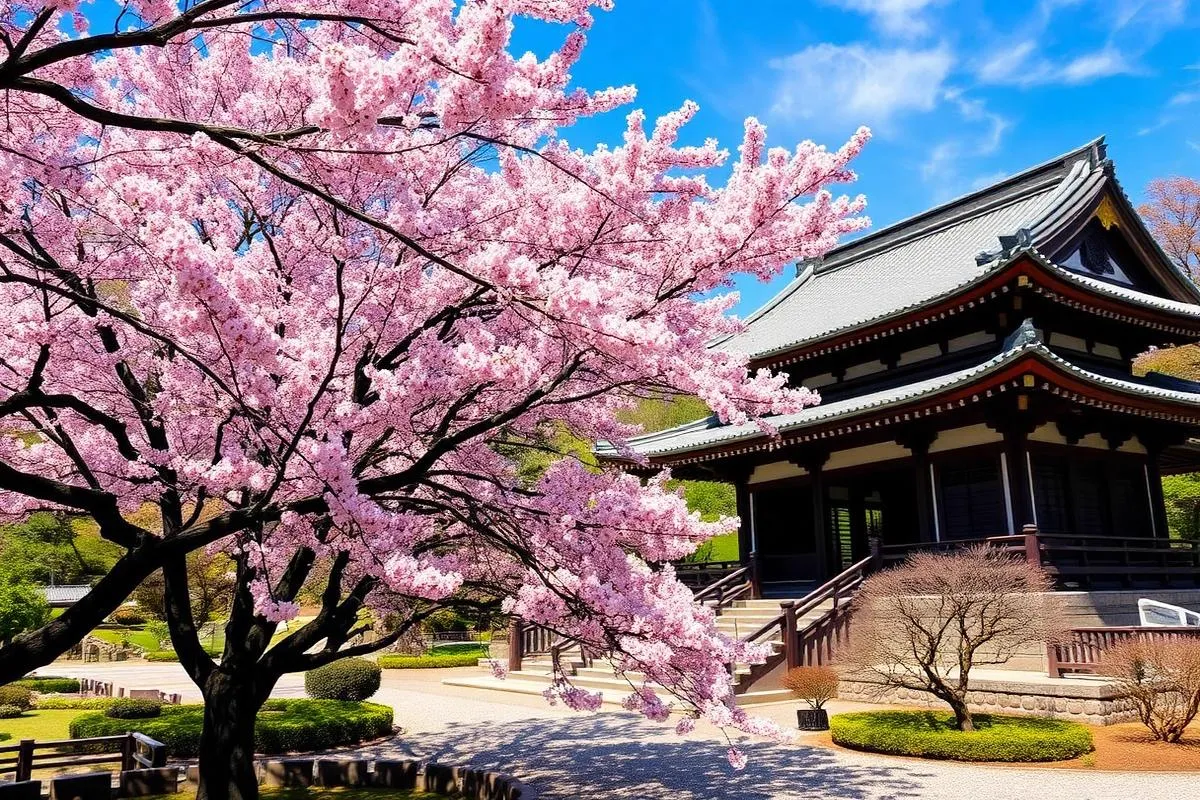
Japan is experiencing a spring tourism surge of unprecedented scale. According to preliminary data from the Japan National Tourism Organization (JNTO), 4.2 million foreign visitors were recorded in March 2026, shattering the previous monthly record of 3.7 million set in October 2025. For the entire year, the country expects to welcome 38 million international tourists, surpassing the pre-pandemic peak of 31.9 million reached in 2019 for the first time. This historic tourism boom is fueled by the convergence of the cherry blossom season (hanami), a yen fallen to 168 to the dollar—its weakest level since 1990—and the Osaka World Expo scheduled for the autumn. (
The weak yen is transforming the archipelago into a bargain destination for Western travelers. A gourmet meal at a Michelin-starred restaurant in Tokyo averages 80 euros, compared to 200-300 euros for an equivalent establishment in Paris or New York. A night in a traditional Kyoto ryokan with a private onsen can be booked for around 150 euros. Long-haul flights from Europe, boosted by competition among ANA, JAL, and low-cost carriers like Zipair, start at 450 euros round-trip from Paris. Tourist spending in Japan reached 5.3 trillion yen (approximately 31 billion euros) in 2025, and the government aims for 8 trillion yen in 2026. (
However, this record influx is causing growing tensions. In Kyoto, the municipality introduced a mandatory reservation system in January 2026 for access to the Philosopher's Path and Fushimi Inari-taisha, two sites overwhelmed by crowds. The Gion district, famous for its geishas, has banned photography in its narrowest alleys, punishable by a 10,000 yen fine. Mount Fuji, which saw 5.1 million hikers in 2025, now imposes a daily quota of 4,000 people and an access fee of 4,000 yen (about 22 euros). Residents of Asakusa in Tokyo have launched a petition signed by 15,000 people requesting regulation of Airbnb rentals. (
The Japanese government, aware of the dilemma between tourism revenue and residents' quality of life, is deploying a "dispersed tourism" strategy to redirect flows to lesser-known regions. The prefectures of Tohoku (northeast), Shikoku, and Kyushu are benefiting from targeted promotional campaigns and new shinkansen routes. The Nishi Kyushu Shinkansen, inaugurated in 2022, has increased tourist traffic to Nagasaki by 45%. Despite its increased cost (50,000 yen for 7 days versus 29,650 yen before 2023), the Japan Rail Pass remains the most cost-effective way to explore the archipelago in depth. (
For French-speaking travelers, Japan in 2026 offers exceptional value for money—provided they avoid Golden Week (late April – early May) and book accommodations and activities several months in advance. Experts recommend the months of March, November, and February to combine moderate crowds, pleasant weather, and reasonable prices. One thing is certain: Japan in 2026 is no longer a niche trip—it is a mass destination that is learning, at forced marches, to reconcile openness to the world with the preservation of its soul. (