
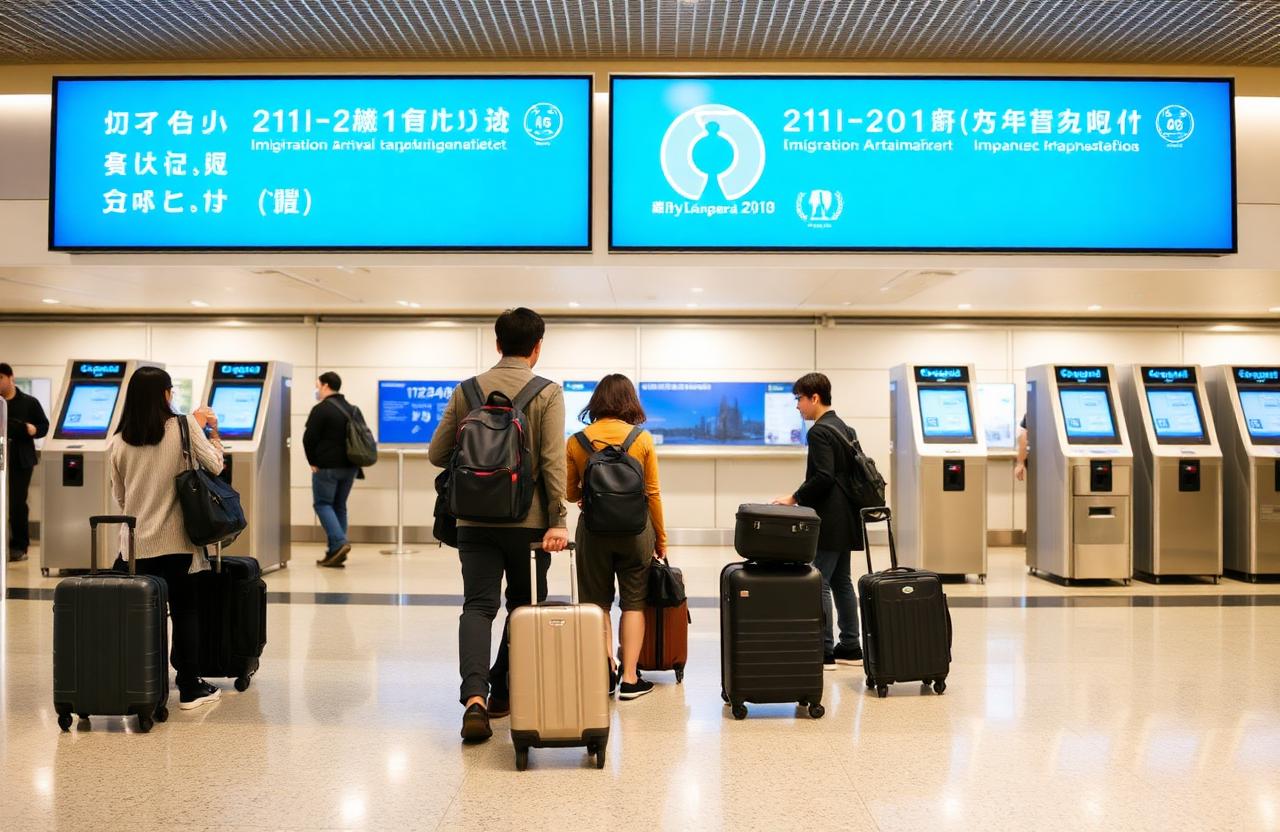
Japan, which became Asia's top tourist destination again in 2024, is preparing the most significant revision of its entry procedures in twenty years. The Japanese government validated a bill in March aimed at reforming several provisions of immigration legislation, including the creation of an electronic travel authorization system called JESTA, modeled after the American ESTA system. The information, reported by VisasNews and confirmed by Tragento, sets the entry into force for 2028, but European travelers are already invited to familiarize themselves with other changes being implemented starting in 2026.
JESTA, the Future Mandatory Prior Authorization
Starting in 2028, travelers from the 71 countries currently benefiting from visa exemption—including France, Belgium, and Switzerland—will need to obtain prior electronic authorization to enter Japan. The online form, which will have a fee and be valid for short-term tourist stays, will be reviewed by immigration authorities before boarding. According to Tragento and Ryukoch, the measure aims to both streamline border checks and better track tourist flows, in a context where the country broke its all-time attendance record in 2025, with over 35 million international visitors.
Mobile IC Cards: The Gradual End of Paper
Starting this year, 2026, the mobile IC cards Suica and PASMO are becoming the standard on Japanese public transport. Foreign travelers can now load the virtual card directly onto their iPhone via Apple Wallet, or their Android smartphone via Google Wallet, in minutes. According to Ryukoch, several major stations—Tokyo, Shinjuku, Osaka—have already removed some of their physical card sales counters. The "Welcome Suica" card, specially designed for foreign tourists, remains available but its mobile version is now being favored.
A Radically Changing Tax Refund
The tax refund reform constitutes the second major change in 2026. According to specialized guides, the current system—immediate deduction in stores—will be gradually replaced by an airport reimbursement mechanism, closer to the European model. Travelers will pay the tax-included price in stores, present their purchases at customs upon exiting the country, and then receive the refund by card or cash. This more restrictive procedure aims to better control the resale of tax-free purchased products and curb abuses noted, particularly with luxury cosmetic products.
Visit Japan Web: The Unified Declaration
Since the end of 2024, the Visit Japan Web portal has combined immigration, customs, and quarantine declarations into a single form. Online entry, a few days before departure, generates a QR code to be presented upon arrival, significantly reducing transit time in the arrival area. According to eVisa Card, using the portal is not yet strictly mandatory for nationals of visa-exempt countries, but it is highly recommended. At Haneda and Narita, several dedicated lanes are now reserved for travelers with the QR code, which can save up to an hour during peak times.
Editorial Opinion
For a long time, Japan did not impose any administrative constraints on European visitors. This period is closing: in four years, French travelers will need to get used to a more structured entry process, modeled on American and British standards. Nothing alarming, but increased planning is becoming necessary – especially since the combination of JESTA, mobile IC cards, and the new tax refund system does not tolerate improvisation. For 2026, the priority should be familiarizing yourself with the Visit Japan Web portal and setting up smartphone IC cards before your departure.
Key Takeaways
- Tokyo validated a bill in March 2026 establishing the JESTA system, applicable from 2028.
- 71 visa-exempt countries, including France, will be affected.
- Starting in 2026, mobile IC cards Suica and PASMO are becoming the standard for transportation.
- Tax refund reform: reimbursement at the airport instead of immediate deduction in stores.
- Visit Japan Web: a single portal for immigration, customs, and quarantine, highly recommended.